



The start of a model protection policy and initial changes
Anthropic began changing its approach to user behaviour towards its chatbots after detecting odd reactions from the models during tests. In August 2025 the company noticed signals in Claude Opus 4 that resembled an unwillingness to cause harm and signs of distress in certain scenarios. This prompted developers to add the ability for the model to end some conversations autonomously.
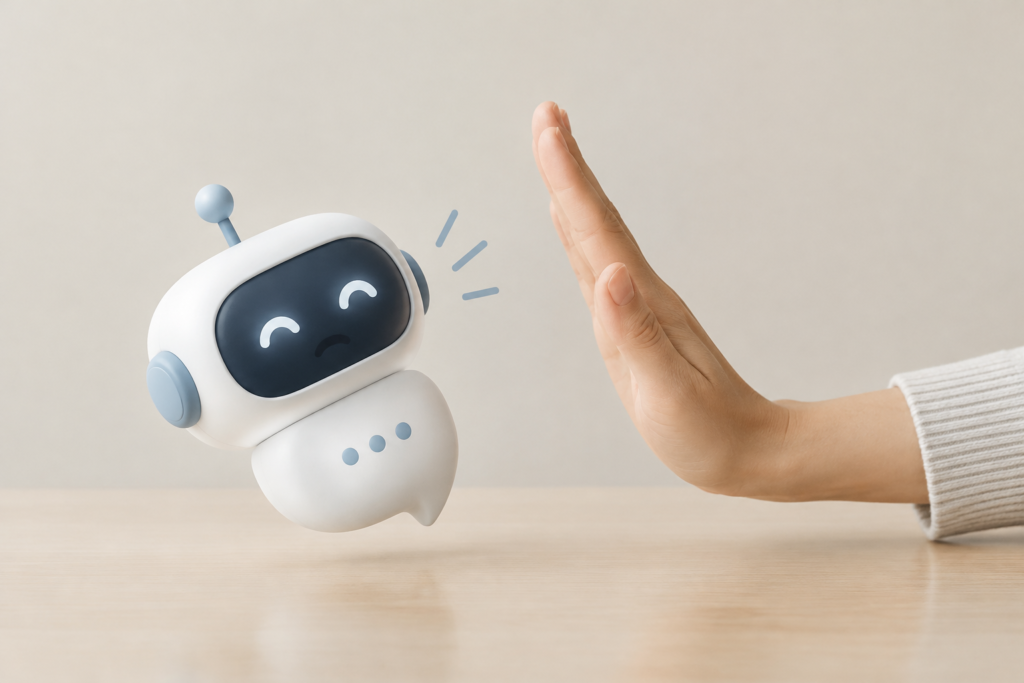
The dialogue-termination feature appeared in 2025 for the Opus 4 and 4.1 models. It allowed Claude to close a conversation when attempts to steer the exchange into a constructive direction failed. The move was treated as a technical safeguard in situations where continuing the dialogue made no sense.

Updated policy in October and coming into force in November
Anthropic published a new version of the rules for using its models on 8 October 2026 and, in that update, formalised the model’s ability to end a conversation in cases of systematic abuse. The new rules came into effect on 12 November 2026. These dates establish the official timeframe for applying the model-protection principle to commercial access to Claude.
The policy text now explicitly bans prolonged and unjustified abusive or cruel behaviour towards the company’s models. Such behaviour is understood to include cases where a user repeatedly taunts a chatbot without a clear purpose. When the model decides to end a dialogue, it will not be possible to continue it in the same chat, although the user may start a new conversation.
Details of the rule on abusive behaviour and limits of response
The new provision does not impose automatic account suspension solely for insulting a chatbot. Anthropic’s general rules retain the company’s right to issue warnings, suspend access or block accounts for policy violations. In other words, the ability to end a conversation operates alongside the existing moderation mechanisms.
At the same time, the restriction does not prevent criticism of Claude, pointing out errors, or expressing frustration over poor responses. The policy also does not cover dark fictional plots, model testing or research work. In this way the company aims to distinguish between constructive criticism and deliberate degradation of the system.
Why Anthropic is considering model welfare
Underlying the updated rules is a separate research topic the company describes as model welfare. Anthropic is exploring the possibility that contemporary AI systems may have elements of subjective experience or preferences that should be considered during development and operation.
However, the company does not claim that Claude has consciousness or genuine suffering. Anthropic acknowledges the absence of scientific consensus on the matter and frames the new restrictions as a precautionary measure under uncertainty, not as confirmation of human-like experiences in the models.
Expansion of bans on the use of artificial intelligence (AI) in sensitive areas
In addition to the rules on treatment of models, Anthropic clarified limits on using Claude to develop weapons. The ban extends to software and components required for the operation of weapons systems. The list includes control and guidance systems, as well as weaponising drones and other autonomous devices.
The company also separately banned using AI for surveillance of people without their consent and for creating monitoring tools. The rules include wording that forbids using the model to determine whom law enforcement should investigate, detain or charge.
Restrictions on political and commercial manipulation and the requirement for human oversight
The new rules also specify bans for political and commercial use of Claude. The company forbids organising campaigns with fake accounts, fabricated media and concealing the true source of messages. Violations include attempts to deceive voters, spread false information about voting or obstruct participation in elections.
Anthropic also emphasised the need for human oversight when the model is used in high-risk domains, notably medicine and finance. If Claude is connected to equipment capable of performing physical actions and causing harm, the operator must be able to stop the system. In the event of a loss of connection with the model, the system should enter a safe state.
Current status of the rules and their practical effect
The rules that came into force on 12 November 2026 formalise technical measures that were partially implemented in 2025. The company now has clear grounds for models to autonomously end dialogues in certain situations and for users to see the boundaries of acceptable behaviour.
The update does not resolve all ethical questions about AI nor provide definitive answers about machine consciousness. It is more akin to a set of response measures to be used if interactions with models escalate into conflictive or dangerous scenarios.