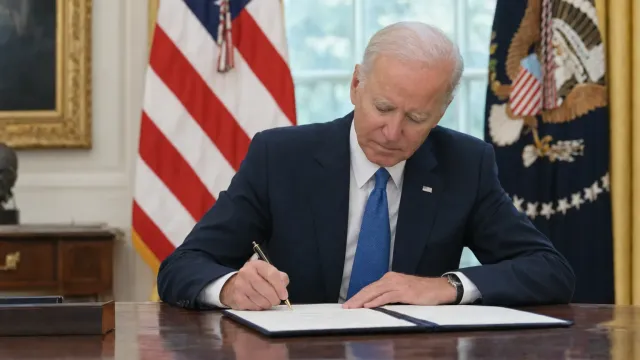


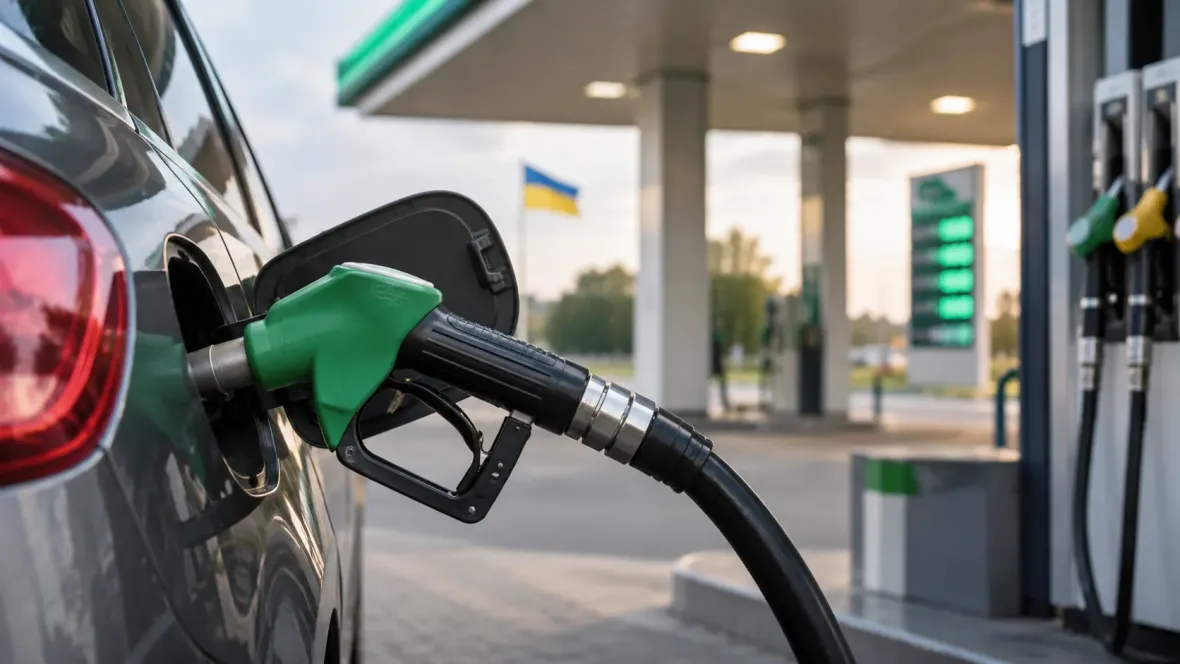
Petrol in Ukraine is gradually getting cheaper, and it looks like this may not be the end. Prime Minister Serhiy Koretskyi said that prices at filling stations could fall further when new batches of fuel bought at lower prices arrive on the market. Drivers have already felt the first changes. Since the beginning of November, A-95 petrol has fallen by an average of 2 UAH per litre. However, there is no specific date for the next reduction yet.
According to monitoring data, on 13 November 2026 average fuel prices in Ukraine looked like this.
| Type of fuel | Price per litre | Change since 2 November |
|---|---|---|
| A-95 petrol | 88.08 UAH | -2.00 UAH |
| A-95+ petrol | 91.07 UAH | -2.82 UAH |
| A-92 petrol | 84.78 UAH | -1.57 UAH |
| Diesel | 103.24 UAH | -1.26 UAH |
| Autogas | 61.79 UAH | +3.38 UAH |
If previously a full 50-litre tank of A-95 cost on average 4504 hryvnia, now it is roughly 4404 hryvnia. A difference of a hundred hryvnia, of course, will not radically change a household budget. But for those who drive often, such changes are already noticeable.
When will petrol at Ukrainian filling stations (АЗС) become cheaper?
Serhiy Koretskyi spoke about the possible further price fall on 13 November during the hour of questions to the government in the Verkhovna Rada.
The gist of his explanation is quite simple. Suppliers are already buying fuel at more favourable prices. Now those batches need to reach Ukraine and be delivered directly to the filling stations.
But everything works here not as quickly as drivers would like.
Imagine a typical petrol station. Its tanks still contain fuel that was bought a few weeks ago at a higher price. Even if a new batch is cheaper today, the old stocks do not disappear overnight.
Therefore prices change gradually. First fuel becomes cheaper for suppliers, then on the wholesale market, and only later do drivers see new numbers on the station price boards.
Koretskyi did not give an exact date for when petrol will fall in price again. He also did not specify by how many hryvnia the cost per litre might drop.
The government, the Ministry of Energy and the Anti-Monopoly Committee are monitoring the fuel market situation.
Why doesn’t petrol get cheaper immediately?
Many drivers have noticed an interesting thing. When fuel gets more expensive, the numbers at petrol stations sometimes change quite quickly. But when purchase prices fall, retail price reductions take longer to appear.
The thing is that there is a whole chain between buying petrol and selling it.
First fuel is purchased abroad. Then it has to be delivered to Ukraine, transported to fuel depots and distributed among stations. And all that costs money.
Taxes, employee wages, equipment maintenance and other expenses are also included in the final price.
So even if petrol has already become cheaper for the supplier, that does not mean that the next morning every filling station will show new price tags.
Moreover, each network has its own stocks and buys fuel on different terms. That is why one station may cut the price today while another does so only after a few days.
How much does petrol cost now at OKKO, WOG, UPG and other petrol stations (АЗС)?
Fuel prices in Ukraine now vary significantly. Sometimes it’s enough to drive a few kilometres to another station to pay several hundred hryvnia less for the same amount of petrol.
For example, among popular networks the difference in the price of A-95 can reach 7 UAH per litre.
Approximate prices on 14 November 2026 are as follows.
| Network | A-95 petrol | Diesel |
|---|---|---|
| KLO | 84.90 UAH | 103.90 UAH |
| BRSM-Nafta | 85.99 UAH | 101.99 UAH |
| UPG | 86.90 UAH | 101.90 UAH |
| Ukrnafta | 86.90 UAH | 102.90 UAH |
| OKKO | 90.90 UAH | 105.90 UAH |
| WOG | 90.90 UAH | 105.90 UAH |
| SOCAR | 91.90 UAH | 106.00 UAH |
Prices may differ depending on the specific station and the city.
Take 40 litres of A-95 as an example. At the listed prices a fill-up at KLO would cost 3396 hryvnia. At SOCAR you would pay 3676 hryvnia.
The same 40 litres but a difference of 280 hryvnia.
Of course, drivers choose stations not only for price. Some value proximity to home, some use loyalty programmes, and others have been refuelling for years at a station they trust.
But when it comes to regular trips, it certainly doesn’t hurt to compare prices before refuelling.
How did petrol prices change during November?
At the start of the month the average price of A-95 was still above 90 hryvnia. Then petrol began to get gradually cheaper.
There were no sharp jumps or a massive collapse in prices. The cost per litre simply decreased gradually.
| Date | A-95 petrol | Diesel |
|---|---|---|
| 2 November | 90.08 UAH | 104.50 UAH |
| 5 November | 89.84 UAH | 104.64 UAH |
| 9 November | 89.58 UAH | 104.54 UAH |
| 11 November | 88.74 UAH | 104.31 UAH |
| 13 November | 88.08 UAH | 103.24 UAH |
In less than two weeks A-95 fell by 2 UAH per litre. Diesel also eased a little, although its price fell more slowly.
For a driver who fills 20 litres once a week, the saving is not yet very large. But if a car is used daily, the difference over a month will already be more noticeable.
Why is petrol getting cheaper while autogas at filling stations is getting more expensive?
With autogas the situation is the opposite right now. While owners of petrol cars are pleased with at least a small price drop, drivers of vehicles with gas-cylinder equipment (ГБО) have to pay more.
Since the beginning of November autogas has risen by more than 3 UAH per litre. Its average cost has reached 61.79 UAH.
And the reason is not only the domestic Ukrainian market.
The director of the consulting group A-95, Serhiy Kuyun, explained that Europe has faced a shortage of liquefied petroleum gas. Supplies have become more difficult and purchase prices have gone up.
Transport by the Danube added to the problems. Low water levels have made river transport more difficult.
As a result there is less gas on the market and its price has risen.
Will autogas get cheaper in the near future?
For now there are no grounds to talk about a quick reduction in autogas prices.
For prices to start falling, it is first necessary to establish stable supplies and increase the amount of available fuel.
And it is important to understand one thing: if petrol becomes cheaper, that does not automatically mean that autogas will become cheaper too.
These fuels have different suppliers, logistics and purchasing conditions. So the market situation can change in very different ways for each.
How much could you save if petrol falls by another 2-3 UAH?
It is still unknown by how much petrol might fall. But let’s calculate how drivers’ costs would change if the price per litre dropped by one, two or three UAH.
For those who fill a small amount the difference will be modest. But for a full tank the savings become more noticeable.
| Refuelling volume | Cheaper by 1 UAH/l | By 2 UAH/l | By 3 UAH/l |
|---|---|---|---|
| 20 litres | 20 UAH | 40 UAH | 60 UAH |
| 30 litres | 30 UAH | 60 UAH | 90 UAH |
| 40 litres | 40 UAH | 80 UAH | 120 UAH |
| 50 litres | 50 UAH | 100 UAH | 150 UAH |
| 60 litres | 60 UAH | 120 UAH | 180 UAH |
These are only examples of possible scenarios, not a government forecast.
Now imagine an ordinary passenger car that consumes 8 litres of petrol per 100 kilometres.
If you drive 1,500 kilometres a month, you would need about 120 litres of fuel.
If the price falls by 2 UAH, a driver would spend 240 UAH less per month. Over a year, if that difference remains, that would be 2,880 UAH.
And if a car is used for work, for example in a taxi or delivery service, fuel costs can be much higher. Accordingly, the savings from a price drop would be more significant.
Will cheaper petrol affect shop prices and delivery costs?
Fuel prices concern not only those who own a car.
Petrol and diesel are needed by trucks, courier services, buses, agricultural machinery and many businesses.
For example, a small transport company uses 3,000 litres of diesel a month. If its price falls by 2 UAH, the company would spend 6,000 UAH less.
For a large fleet the sums can be even more substantial.
But does that mean delivery prices will immediately fall? Not necessarily.
Carriers’ tariffs include not only fuel costs. They have to pay drivers, repair vehicles, buy spare parts and service the fleet.
So even if diesel becomes cheaper, companies do not always immediately revise the cost of their services.
The story is similar for supermarket products. Transport costs affect their cost price, but are not always the main component of the final price.
Could petrol become more expensive again?
Yes, this cannot be ruled out. Even if prices are currently falling, the situation on the fuel market can change.
Ukraine receives a significant share of its petrol and diesel from abroad. That means domestic prices depend on how much fuel costs in Europe, the exchange rate and the cost of delivery.
For example, if oil prices rise sharply on the world market, after some time this could be reflected at Ukrainian filling stations.
The same applies to the hryvnia exchange rate. When imports become more expensive, suppliers have to reflect that in their costs.
There is also the question of logistics. Because of the war, the delivery of petroleum products remains more complex and costly than in peacetime.
So the current price fall does not guarantee that petrol will keep getting cheaper.
How can drivers refuel more cheaply right now?
You don’t have to wait for the next price drop to reduce fuel costs a little. Sometimes it’s enough just to check how much petrol costs at neighbouring stations.
Especially since the difference between networks can currently reach several UAH per litre.
Here are a few simple ways not to overpay for refuelling.
- Compare prices at different stations. Even within the same city petrol prices can differ noticeably.
- Use loyalty programmes. OKKO has Fishka, WOG has PRIDE, and Ukrnafta has U.GO. Through these you can check available bonuses and discounts.
- Look at the final price. Sometimes a station with a pricier listed fuel offers a better effective price with a personal discount.
- Don’t drive far just for cheaper fuel. If saving 30 UAH requires using extra litres to get to the station, the trip may not make sense.
When to expect new petrol prices in Ukraine?
The main news for drivers for now is that petrol has already become cheaper and the fall may continue.
On 13 November the average price of A-95 stood at 88.08 UAH per litre. Diesel cost 103.24 UAH, while autogas, conversely, rose to 61.79 UAH.
Serhiy Koretskyi links further petrol price reductions to new batches of fuel bought at lower prices. When they arrive at stations, networks will be able to revise their price boards.
But whether a litre will fall by 50 kopecks, 1 hryvnia or more is not being officially announced at present.
So in the coming days drivers should watch prices at their usual filling stations (АЗС). Especially those who fill a full tank or drive a lot every day. Even a small difference in the price per litre over time turns into a concrete sum.