



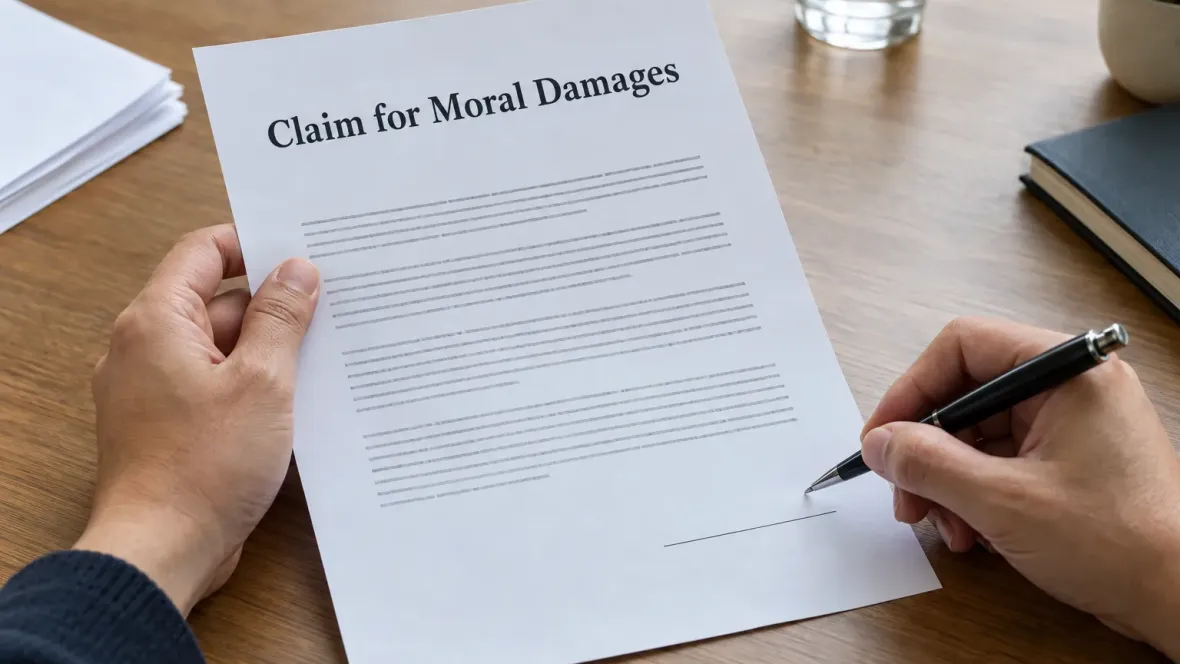
You can apply to the court to claim compensation for moral harm for physical or emotional suffering and for violations of personal non‑pecuniary rights, said specialists of Free Legal Aid reported. Moral harm is non‑pecuniary suffering, and a statement of claim is a written petition to the court demanding compensation.
Grounds for bringing a claim to court
The right to compensation arises not only in cases of physical pain; it may also be based on emotional suffering or violations of personal non‑pecuniary rights. Compensation can be sought in cases of unlawful decisions, actions or omissions by law enforcement agencies, the prosecutor’s office or the court, for the commission of a corruption or criminal offence, and in other situations where a person’s rights are violated.

The injured party should assess the suffering caused and state the desired amount of compensation in the statement of claim. The court then decides whether and in what amount to award compensation.
Procedure for determining the amount of compensation
The law does not set a single minimum or maximum amount of compensation for moral harm for all cases. Compensation for unlawful detention during investigation or trial is regulated separately: in such cases compensation cannot be less than one minimum wage for each month of detention during investigation or trial.
The final amount of payment is determined by the court. In particular, it takes into account: