

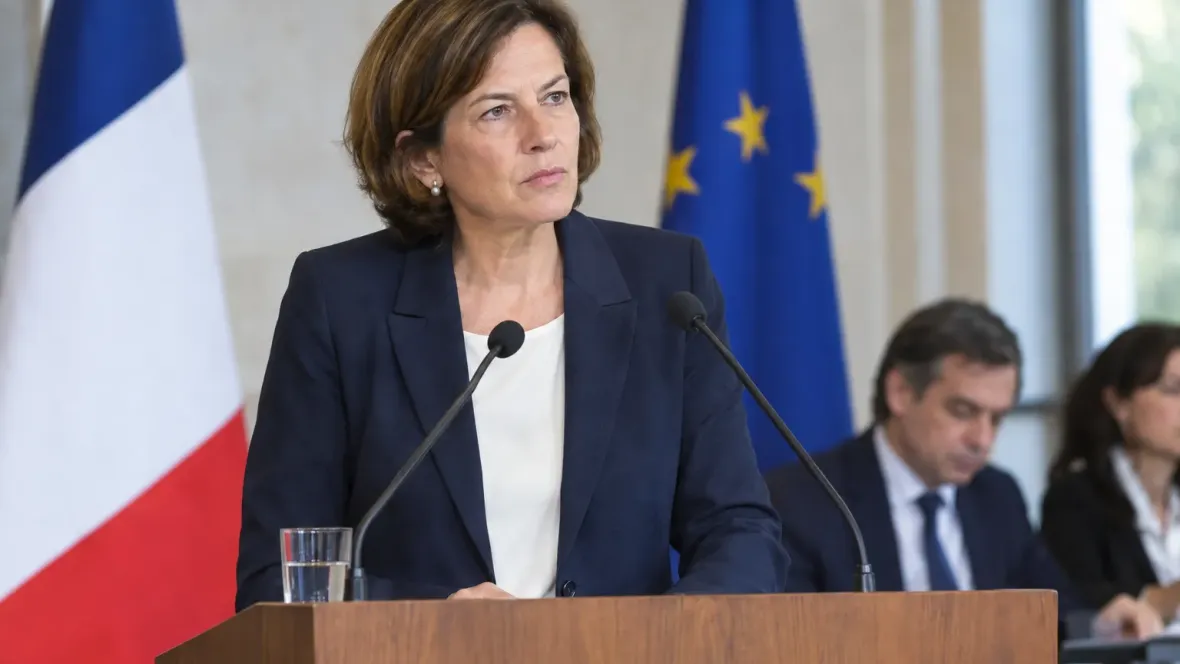
According to the Ministry of Finance, on 17 November Minister Serhiy Marchenko warned that the EU may not recognise Ukraine’s law on accession to the Single Euro Payments Area (SEPA) because amendments might not meet EU standards. The minister urged MPs to thoroughly consider bill no. 14327-d before the second reading and to agree disputed provisions with European partners.
Risk of the law being rejected because of changes during preparation
Marchenko noted that, during preparation for the second reading, Parliament may alter the document to such an extent that it no longer complies with European requirements. “Mistakes can be simple. If we adopt a bill that will not be recognised,” warned Minister of Finance Serhiy Marchenko.
The minister also emphasised the need to take into account the economic benefits of joining SEPA. In the first reading, on 10 November, the Verkhovna Rada supported bill no. 14327-d; 249 MPs voted for it.
Disputes around a unified register of bank accounts
One of the main points of contention is the creation of a unified register of bank accounts and safes and the rules for state authorities’ access to it. In the version of the bill adopted at first reading, direct access to the register is provided for only three bodies.
The European Commission insists on full implementation of EU directives, which implies broader access for authorised bodies. Compromises under consideration include a model under which certain law enforcement agencies would receive information via the prosecutor’s office.
What the register will contain and what data will not be included
The future register will contain basic information about accounts: the IBAN number, the account holder’s name and the bank’s name. The register will not include information on account balances, movements of funds on accounts or the contents of bank safes.
The current draft also foresees raising the threshold for financial transactions subject to mandatory financial monitoring from 400,000 hryvnia to an amount equivalent to more than 10,000 euro. Access for authorised bodies is planned to be opened no earlier than six months before the agreement on Ukraine’s accession to the EU comes into force.
Economic benefits of SEPA and the timetable for legislative changes
Joining SEPA (the Single Euro Payments Area) will allow euro transfers to be made under common European rules. At present an international transfer from Ukraine to the EU can cost from 0.7% to 1.5% of the payment amount plus a fixed fee of 15-25 euro; within SEPA, in many banks such operations cost from zero to one euro.
According to an estimate by the Institute for Economic Research and Policy Consulting, quoted by the Ministry of Finance, savings for citizens and businesses could amount to 70-100 million euro per year. However, adoption of the law will not mean automatic accession: assessments and fulfilment of technical and regulatory requirements are needed.
The European Payments Council has updated the criteria for joining SEPA; applications submitted after November 2026 will be assessed under new, stricter requirements. Because of possible delays, Ukraine’s accession could be postponed to around 2029. The Verkhovna Rada is expected to return to bill no. 14327-d for a second reading in December 2026.