


Briefly about the magnets case and the author’s claim
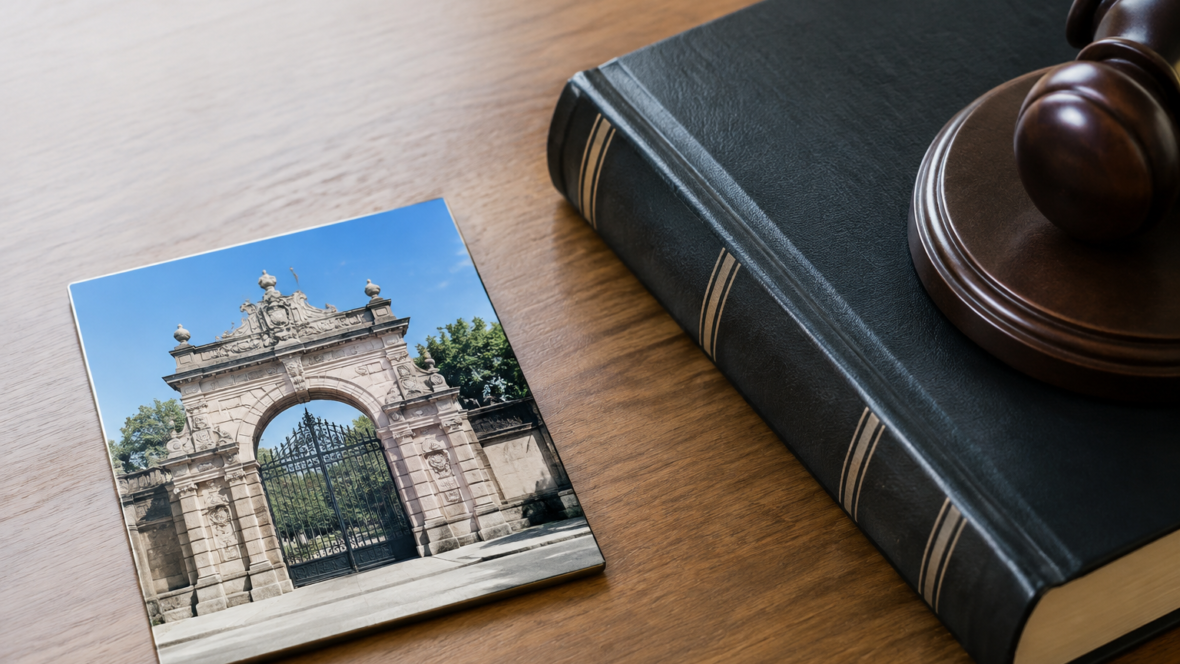
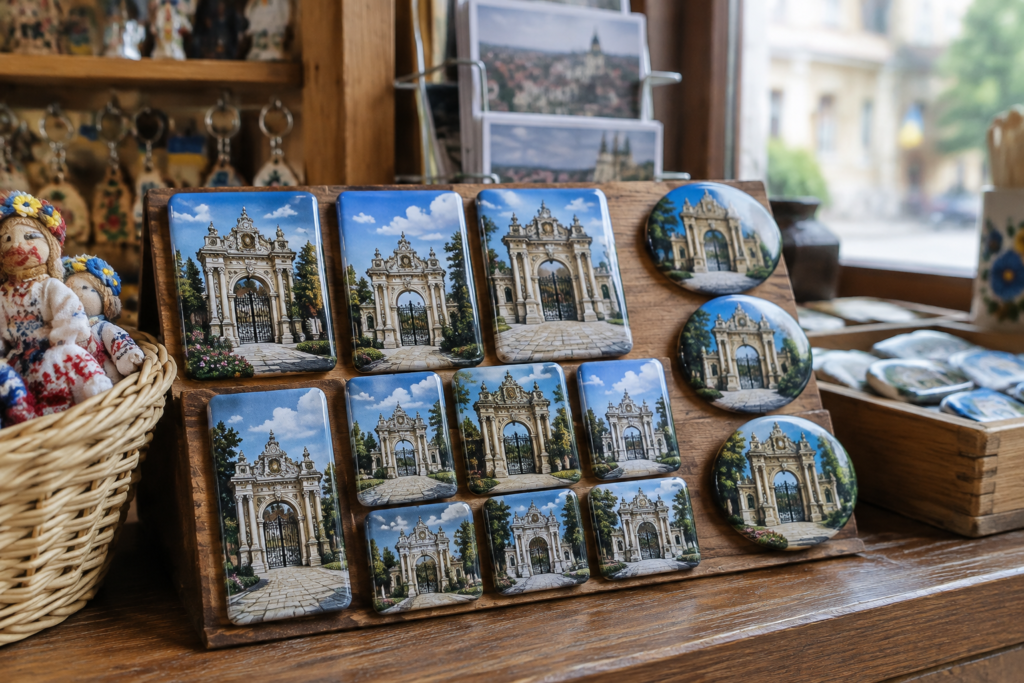
The author claimed that his graphic image of the Main Gate of the Potocki Palace in Ivano-Frankivsk appeared on souvenir magnets without permission. One magnet in the shop «Ole-Tur» cost 25 UAH, and the author sought compensation of 65 000 UAH and publication of information about the infringement.
The dispute passed through several instances and reached the Supreme Court. The publication writes Sudovo-Yurydychna Hazeta. Amounts, dates and the names of laws in the decision played a key role in the final determination of compensation.
How the image ended up on the magnet and what evidence the author submitted
According to the case materials, the author posted his work on Facebook in 2014, and showed a reconstruction of the gate on Dribbble in 2016. On 28 May 2021 he saw magnets with that image in a souvenir shop without any attribution and filed a claim against the seller.
The business refused to satisfy the claim. The author brought a lawsuit requesting 65 000 UAH in compensation, an order to publish information about the infringement, and disclosure of the persons involved in the production and distribution of the magnets. The court decisions refer to case No. 344/1415/22, where these circumstances and pieces of evidence were examined.
Which legal provisions affected the amount of compensation
The author relied on the previous version of the copyright law that was in force before 22 July 2018. That edition provided compensation across a very wide range from 10 to 50 thousand minimum wages and could have led to a substantially higher sum.
However, on 22 July 2018 changes introduced by Law No. 2415-VIII came into force. Under the new logic, compensation is determined as a lump sum based on double, and in cases of intentional infringement even triple, the remuneration that the infringer would have had to pay for a licence to use the work. Since the infringement was discovered in May 2021, the courts applied the new calculation procedure.
The mechanics of determining compensation step by step
- First the plaintiff must prove the very fact of the copyright infringement — that is, show that the protected work was reproduced on the product.
- Then the court establishes which version of the law applies according to the date the infringement was discovered and selects the method of calculating the amount.
- Next come the circumstances that must be supported by evidence: intentionality of the infringement, the duration of use of the work, and whether the infringement had a commercial character.
- Finally, the court substantiates the amount of compensation based on the principles of fairness, good faith and reasonableness and explains why it determined that particular sum.
This simple sequence shows that it is not enough merely to claim a larger sum. Facts are needed that explain how the amount compensates the harm or the author’s lost income.

Why the courts left the sum at 6 000 UAH
Ivano-Frankivsk City Court on 8 April 2025 partially upheld the claim and awarded 6 000 UAH in compensation. The court found that the magnet reproduced most of the graphic elements of the work but also noted that the author relied on the version of the law that was no longer in force at the time the infringement was discovered.
The appeal on 1 July 2025 left the decision unchanged. In the cassation complaint the author’s representative insisted that the courts had underestimated the intentional and commercial nature of the infringement and had erred in setting the amount. The Supreme Court reviewed the application of legal norms and concluded that there was insufficient evidence to support the claimed 65 000 UAH and the allegation of intentional infringement.
What changes for authors and souvenir sellers
In practical terms, courts require authors not only to assert an infringement but also to provide an evidential basis that explains the amount of compensation. This can include documents about income, licence offers, or other materials that give an indication of the market value of using the work.
For souvenir sellers the decision is a reminder that the absence of attribution alone does not absolve liability, but it also does not guarantee zero liability if the plaintiff fails to prove the amount of damage. The court also emphasised that cassation reviews the correct application of the law and does not re-evaluate facts and evidence.