


What the president announced and the terms he proposes
President of the United States Donald Trump openly rejected the widespread term Artificial Intelligence (AI) and proposed replacing it with Super Intelligence (SI). In a post on 8 October on the social network Truth Social he called the new term more accurate and urged that it become standard in official communications.
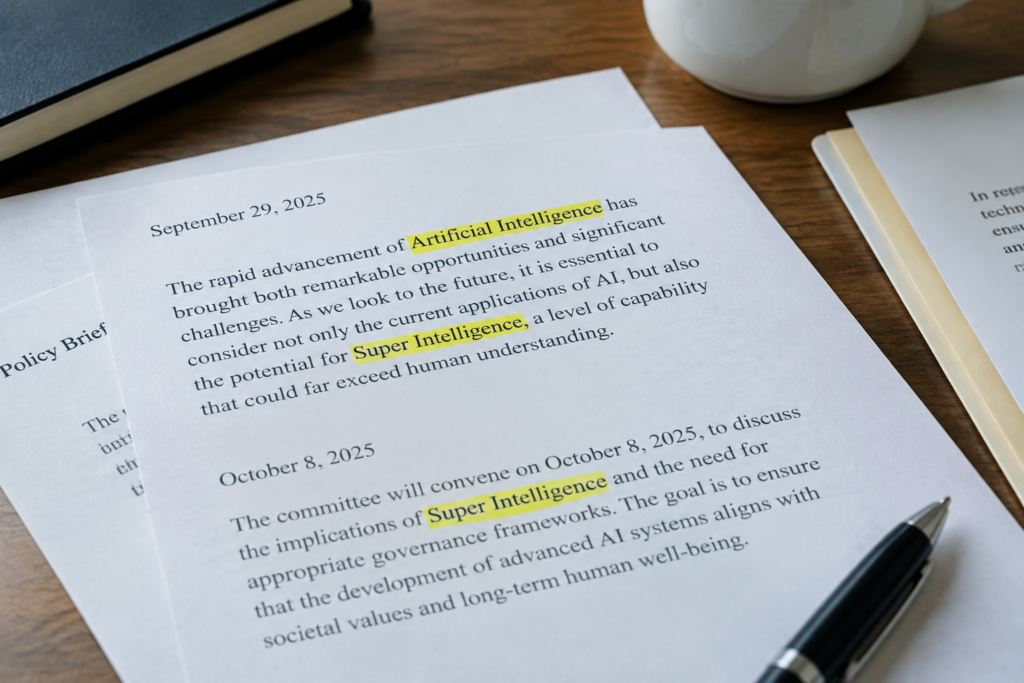
Earlier, on 29 September, he signed an order requiring federal agencies to use Super Intelligence (SI) instead of Artificial Intelligence (AI) in announcements, documents and public communications. The White House explained the move by saying that modern technologies already extend human capabilities and therefore require different terminology.
How the term change works in government communications
It is important to understand not the rhetoric but how the process of changing terminology in official documents actually works. The government is not changing the technology but is merely requiring a different phrase in its official language. This happens through a legal act that has force for federal agencies.
Below is a step‑by‑step explanation of how such a substitution generally takes place.
- The first step is the publication of an order that establishes the new terminology for official documents.
- The second step is communicating the directive to federal agencies, which must update templates for announcements and internal guidance documents.
- The third step is applying the new formulations in press releases, reports and regulatory acts issued by government bodies.
- The fourth step is preserving freedom of expression in the private sector, where the use of the term Artificial Intelligence (AI) is not banned by the order.
The text of the order does not mention specific sanctions for failing to use the new terminology, and in a public statement Trump did not specify what consequences he meant when referring to opponents or those who use AI. Therefore, in practice implementation will depend on the internal procedures of each department.
What effect this has on government and technological communication
For federal agencies the 29 September action constitutes a direct rule regarding language in documents and public statements. Practical changes will appear in style guides used by press offices and in the official texts released by the government. This shifts the emphasis of communication without changing the technical nature of products and services.
In the technology sector the term Artificial Intelligence (AI) remains the generally accepted and widely used term. The order primarily concerns the public sector and does not introduce a general ban for private companies. Thus, two linguistic practices coexist today: the governmental one, which has an official character, and the market one, which continues to use the familiar names.