




According to analytics firm TeleGeography, at the end of the first half (H1) of 2026 the total capacity of international internet channels worldwide reached 2259 Tbit/s, which is 23% higher than in the same period of 2025.
These annualised growth rates have been recorded since 2022, and over that time total capacity has more than doubled. Average and peak volumes of international traffic are growing by roughly 24% year on year.
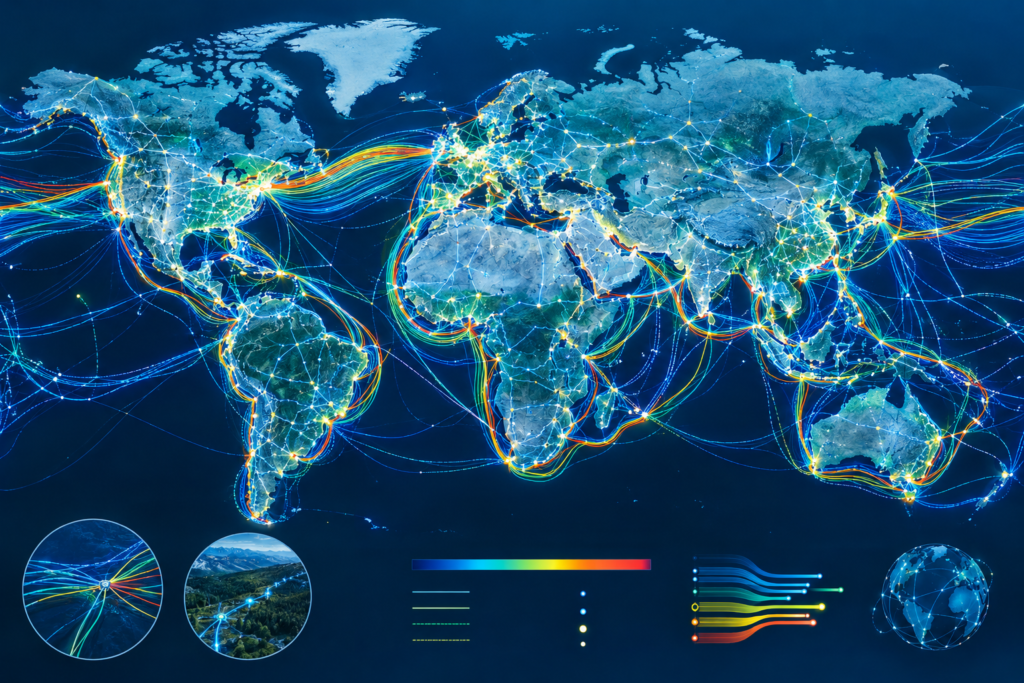
The dynamics vary by region: Africa has shown an average annual increase of 35% in 2022–2026, and Oceania 25%. Analysts also note a general rise in peak loads.

Artificial intelligence (AI) is currently having a minimal impact on international channel loads; backbone IP network operators are not recording mass AI-traffic spikes. AppLogic’s research shows that in 2025 data volumes generated by AI increased by 90% in fixed networks and by 80% in mobile networks.
Major content providers, cloud services and data centre operators are building their own backbone networks — for example Google with its Sol cable — and are using caching, which keeps some traffic within regions and somewhat slows the growth of global data exchange.
The rise in private backbones and economies of scale are lowering the cost of data transmission, and IP transit prices are falling. Most customers require 100 Gbit/s ports, while demand for 400 Gbit/s connections is increasing in the US and Europe.