

Anton Siluanov, Russia’s finance minister, took the floor at a meeting of the International Monetary Fund (IMF) in Bangkok, and half the room stood up and walked out. Thus, on 17 October 2026 an otherwise routine gathering of finance officials turned into a diplomatic protest. One of the first to stand was Andriy Pyshnyi, head of the National Bank of Ukraine (NBU), and he was followed by representatives of several European and Western countries.
How it unfolded
Half the room emptied
Joachim Nagel, president of the German Bundesbank, said that nearly half the delegates left the hall during Siluanov’s speech. The meeting was not stopped, and Russia was not expelled from the committee. Officials simply left while the Russian minister was speaking. The background was clear: Russia’s war against Ukraine has for years shaped the atmosphere in international financial institutions.
Pyshnyi: “I did not expect such support”
Andriy Pyshnyi explained that he stood up as soon as the Russian representative was given the floor, and a large group of delegation leaders followed him. The head of the NBU admitted he had not expected such mass support and called the moment emotional. He had previously left the room when Russians spoke, but had not seen such a joint exit.
Who left and who stayed
Delegates from Denmark, Sweden, Finland, Norway, Lithuania, Latvia and Estonia, as well as the United Kingdom, Germany and France, left the room. Pyshnyi specifically mentioned Canada’s support, so the protest extended well beyond the European Union (EU). The Bank of England confirmed that its governor, Andrew Bailey, also left during Siluanov’s speech.
However, not everyone left. According to participants, the president of the European Central Bank, Christine Lagarde, remained in her seat. So the boycott was the decision of specific delegations and individuals, not of all European financial institutions.
Why Siluanov in Bangkok sparked so much controversy
A return after several years’ hiatus
After the 2022 invasion, contacts with Russia at high level in such formats were very limited. So Siluanov’s appearance at the IMF meeting provoked debate even before the committee convened. Some Europeans are categorically against Moscow returning to normal cooperation while the war continues. It was for that reason, rather than the language or content of the speech, that they left.
Seating row at the reception
Tension, Pyshnyi said, arose at the start of the week — at an official reception hosted by the Prime Minister of Thailand. Europeans asked for guests to be reseated so they would not sit at the same table as Russian officials, including Russian Deputy Prime Minister Alexey Overchuk, who is subject to international sanctions. After this seating incident, according to Pyshnyi, Overchuk did not attend the reception.
Berlin against, Washington in favour
On 15 October, two days before the protest, Germany’s finance minister Lars Klingbeil warned that Russia should not be presented as a normal partner on international platforms. This followed Siluanov’s attendance at a meeting of G20 finance ministers and central bank governors. Klingbeil emphasised that any talks about the end of the war without Ukraine are impossible.
The United States takes a different view. The Americans, who are presiding over the G20 in 2026, supported Russia’s participation in the meetings. Erin Brown, a representative of the US Department of the Treasury, explained that channels of dialogue are needed to manage conflicts. So in Bangkok the partners’ differences were plain to see.
What this committee is and whether its agenda was disrupted
IMFC — an advisory, not punitive, body
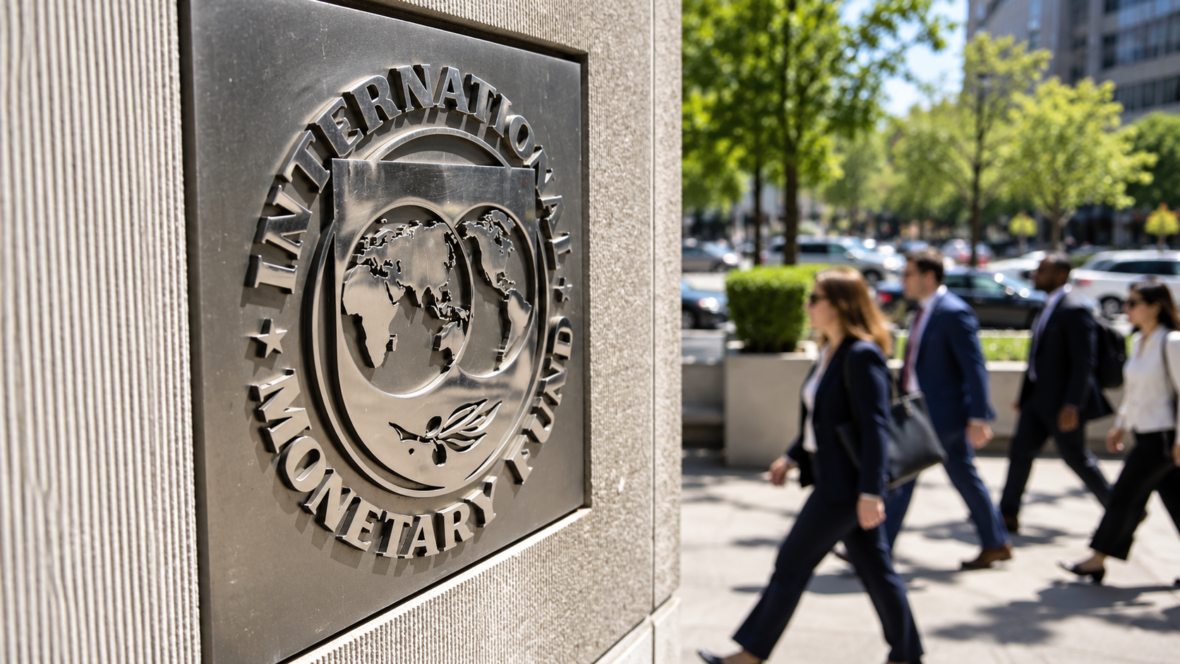
The protest took place at a meeting of the International Monetary and Financial Committee (IMFC). It is an advisory body of the IMF where countries discuss the global economy, financial stability and the fund’s priorities. It meets twice a year — in the spring and at the annual meetings — and the 54th meeting was held in Bangkok on 16–17 October. The committee does not impose sanctions on individual countries — it is a forum for discussion.
Work did not stop
Despite the delegates’ exit, the committee completed its work. The chair of the IMFC, Saudi Arabia’s finance minister Mohammed Al-Jadaan, reported that participants agreed a final statement. It addressed global economic risks, the consequences of wars and high energy prices.
IMF leadership at the meetings spoke about sovereign debt, inflation and threats to energy and food security. Kristalina Georgieva noted the resilience of the world economy, but also concern that growth is very uneven across countries. They also discussed the impact of artificial intelligence, and the war in Ukraine remained part of the broader conversation about risks to the world.
Money for Ukraine for 2027
45 billion from the EU — and that may not be enough
At the same time in Bangkok they discussed support for Ukraine for the coming year. Valdis Dombrovskis, European Commissioner, said that the European Union (EU) had already pledged 45 billion euros, but needs may prove larger. Therefore Brussels is negotiating with Canada, Norway, the United Kingdom, Japan and Switzerland.
These talks concern budgetary financing and are not directly related to the boycott of Siluanov. But they took place on the same days and at the same venue.
What next for the Russian delegation
As of 17 October, no one had announced that Russia would be expelled from the committee or that the rules of its participation would be changed. The main event remained the mass exit by officials during Siluanov’s speech. Ukraine and its partners, in the same week in Bangkok, managed to discuss both financial assistance and the economic consequences of the war.