




According to a study by DOU (Ukrainian developer community), over a year and a half the number of vacancies for artificial intelligence/machine learning (AI/ML) specialists in the Ukrainian defence industry has more than tripled.
Vacancies and application numbers are rising
On DOU in the first half of 2025 there were 37 vacancies in the AI/ML category, in the second half of 2025 - 99, and in the first six months of 2026 there were 129. Overall the Data Science (DS) / AI / ML / Data Engineering category accounts for 6% of all specialists in deftech.
The average number of applications per vacancy rose from about 7 in 2025 to 12.4 in the first half of 2026, i.e. roughly 80% compared with the previous half-year. Companies note that it is nevertheless difficult to find specialists with the required expertise.
Applications of AI/ML in defence
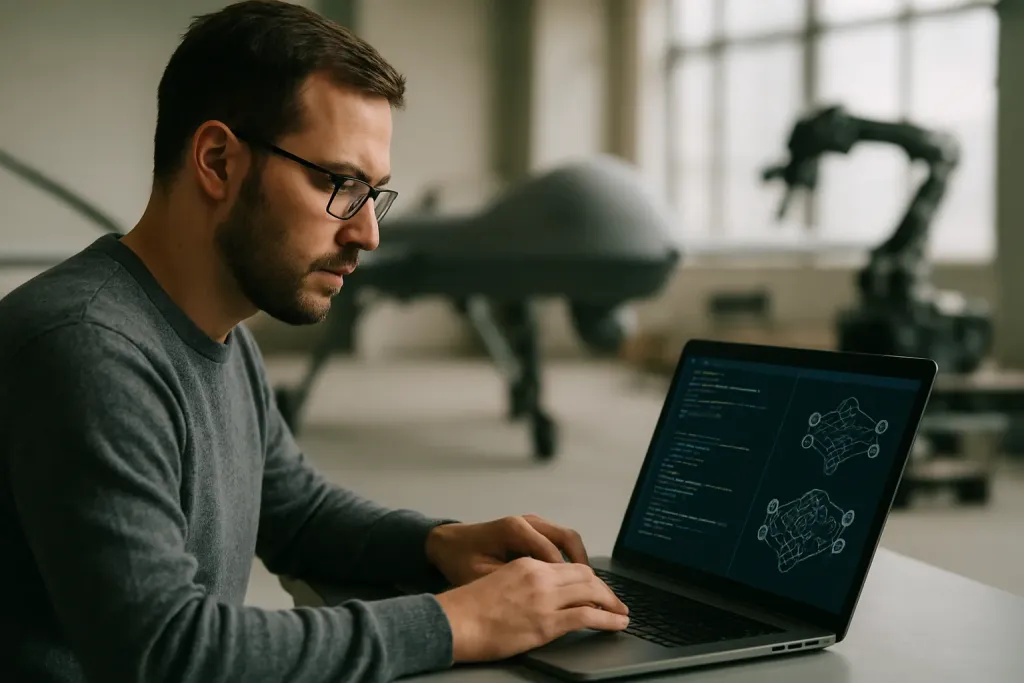
AI/ML engineers develop algorithms for object recognition, information analysis and the autonomous execution of individual tasks. When working with defence equipment they are involved in projects with drones, missile systems, surveillance systems and the processing of intelligence data.
Another area is navigation for ground robotic systems. In some cases such specialists can work remotely.
Requirements for candidates and salary approaches
Work in the defence sector requires knowledge of machine learning and an understanding of how software interacts with physical systems; a solid mathematical foundation is often more important than a specific programming language. Requirements cited include knowledge of physics, an understanding of hardware and software components and training at the level of a Data Scientist; the most popular languages are C++, Rust and Python.
Companies compete with civilian IT for talent. Norda Dynamics named the salary ranges they observe on the market, but specific amounts are not provided in the source. The final offer depends on the candidate’s experience and technical competencies, and prior experience in defence is not mandatory.