



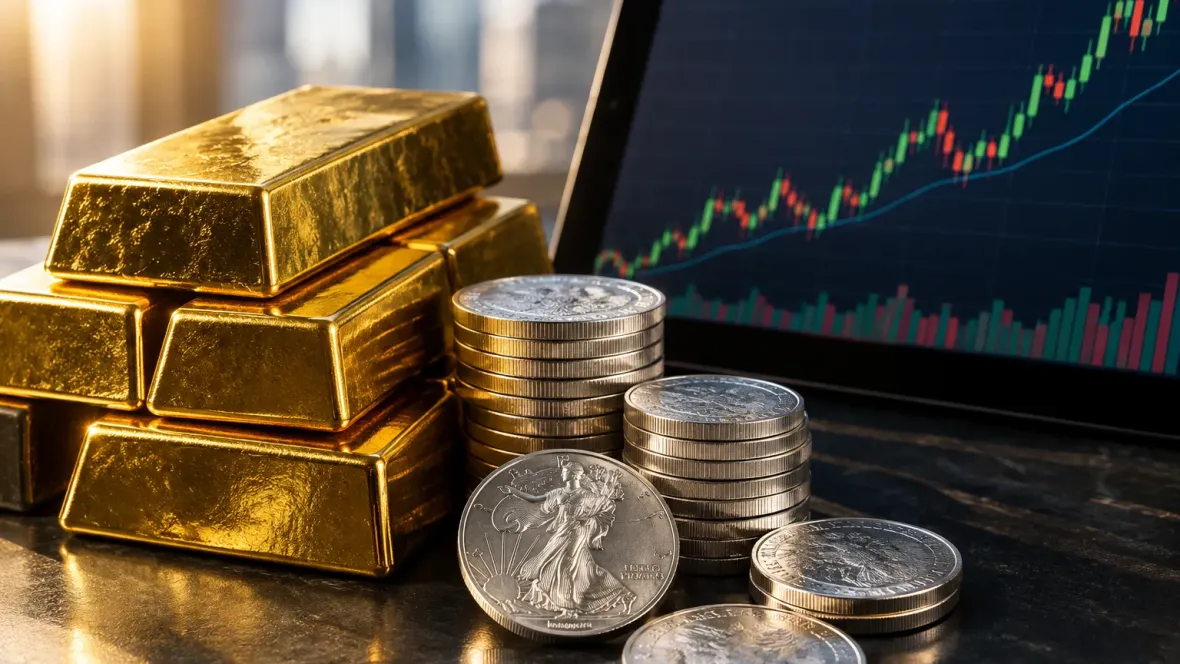
On 9 November the spot price of gold rose by 1,4% — to $4 123,46 per troy ounce, while silver added 2,5% and traded at $53,15 per ounce, continuing its advance after almost a 5-percent rise in the previous week.
Cheaper oil and political statements reduced supply concerns
One of the factors behind the price increase was a drop in oil prices after statements that new strikes on Iran are unlikely while negotiations to end the conflict continue. Cheaper oil reduces inflationary pressure, which can lessen the need for central banks to keep interest rates high.
Since gold does not pay interest, it becomes more attractive when expectations for borrowing costs decline. Demand was also supported by a weaker dollar, which makes precious metals cheaper for buyers outside the United States.
Demand from central banks and purchase volumes
The market was also supported by purchases by central banks: in the third quarter of 2026 global central banks bought a net 321 tonnes of gold. That added to background market demand and helped push prices higher.
Ahead of trading, gold had already recovered more than $250 after falling to an annual low of $3 869,85 per ounce at the start of November, and in the previous session the metal jumped nearly 3,4%.

US labour market data and expectations for the Federal Reserve System (FRS) policy
Strong US labour market readings raised the odds of a rate hike by the Federal Reserve System in December: after the data were published traders increased the probability of such a move to 81% from 71% before the release. In October payrolls grew faster than expected and unemployment fell to 4,1%.
Investors are waiting for new US inflation data: the consumer price index (CPI) is due to be published on Tuesday, 10 November, and the producer price index (PPI) on Friday. If inflation comes in above forecasts, it could strengthen the dollar and increase expectations of an FRS rate rise, putting additional pressure on precious metals.