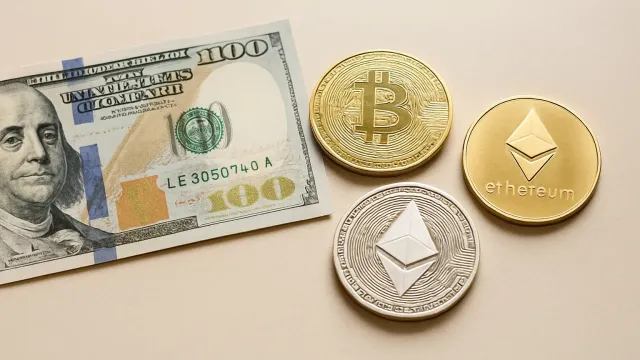




According to Chainalysis, Ukrainians are increasingly using cryptocurrencies in everyday financial transactions. The most common use cases are international transfers, exchanging hryvnia for cryptocurrency, storing value in stablecoins and paying for goods and services.
Spread of stablecoins and scale of holdings
Ukraine ranked seventh globally on Chainalysis’s 2026 Global Crypto Adoption Index. As of the end of 2025, the volume of stablecoins held by residents of Ukraine was estimated at $8.6 billion - the equivalent of 4.1% of the country’s GDP; by this measure Ukraine ranked second after Venezuela.
Cryptocurrencies are highly volatile, so asset values can change significantly in a short time. Stablecoins are used for fast transfers and for storing part of savings in digital form, but they are not equivalent to bank deposits.
International transfers and P2P operations
Between July 2025 and June 2026, the volume of cross-border stablecoin transfers between crypto wallets and Ukrainian wallets reached $12 billion. Of that sum, $2.41 billion accounted for retail P2P transfers (transactions up to $10,000), which put Ukraine first among 16 neighbouring markets for the volume of retail P2P stablecoin transfers.
P2P trading allows users to buy and sell cryptocurrency directly to one another for hryvnia, with settlement via a bank card or another payment method. Platforms temporarily hold the seller’s cryptocurrency, the buyer pays for the transaction, and after payment confirmation the seller completes the deal and receives hryvnia.

Storage, payments and risks
Many Ukrainians store part of their savings in the stablecoins USDT and USDC, which are pegged to the US dollar. Various ways to acquire stablecoins are available on platforms: through P2P, simplified conversion or classic spot trading.
Crypto payments are used to pay for freelance services, digital services and with some merchants, while crypto cards allow automatic conversion of cryptocurrency into fiat at the point of payment. At the same time there are risks of issuers freezing assets, wallet hacks, fraud and platform failures; “The general rule is to approach cryptocurrency as carefully as any other financial operation: don’t rush, check sources, do not share access credentials and consider the possibility of financial losses before making decisions,” Binance said.

Market regulation in Ukraine
On 19 November 2026 the National Bank of Ukraine (NBU) and the National Securities and Stock Market Commission (NSSMC) agreed an updated draft law on crypto-asset regulation, and on 25 November the Verkhovna Rada (the Ukrainian parliament) adopted law № 10225-d on the legalisation of the cryptocurrency market and rules on taxation and the operation of crypto exchanges. The law is to come into force on 1 July 2027 after the president’s signature.
The document provides for a preferential tax rate of 5%+5% on the total volume until 2028, thereafter 18%+5%. The draft also proposes taxing profit from the sale of cryptocurrency rather than the entire transaction amount, and defines who will issue licences and supervise crypto platforms. Legalisation of the market is expected to bring an additional 15 billion hryvnia to the budget. Cryptocurrency is not a legal means of payment in Ukraine yet - the official currency remains the hryvnia.