



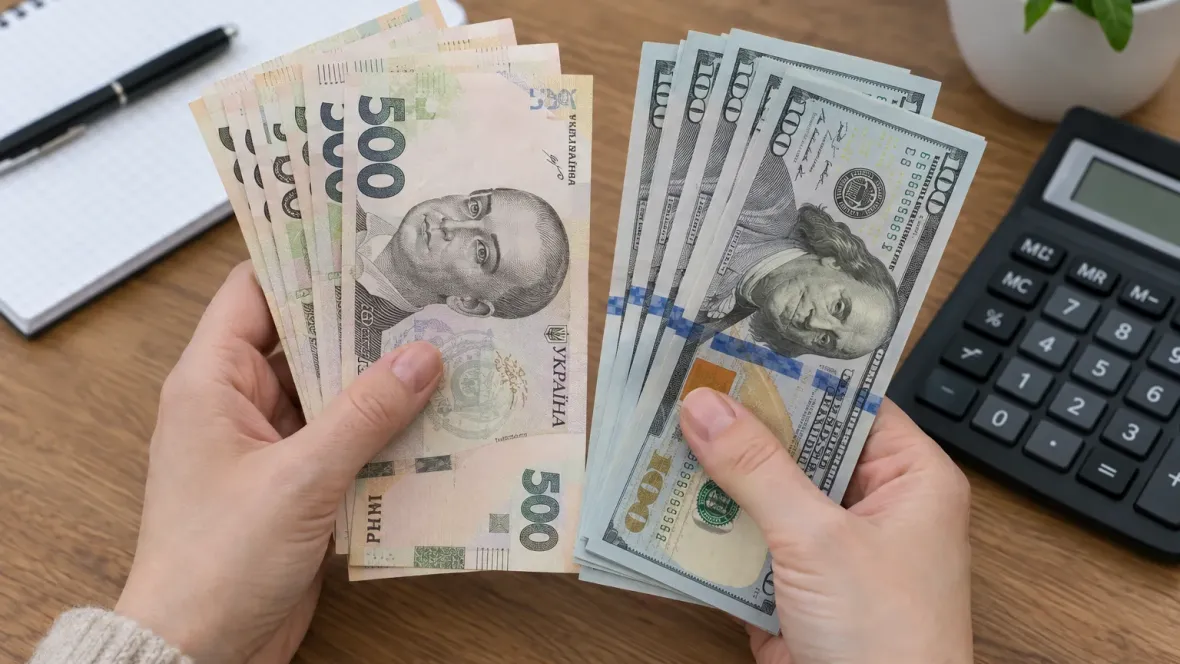
Dmytro Zamotaiev, director of the retail business department at Globus Bank, explained how best to preserve savings in the conditions of the full-scale war. He compared hryvnia deposits and the purchase of foreign currency and provided calculations.
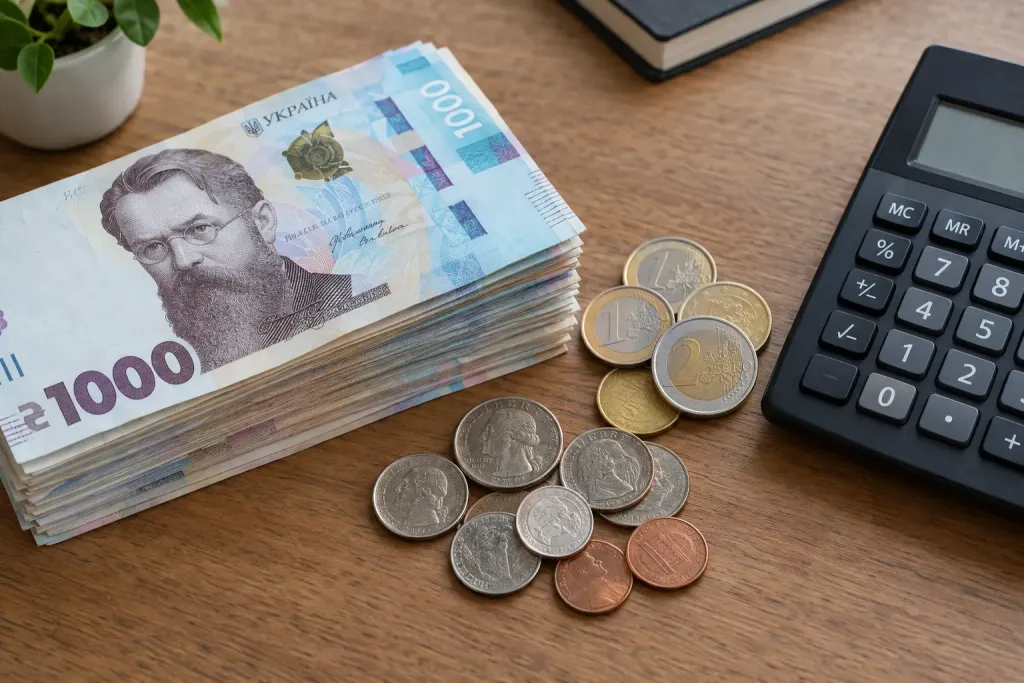
When choosing an instrument, it is worth weighing the likely appreciation of foreign currency against the guaranteed interest income on a hryvnia deposit, taking into account inflation and mandatory taxes: 18% personal income tax (PIT) and a 5% military levy. Zamotaiev provided concrete numerical examples for assessment.
For example, with 100,000 hryvnia at an exchange rate of 45.60 hryvnia per dollar one can buy approximately 2,193 dollars. To make buying dollars more profitable than a deposit with a net yield of 2.7%, the dollar would need to be sold at a rate above 46.83 hryvnia per dollar after three months; for a six-month deposit - above 48.15 hryvnia; for a one-year deposit - roughly 50.62 hryvnia.
The same logic applies to the euro: at an initial rate of 50.80 hryvnia per euro, buying euros would be more profitable than a three-month deposit if they are sold for more than 52.17 hryvnia; for a six-month deposit - above 53.64 hryvnia; for a one-year deposit - above 56.39 hryvnia. The values given are mathematical benchmarks and do not account for additional commissions or interest income from holding currency.
The main risks for hryvnia deposits are accelerating inflation and a sharp increase in devaluation pressure, when hryvnia depreciation could outpace net deposit earnings. At the same time, the “managed flexibility” regime and sufficient activity by the National Bank of Ukraine (NBU) are mentioned as factors that can keep such threats under control.