


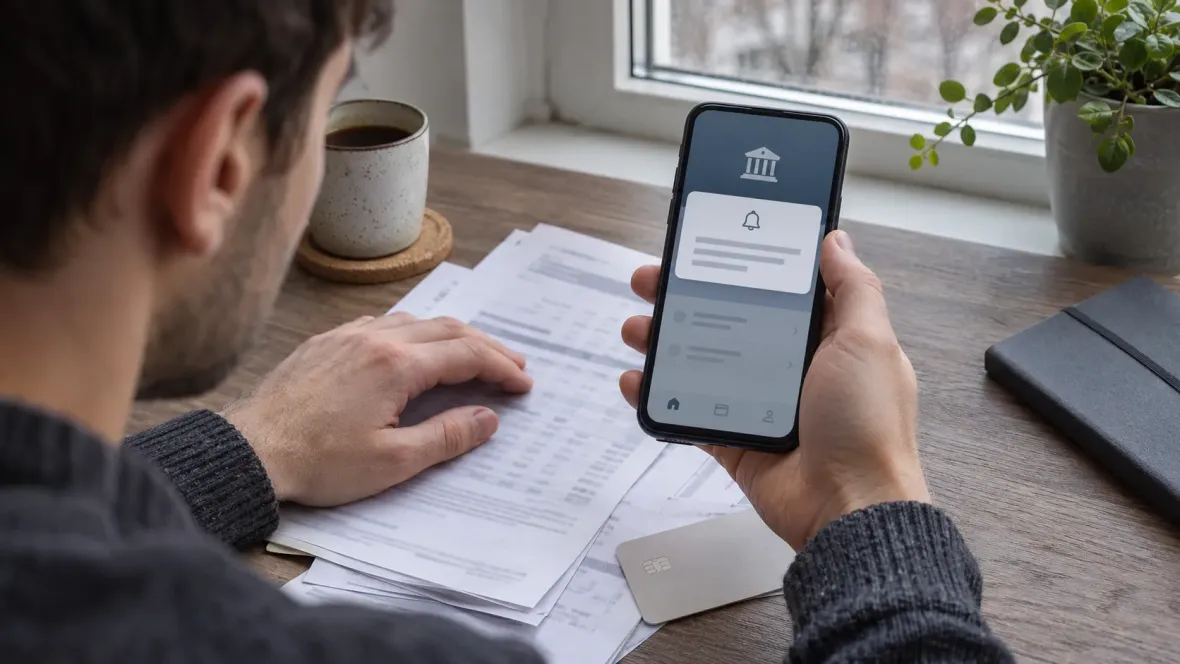
You received a transfer, and the next day your banking app shows a message: explain where these funds came from. The reason might not be the amount itself, but unusual activity, frequent incoming payments or that the turnover doesn’t match your declared income. To avoid having your card blocked, respond to the bank promptly and provide documents that explain the specific payments. And no, there is no safe threshold below which financial monitoring does not operate in Ukraine.
Which documents prove the origin of funds
A different document for each source
There is no universal certificate that covers every case. The bank wants to understand three things: where the money came from, what it was paid for and whether the amount is consistent with your actual means.
| Source of funds | How to prove it |
|---|---|
| Official salary | income certificate, data from the tax register |
| Income of individual entrepreneurs (FOP) | tax declaration, contracts, bank statements |
| Car sale | purchase-sale agreement, proof of payment |
| Property sale | notarised sale contract, documents showing settlement |
| Gift from relatives | deed of gift, documents proving the donor’s source of funds |
| Inheritance | certificate of inheritance rights |
| Earnings abroad | employment contract, pay slips, tax documents |
| Loan repayment | loan agreement, IOU, history of transfers |
Two real‑life examples
Sold a car for 480 000 hryvnia and the buyer transferred the money to your card? The bank will most likely request the purchase-sale agreement and proof of settlement. A freelancer who receives 70 000 hryvnia each month from foreign clients will need a different set of documents: service contracts, invoices, payment‑service statements and declarations. The main point is that the documents must explain those particular receipts. A work reference alone often does not explain much.
Why the bank flags even small amounts
What financial monitoring sees
The bank looks at the whole picture, not a single number: how often money arrives, from whom, and how consistent that is with your profession and declared income. For example: you declared a salary of 25 000 hryvnia, but in one month another 180 000 hryvnia arrived on your personal card from various people. That is not proof of wrongdoing, but it will definitely raise questions at the bank.
What most often raises suspicion
Here are the types of transactions that more often attract attention:
- regular transfers from many unknown people without a clear purpose;
- a sharp increase in turnover compared with previous months;
- large receipts that are immediately sent on to other people;
- a personal card that is consistently used to settle payments for goods or services;
- transactions that do not correspond to your profession or income.
One such operation does not automatically mean blocking. The bank assesses everything together.
From what amount do they check in 2026
The myth of 400 thousand
Ukraine does have a threshold of 400 000 hryvnia for certain reportable financial operations, when specific legal signs are present. But many mistakenly think this is a limit below which no one will ask questions. In fact, the bank can check a suspicious operation of any amount.
| Transaction amount | Can the bank check? |
|---|---|
| 5 000 hryvnia | yes, if there are grounds |
| 30 000 hryvnia | yes, depending on the nature of the operation |
| 100 000 hryvnia | yes, considering your financial profile |
| 250 000 hryvnia | yes, a document request is possible |
| from 400 000 hryvnia | yes, plus rules for reportable operations apply |
This is an illustration, not legal limits for blocking.
Transfer limits and financial monitoring are different things
Card transfer limits are set by the bank itself, depending on the client category and declared income. Even if a payment fits within your limit, the bank can still ask you to explain where the money came from.
How to respond to a bank request
First check that the message really came from the bank
The request may arrive in the monobank app, Privat24 or another bank’s app, by email or via another official channel. Scammers like to impersonate such messages, so respond only through the official app or verified support contacts.
How to write an explanation
The bank needs a clear story about the specific operation. For example, 150 000 hryvnia arrived for the sale of your property. State the date, what you sold, the amount, how it was settled and the contract details, then attach the documents where the bank requests. Don’t send everything indiscriminately: a work reference will not explain where a specific transfer from a buyer came from.
How much time you have to respond
There is no single statutory deadline; it is usually specified in the message. If you still need to obtain a document, ask for an extension. But remember: while the check is ongoing, operations may remain restricted.
If your card has already been blocked
What exactly has been restricted
A notification about restrictions does not necessarily mean the account has been closed for good. Sometimes the bank stops a single payment, sometimes it blocks all outgoing operations. So first find out exactly what has happened.
| Situation | What to do |
|---|---|
| One transfer does not go through | find out the reason and whether documents are needed |
| All outgoing operations are blocked | contact the bank and provide an explanation |
| The bank is checking the origin of funds | gather documents specifically related to those receipts |
| The bank refuses to provide service | find out the procedure for closing the account and returning the balance |
| Disagree with the decision | submit a written complaint to the bank, then contact the National Bank of Ukraine |
Keep everything in writing
Contact support in a way that creates a record: date, what you sent, what they replied. If an account is closed because of financial monitoring, the remaining balance must be returned in the manner provided by law. But if funds are frozen on lawful grounds, additional restrictions may apply.
Informal income, freelancing and transfers from relatives
If you work without formal employment
A designer receives 40-60 000 hryvnia per month from several clients to a personal card and has no work reference. What to show the bank? Client contracts, acceptance certificates, invoices and statements. However, this does not remove tax questions: if you regularly provide services or sell goods, consider registering as an individual entrepreneur (FOP) and declaring income.
PayPal, Wise and Payoneer
Statements from these services can be part of the explanation. For example, a freelancer received 2 000 dollars for a website via Payoneer and withdrew to their card. You will need the invoice, contract, payment confirmation and a statement showing the full path of the funds. The mere fact that money passed through Payoneer does not prove the legality of the income, so the bank may ask who the original payer was and what they paid for.
Money from parents and friends
Family transfers can also be checked. Parents transferred 300 000 hryvnia as a down payment for an apartment and such sums had not appeared on the account before? Be ready to show a deed of gift, statements and explain where your parents obtained the funds. If friends send 1 500 hryvnia each month for shared rent, that is not entrepreneurial activity, but you should be able to explain the purpose of these transfers.
How to avoid being blocked
Simple rules
You cannot completely avoid checks, but you can make them pass quickly. Keep documents for large receipts - you may need them even after several months. Update your declared income with the bank if it has changed. Keep personal funds separate from business funds; there is a separate account for FOP. State in the payment purpose what actually took place, and do not split a large payment into smaller ones, because associated transfers are analysed together anyway. And do not lend your card to other people: other people’s transactions on your account are a direct path to troublesome questions.
Will another bank help?
No. If you transfer 500 000 hryvnia from one bank to another, the new bank can also ask where the funds came from. A statement from the first bank will show the movement of funds, but not their original source. Attempts to “scatter” the sum across several cards usually only make explanations harder.
Can an account be closed without your consent?
When the bank is obliged to refuse
The law provides cases when a bank must cease service: for example, if a client does not provide documents for verification or the risk is deemed unacceptably high. But not every request about income ends with account closure - it all depends on the circumstances and your explanations.
Where to complain
If you disagree with the decision, file a complaint with the bank. If that does not help, contact the National Bank of Ukraine (NBU) via the official website. The NBU will check whether the bank followed the law, although filing a complaint itself does not automatically lift any restrictions.
How to prove savings for a large purchase
An example with savings
A person officially earns 35 000 hryvnia per month and over three years saved 600 000 hryvnia for a flat. When they deposit that sum into their account, the bank may ask where the money came from.
| Indicator | Amount |
|---|---|
| Monthly official income | 35 000 hryvnia |
| Savings period | 36 months |
| Total income | 1 260 000 hryvnia |
| Savings | 600 000 hryvnia |
| Share of savings in income | 47.6% |
This is a hypothetical calculation without taxes and living expenses. The bank looks not only at arithmetic but also at how plausible it is that someone saved almost half their salary. Therefore a single income certificate may not be enough: you may need income records for several years, declarations and evidence of the savings themselves.
Tell the bank in advance
You don’t need to submit anything before every ordinary transfer. But if a large payment for a car or property is coming up, especially in cash or foreign currency, it’s better to ask the bank in advance how to conduct it and which documents to prepare. A request about the origin of funds is not an accusation but a standard procedure - the better prepared you are, the quicker it will pass.