




How write-offs look for owners and workshops
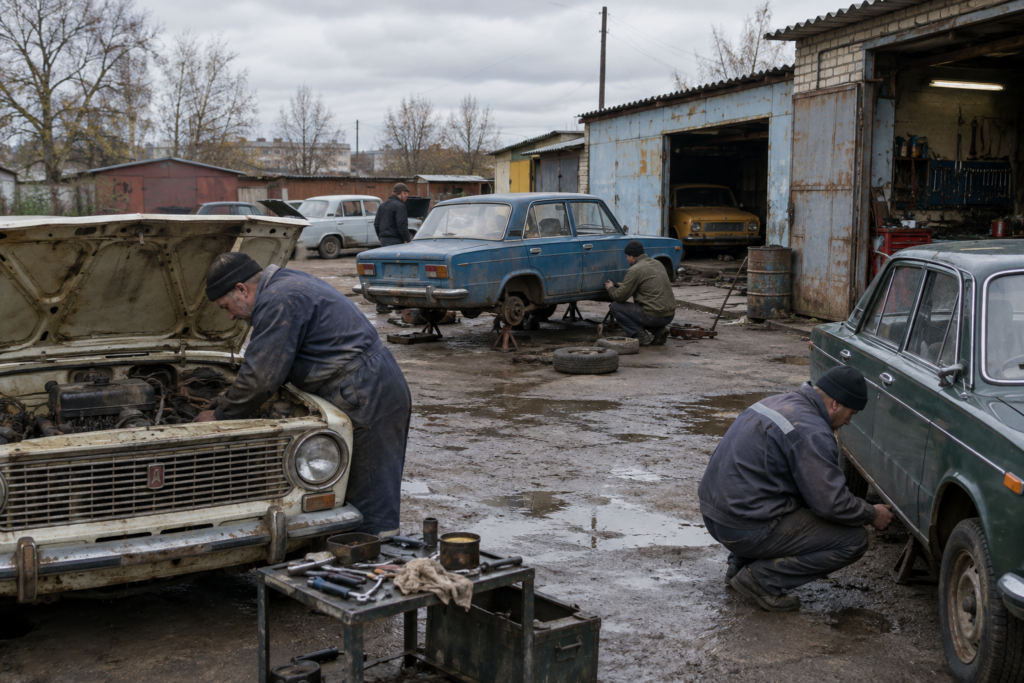
For the owner of an old car, a write-off is rarely a celebratory occasion. Often the decision is made after another repair when restoration costs exceed the vehicle’s residual value and it is simpler to arrange formal write-off. For farms and private workshops this means paperwork and the logistics of old bodies that must be properly documented and disposed of.
Local realities also show another side of the process. In villages and small towns owners keep driving outdated models for longer due to limited finances and the remoteness of service centres. In large cities write-offs are more often linked to mechanical failure beyond repair or to the economics of repair.
Which makes and models were most often written off
In August the largest group were VAZ/Lada vehicles — 627 write-offs or 28,0% of the total. In second place was GAZ with 159 cases and third was ZAZ with 131 cases. The top three together accounted for 917 write-offs, which is 40,9% of the total.
Most common models and their share
At model level the lead was held by VAZ/Lada 2106 with 109 write-offs. Other models appear in the statistics with smaller figures, but the 2106 proved the most common in write-off filings this month. The overall picture shows that among makes the largest share belongs to old Soviet and post‑Soviet models.

Age groups and types of vehicles written off
The median age of vehicles at write-off was 25 years, which matches the figure for previous comparable periods. Vehicles aged 21 years and over accounted for 1 443 write-offs, or 64,4% of the total. The largest age groups were 11−20 and 31−40 years, and they proved almost equal in size.
By type, most write-offs were passenger cars: 1 662 were registered, or 74,2% of the total. Trucks accounted for 335 filings, which is 14,9%. Compared with July there were fewer passenger cars than in July, when there were 1 858, and trucks numbered 400. The reductions in the two categories were 196 and 65 respectively, and together this explains the bulk of the overall decline.
Geography of write-offs and monthly dynamics
The most write-offs were registered in the city of Kyiv — 224. Next were Kharkiv Oblast with 181 filings, Dnipropetrovsk Oblast with 169, Kyiv Oblast with 168 and Lviv Oblast with 160. Together the top five accounted for 902 write-offs, or 40,2% of the total, indicating a concentration of the procedure in major administrative centres.
In August 2026 in Ukraine 2 241 vehicle write-offs were registered. This is 10,7% less than in the comparable period in July. Compared with August last year the figure fell by 5,4%. This is what the data from the Instytut doslidzhennya avtorynku show. indicate.
Monthly dynamics show that the minimum in 2026 was in February with 1 927 write-offs, and the maximum was in May with 2 553 filings. The current August result is lower than both July and August last year, so the write-off market shows fluctuations dependent on seasonality and other factors such as service availability and repair costs.