

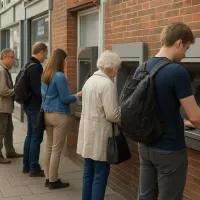

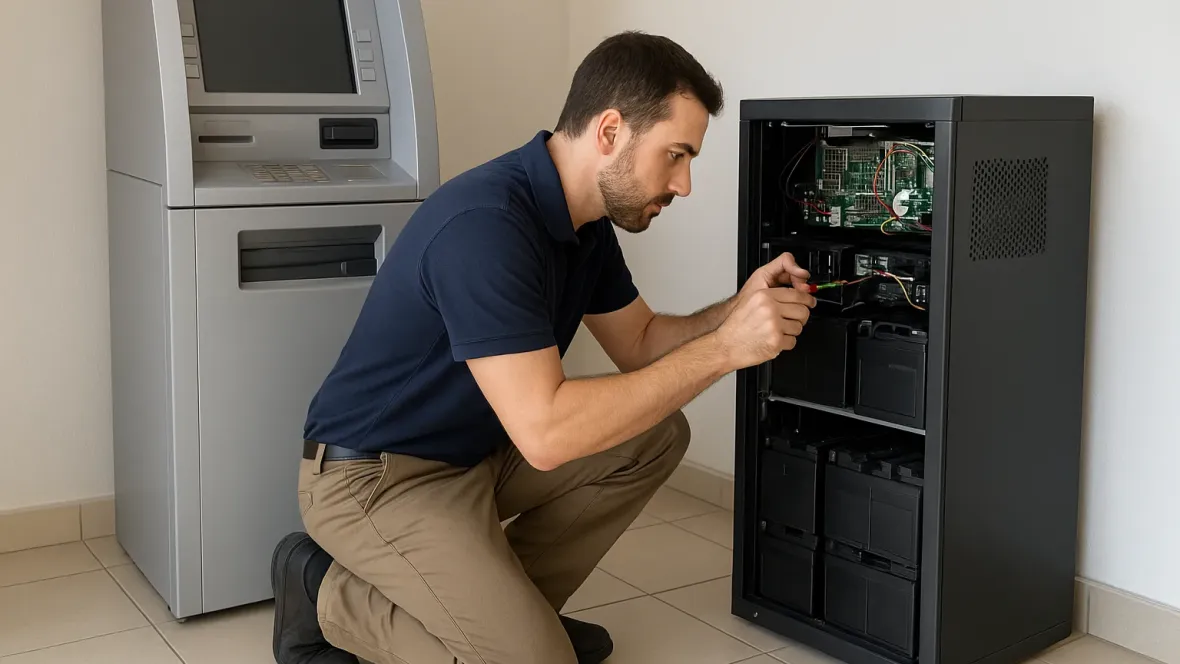
According to Mastercard, during blackouts customers judge banks not by the design of their mobile app but by whether they can withdraw cash, pay by card or access the service they need. Regular power cuts have made the continuity of payment infrastructure part of operational resilience.
Why a generator is not enough
For an ATM or POS terminal to complete a transaction, power to the device itself may be sufficient - but that is not always enough. Network equipment, communications channels, servers and transaction-processing systems are also required; if even one component lacks redundancy, the transaction can fail.
Even when a building has a generator, individual elements - for example the provider’s switch in a technical room - can remain unprotected. For that reason, dependencies on landlord and provider equipment must be checked and backup arrangements agreed with them.
Alternative communications channels and their role
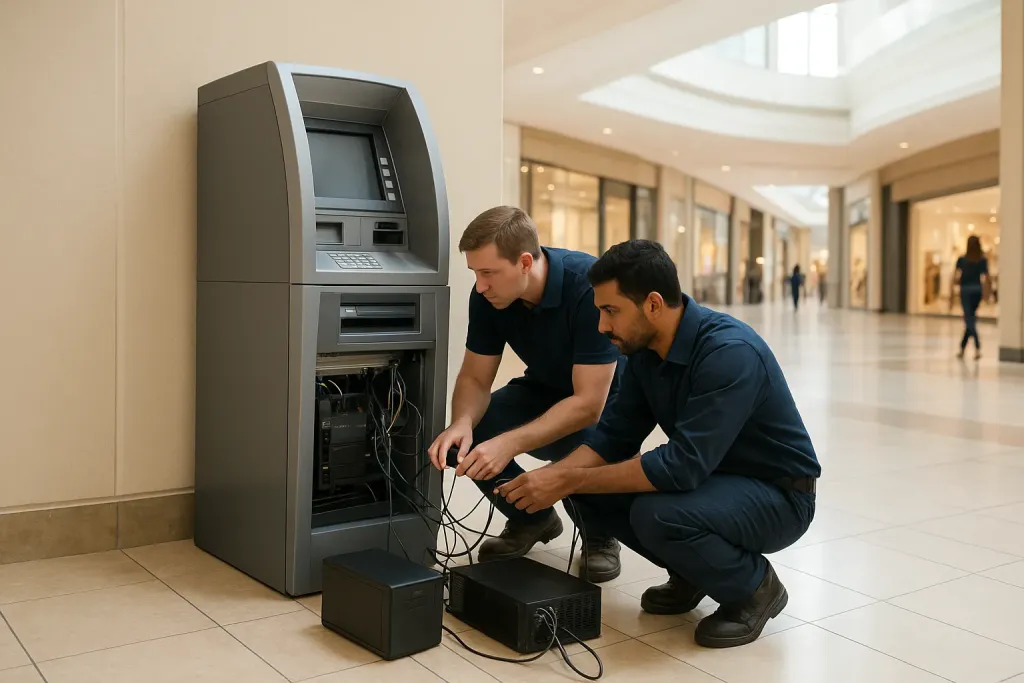
In some cases it makes sense to provide alternative communications channels, for example routers with multiple SIM cards, to avoid dependence on a single provider or physical switch. Power to the terminals themselves does not guarantee access to transaction-processing systems if the communications channel is disrupted.
When preparing infrastructure, you need to consider which elements depend on landlord equipment and agree backup power for them. This applies to ATMs, server cabinets and network devices in branches and points of sale.
Power switching and monitoring of the uninterruptible power supply (UPS)
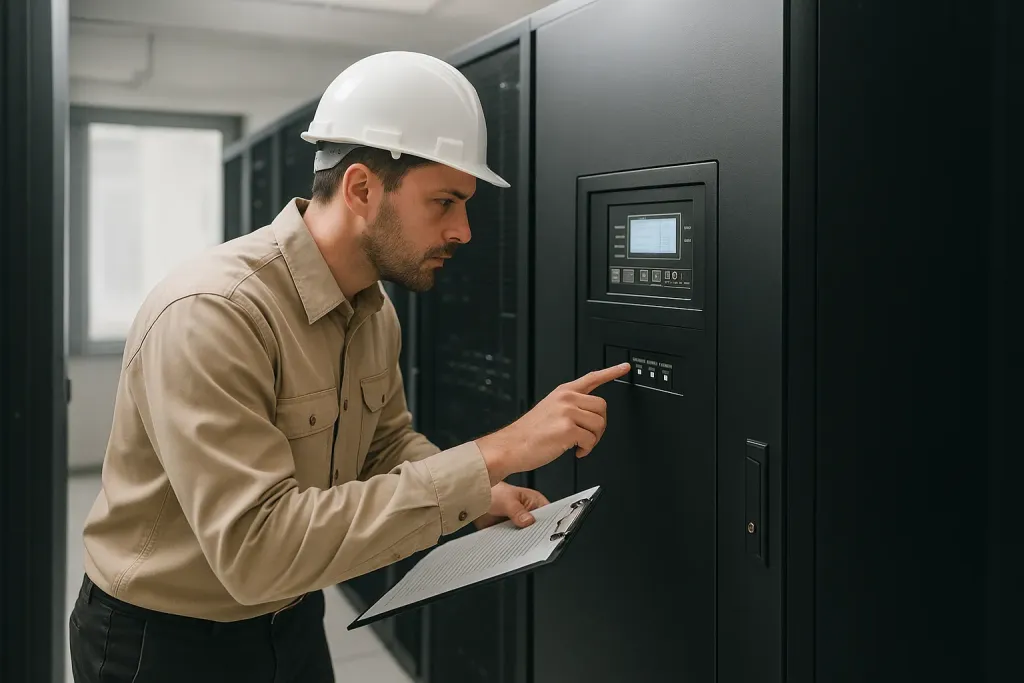
It is important not only how long a power cut lasts but also how equipment responds when the power source switches. For critical equipment, an uninterruptible power supply (UPS) is used; you need to correctly calculate the load and runtime and regularly check the system’s readiness.
Monitoring should include battery charge level, the load on the UPS and the charging process after power is restored. If the battery charge does not increase, the device can appear to be functioning while the next outage will cause downtime; where supported, these indicators can be forwarded to the technical team and alerts configured.
Local UPS solutions and examples of effectiveness
One approach is to install a UPS directly beside critical equipment: network devices, cashier areas and server cabinets. Specifications are chosen taking into account load power, required autonomy time and operating conditions.
For example: a PowerGuard UPS with double conversion and a LiFePO₄ battery was installed inside an ATM cabinet; during outages the ATM ran from the battery for 4−6 hours. The company estimated the battery’s life at over 4000 charge/discharge cycles versus 200−250 for a lead‑acid battery, and recorded 44% fewer failures of sensitive ATM components.
Necessary steps to ensure payment continuity
To move to systematic site-level backup you need to audit equipment, calculate loads, select local UPS units and set up monitoring. Coordinated technical and organisational work with landlords and providers reduces the risk of downtime.
Typical steps mentioned: check dependencies on landlord and provider equipment, agree backup power for key elements, provide alternative communications channels and configure UPS monitoring with alerts for the technical team.