




Changing workplace can strip an employee of a mobilisation deferment: an employer has the right to cancel a booking before the official termination of employment, and moving to a new job does not always proceed without a gap in booking.
Employer can remove booking before the end of employment
The current procedure allows an employer to cancel a booking before the official termination of the employment relationship. The employee may continue to perform their duties at the enterprise, but without the deferment from mobilisation.
“An employee can submit a resignation and continue to perform their duties, but lose the booking. A person may still be working at a critically important enterprise and carrying out work needed by the state, yet no longer has a deferment from mobilisation,” explains Serhiy Kasyanchuk, managing partner of the law firm Primus Partners.
Early termination of a booking is not always unlawful — the decisive factors are the grounds and circumstances provided for by legislation. At the same time, the annulment mechanism is sometimes used during labour disputes, which can create additional risks for the employee.

Problems in the “Rezerv+” register after booking cancellation
After a booking is annulled, territorial recruitment and social support centres may initiate the entry of information about violations of military registration rules. In everyday speech this status is sometimes referred to as being “wanted”, and it is not always based on well-founded grounds.
Kasyanchuk notes that it is precisely the marks in the register that can become an obstacle to arranging a new booking: a new employer may not be able to re-book the employee until the relevant status is resolved. At the same time, the annulment of a booking in itself is not an automatic indication of a violation of military registration rules.
Gaps between bookings and their risks
There is no automatic transfer of a booking from one employer to another: the deferment is tied to a specific enterprise and is issued according to procedure. Therefore, a transfer between two critically important enterprises can be accompanied by a period without a booking.
“The main danger is the interval between the termination of the previous booking and the issuance of the new one. During this period a person may be subject to mobilisation,” stresses Serhiy Kasyanchuk. He adds that prior preparation for a transfer does not guarantee the absence of such a gap.
What to do if your booking was removed without explanation
If an employee discovers that their booking has been terminated, they should find out the reason and the legal basis for the employer's decision and request written explanations and documents. If there are grounds to challenge the employer's actions, one can appeal to the State Labour Service of Ukraine or take the case to court.
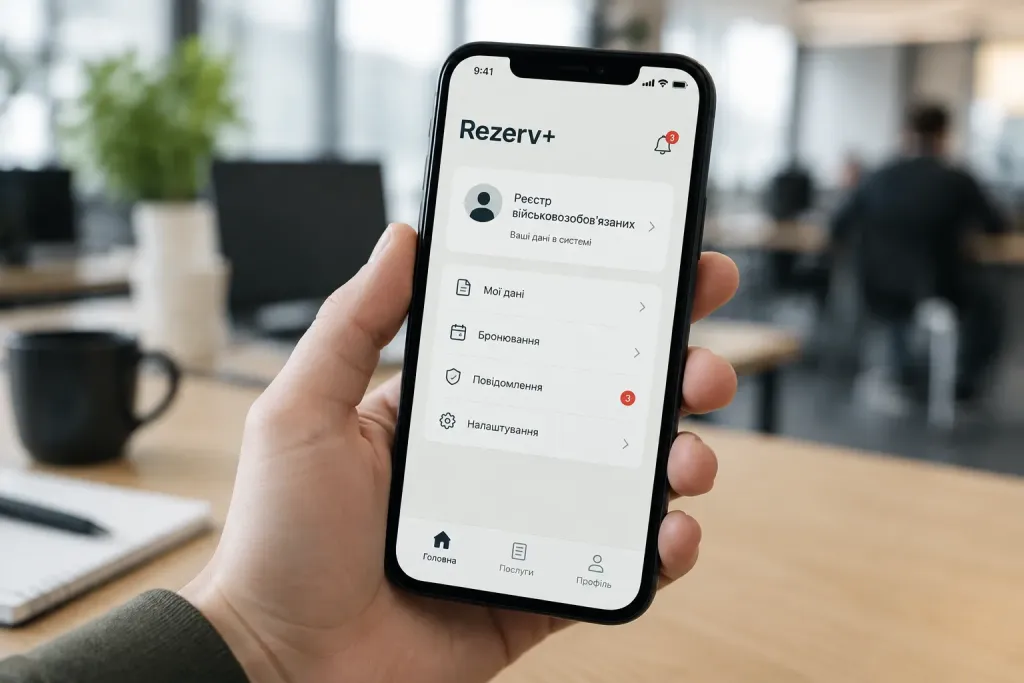
It is also necessary to check the information in the register of those liable for military service and, if necessary, challenge any marks entered there through administrative or judicial procedures. You can check the current booking status in the “Rezerv+” application, but an annulment request submitted by an employer does not necessarily mean that the deferment has already ended.
“Not every early annulment is unlawful. However, the existence of such a mechanism should not be used to create an unwarranted risk of mobilisation for the employee,” notes Serhiy Kasyanchuk.