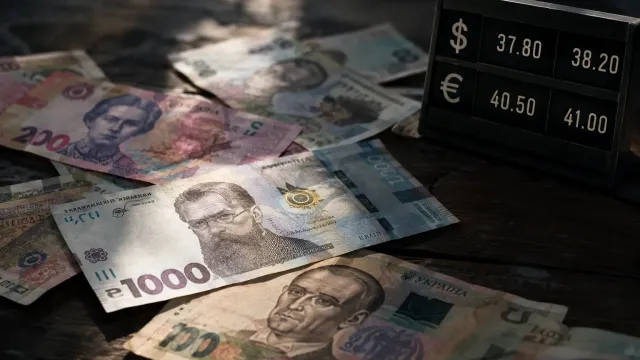




Globus Bank’s chairman, Serhiy Mamedov, said that by the end of 2026 the official dollar exchange rate in Ukraine could approach 46 hryvnia.
Forecast for the official and cash dollar rates
According to the forecast, the official dollar rate could be in the range 45−46 hryvnia, with the banker citing around 46 hryvnia as a reference point. He also mentioned the possibility of a lower level - about 45.5 hryvnia.
In the cash market, he estimates the dollar could cost roughly 46.4 hryvnia, while a conditional maximum level for exchangers would be 46.5 hryvnia. “So I would leave a wide range of 45−46 hryvnia for the official rate,” he noted.
Budget figures and the role of the National Bank of Ukraine (NBU)
The draft state budget for the end of 2027 assumes an exchange rate of about 47−48 hryvnia per dollar, but this figure, the banker said, is primarily needed by the Ministry of Finance to calculate revenues and expenditures.
The NBU is not obliged to hold the rate at the level set in the budget. The regulator focuses primarily on macroeconomic stability and inflation and, in the event of a serious rise in prices, will concentrate on containing them rather than achieving a specific currency target.
The euro rate and external factors
If the official dollar rate is around 46 hryvnia and the euro-to-dollar ratio remains at 1.10, the Ukrainian euro rate could be approximately 50.5−51 hryvnia. The banker does not expect the euro to climb back to this year’s peak of about 52.5 hryvnia by the end of the year.
Decisions by the US Federal Reserve (the Fed) and the European Central Bank (ECB) on interest rates will affect international currency relationships. Mamedov suggests the dollar could strengthen somewhat at first and the euro-to-dollar ratio could fall to about 1.08, but next year the European currency may recover that decline.

Short near-term forecast from Unex Bank
Between 16−20 November, in the view of Hanna Zolotko, a board member and director of treasury operations at Unex Bank, the hryvnia is likely to remain under pressure due to a structural currency deficit, high import needs and significant state foreign-exchange expenditures.
According to her, this pressure will be manageable provided the NBU maintains active interventions and stable inflows of international financial assistance. Interventions are purchases or sales of foreign currency by the NBU to influence the exchange rate.
What to watch in the coming days: the NBU’s official rate, the interbank market (the market for foreign-exchange transactions between banks), the cash exchange rate at bureaux de change, decisions by the Fed and the ECB on interest rates, the volume of NBU interventions and inflows of international assistance.