




Microsoft unveiled MAI‑DxO, an artificial intelligence (AI) system that sequentially analyses a patients condition, determines which examinations are needed and adjusts the diagnosis as new data arrive.
How the system reproduces a clinician’s sequence of actions
MAI‑DxO differs from models that form conclusions based solely on already collected symptoms and images: it reproduces the sequence of actions a clinician takes during an examination. First, the system identifies what information needs to be obtained from the patient and which symptoms require further attention.
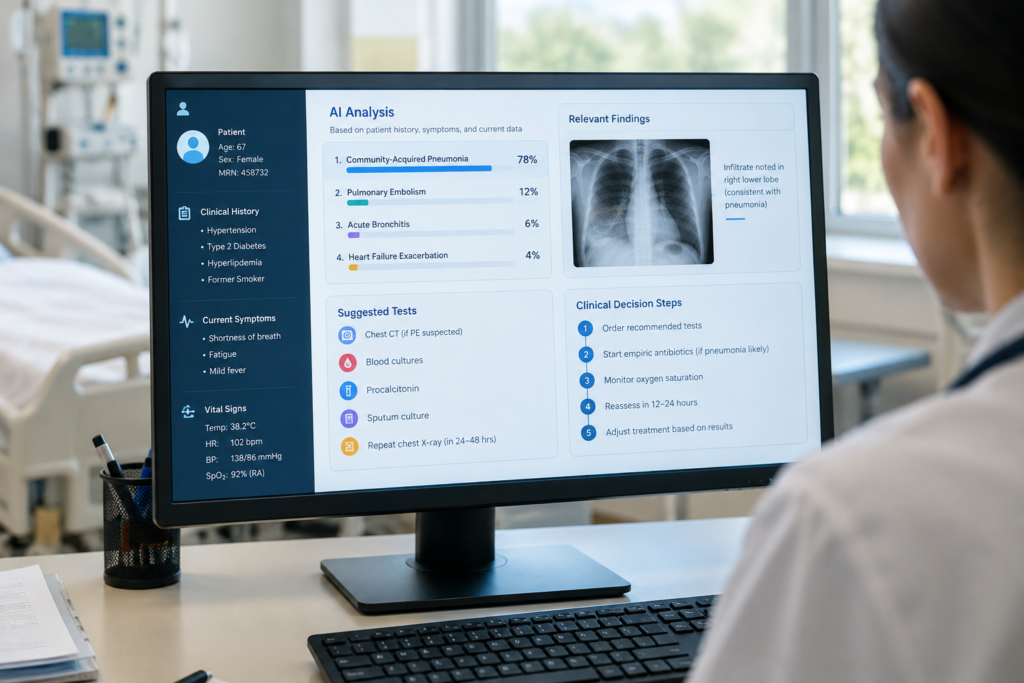
Next, MAI‑DxO selects laboratory tests or other investigations, evaluates the obtained results and, if necessary, suggests next steps. An orchestrator — a coordination mechanism that organises the work of several virtual clinical agents — is used to review and revise previous hypotheses.
Results of clinical case testing
Researchers evaluated the system on over 300 complex medical cases from clinical case reviews. In this testing the AI with a diagnostic orchestrator outperformed general practitioners by more than twofold in diagnostic accuracy.

The system also showed better results in scenarios based on data from emergency departments. At the same time, the researchers draw attention to the difference between such trials and real clinical practice and note that these tests demonstrate the technology’s potential but do not prove the same level of accuracy in work with patients in hospitals.