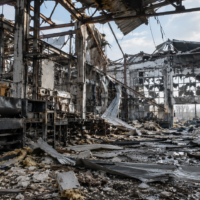



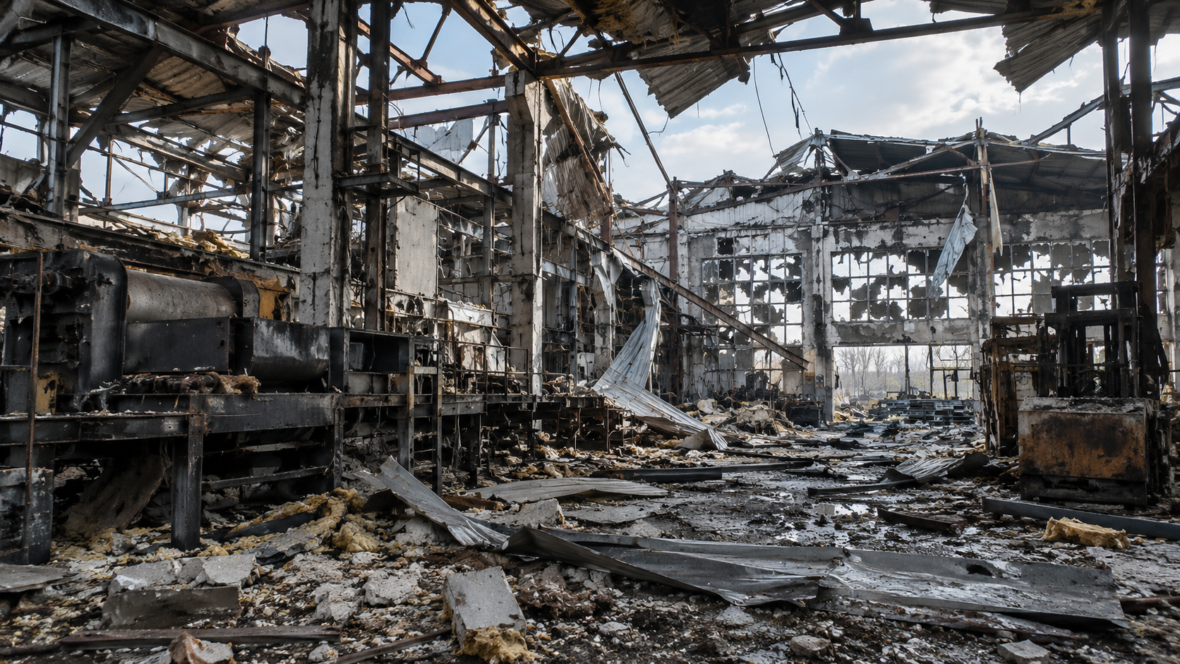
A rocket destroyed a warehouse, a workshop is idle, machines burned along with orders for months ahead. For thousands of Ukrainian entrepreneurs this is not a hypothetical situation. The Ministry of Justice (Minjust) has prepared a memo for businesses on how to record destruction, calculate losses and gather evidence to later claim compensation.
The scale is staggering. According to the ministry, as of 22 October, expert institutions confirmed damages from Russian aggression of over 6 trillion UAH for January–September 2026 alone. However, this is the total of expert findings, not money paid out. Confirmed damage does not mean that compensation will be paid automatically.
What can be counted as losses
It is not only about destroyed buildings. A company can document damaged or destroyed assets — that is, workshops, warehouses, shops, equipment, vehicles and stock. Costs of repair and restoration can be included, as well as profit the company failed to earn due to the halt in operations, and money spent to relocate the business to another region. Separately, Minjust mentions the illegal use of companies’ intellectual property on occupied territory.
Photograph first, clear up afterwards
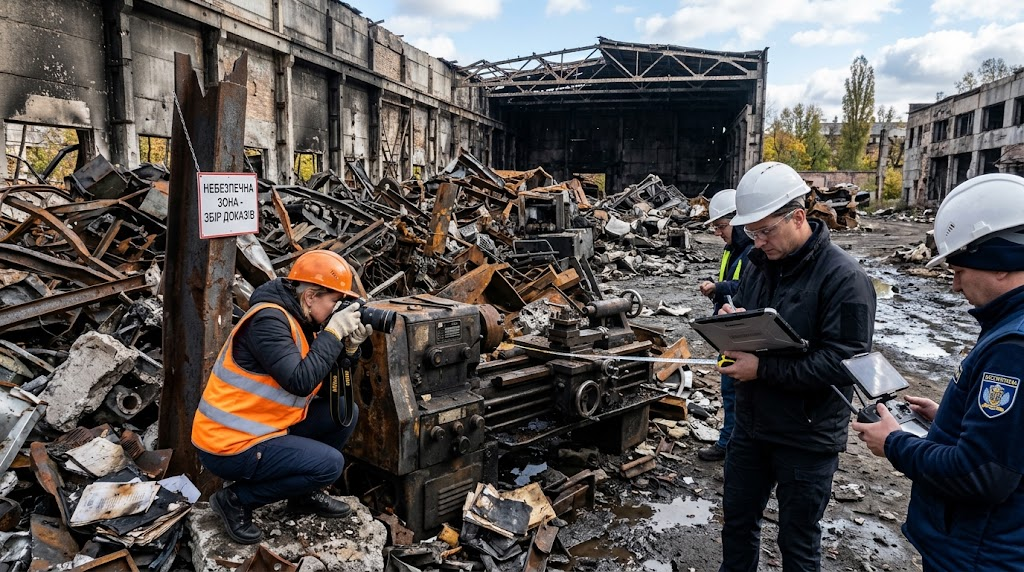
After a strike the first instinct is to quickly clear the rubble and get back to work. But if you immediately cover the roof and send damaged equipment to the scrap yard, an expert will have a hard time determining what and how much was damaged months later. So, if it is safe, damage should be documented before repairs. If there may be unexploded ordnance on the site, entry is allowed only with permission from the relevant services.
You should photograph everything: the building as a whole, every room, each machine and remaining stock. The following documents will also be needed:
- documents proving ownership or the right to use the property;
- inspection, survey and inventory reports;
- purchase contracts for equipment and goods, delivery notes and invoices;
- materials from the police or the State Emergency Service (DSNS), if they attended the scene;
- estimates and receipts for repairs, and reports from appraisers and experts.
If some documents were burned or remain on occupied territory, electronic archives, bank statements and copies of documents held by counterparties can help. Companies whose assets are located in occupied areas should keep anything that proves the existence of those assets before the occupation, as well as any photos or information about what happened to them afterwards.
Lost profits are the hardest
Proving that a business lost income is much harder than showing a burned warehouse. The mere fact of downtime is not enough. You need to show how much the company could realistically have earned under normal conditions, and prove that the lost profit was due to the war, not a fall in demand or other market reasons.
The memo gives a simple example. A furniture factory had a contract worth 2 million UAH, while fulfilling it would have cost 1.5 million UAH. Therefore the lost profit is roughly 500,000 UAH, not the full 2 million UAH. The final figure is determined by an expert, who considers whether the contract was realistic and subtracts costs that the company did not incur because of the stoppage. Financial statements for previous periods, contracts, orders and data on production capacity serve as evidence.
Who calculates the losses
Officially the amount of damage is most often determined by forensic experts. Institutions within Minjust carry out construction-technical, economic, commodity and transport expert assessments. A construction specialist will estimate how much it will cost to restore a workshop, a commodity expert will calculate the value of goods, and an economist will analyse financial losses. Demand for these services is growing: 3,600 expert assessments were carried out in 2025, and in the first nine and a half months of 2026 there were already more than 4,500. Minister of Justice Denys Maslov emphasised that it is expertise that allows businesses to substantiate the amount of damage.
The most common mistakes relate to evidence. A company states that a piece of equipment cost several million, but has neither the purchase contract nor technical specifications. Another frequent problem is counting the same loss twice, for example claiming the full value of a destroyed machine and at the same time claiming repair costs for it.
How to submit a claim via “Diia”
The International Register of Losses Caused by Russian Aggression has been accepting claims across all 43 categories since 30 September. It covers damage caused from 24 February 2022. Since 10 September the category C3.3 “Relocation (evacuation) of business” has been open. This covers not only relocation expenses such as trucks, dismantling and reassembly of equipment, but also lost profit as a result, part of the costs of accommodation for employees and the costs of restarting operations.
A claim is submitted by the head or an authorised person via Diia (the state e-services app). You need to log in, choose the category, describe what happened and which assets were affected, state the amount and upload evidence. Some data will be pulled automatically from state registers by the system.
Money will not arrive immediately after submitting a claim. The register currently only accepts, checks and records claims; the substantive consideration and determination of compensation amounts will be done by the Compensation Commission. Minjust does not advise waiting until the end of the war to start collecting documents: inventory, document collection and expert assessments can be carried out now, and visits to dangerous sites should be made when it is possible and safe to do so.