


What it looks like for buyers and owners
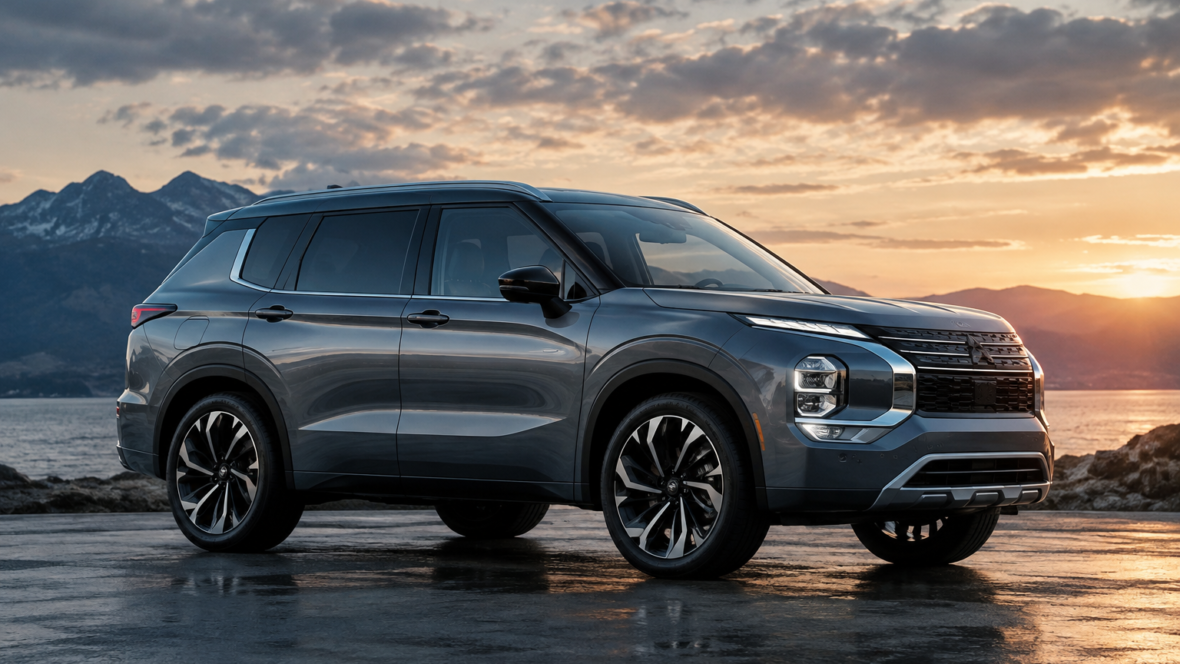
When you think about a model change you imagine new shapes and slightly better fuel economy. For an Outlander owner that means interest in the updates, and for a buyer it raises the question of whether it is worth waiting for the next generation. This is especially true for those evaluating the hybrid versions and wanting to understand the real electric-only range.
Dealers and service networks will also feel the movement. If the new model turns out to be fundamentally different, some who planned to buy now may postpone their decision for a few years. That increases pressure on sales staff, since the Outlander is a key model for the brand in the market.
Appearance and interpretation of the concept
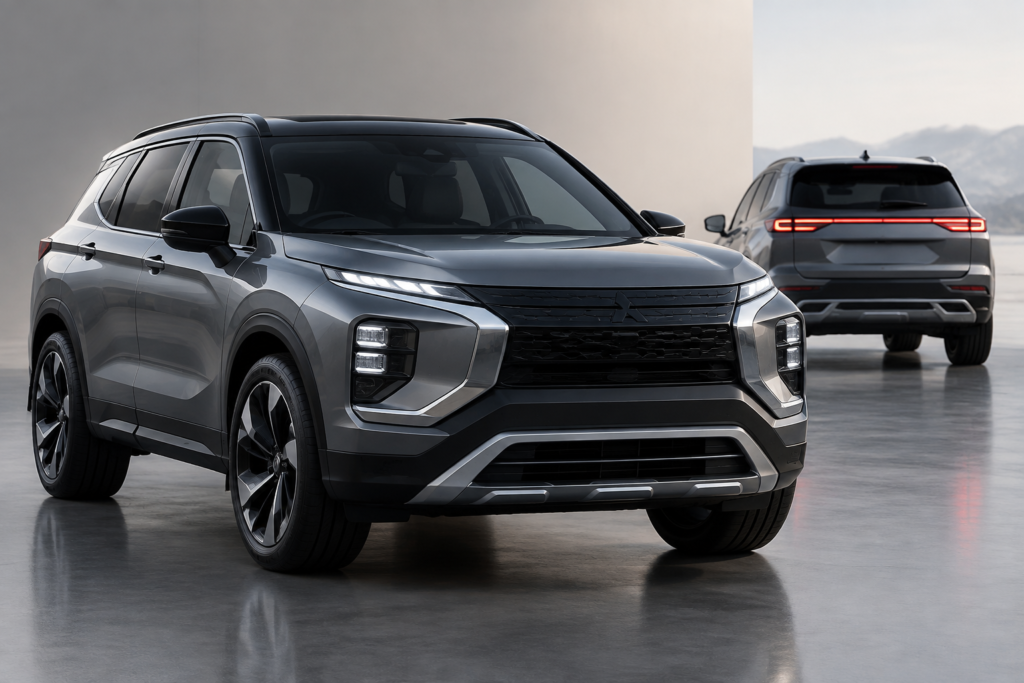
The new Outlander will draw on last year’s Elevance concept. The show car’s proportions were close to the current car, but the styling looked more futuristic. If the designers of the production version adopt these solutions, the crossover will get two-tier headlights with daytime running lights that sweep down along the bumper and a grille painted to match the body.
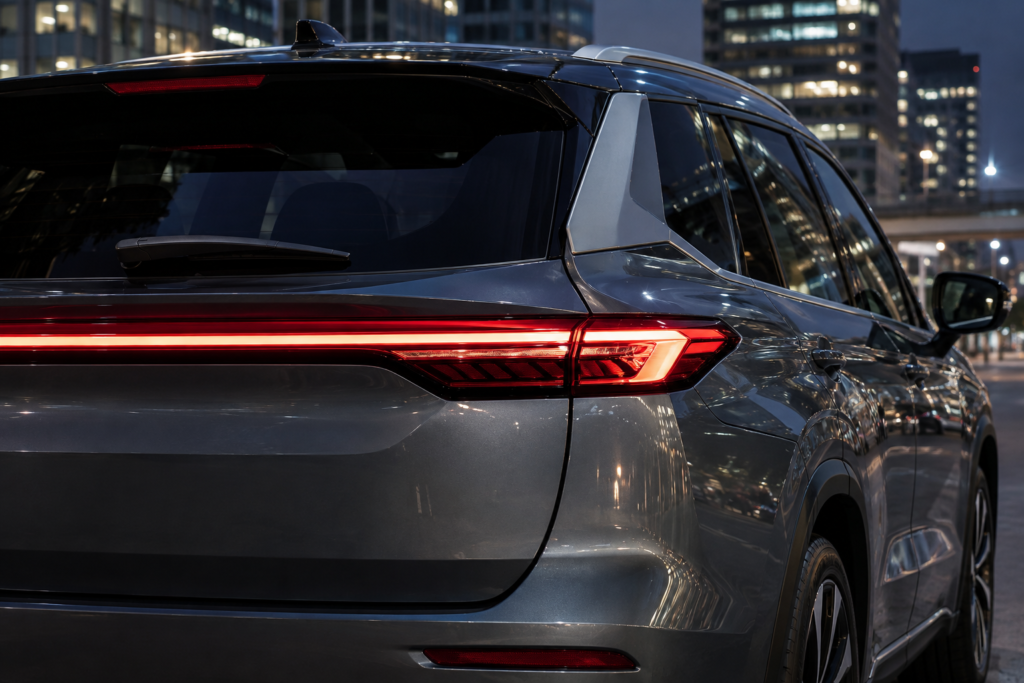
However, not all the concept’s treatments will make it into production. For example, the massive side windows were dismissed as too impractical. At the rear, a continuous LED strip and taillights stretching along the C-pillars are likely to appear — this will give the car a modern look without radical structural changes.
What’s changing under the bonnet and for driving
Real change is expected in the hybrid department. The current plug-in hybrid has a 2.4-litre naturally aspirated engine and two electric motors producing a combined 297 hp with an electric-only range of over 100 km. That configuration has already made the Outlander an important model in the line-up.
In the fifth generation the number of electric motors could double to four. This would allow one motor per wheel and not only increase power. The S-AWC (Super All Wheel Control) all-wheel-drive system would gain new controllability features that could improve dynamics on different surfaces.
Market consequences and risks for the brand
The Outlander has long been a sales driver for Mitsubishi, especially in the US market. In 2025 dealers sold almost 36 000 of these cars, although that is slightly fewer than the year before. Updating the model always carries the risk of losing part of the audience, so the pressure on engineers and designers is high now, as Carscoops reports.
How demand changes will depend on how much the production version preserves the concept’s appeal and how successfully the new hybrid technology is implemented. For buyers it is important to understand that the main innovations will be in drivetrain technology rather than a revolution in styling, so the decision to buy the current model or wait for the replacement will come down to individual priorities.