


The start of shifts in shopping and what caused them
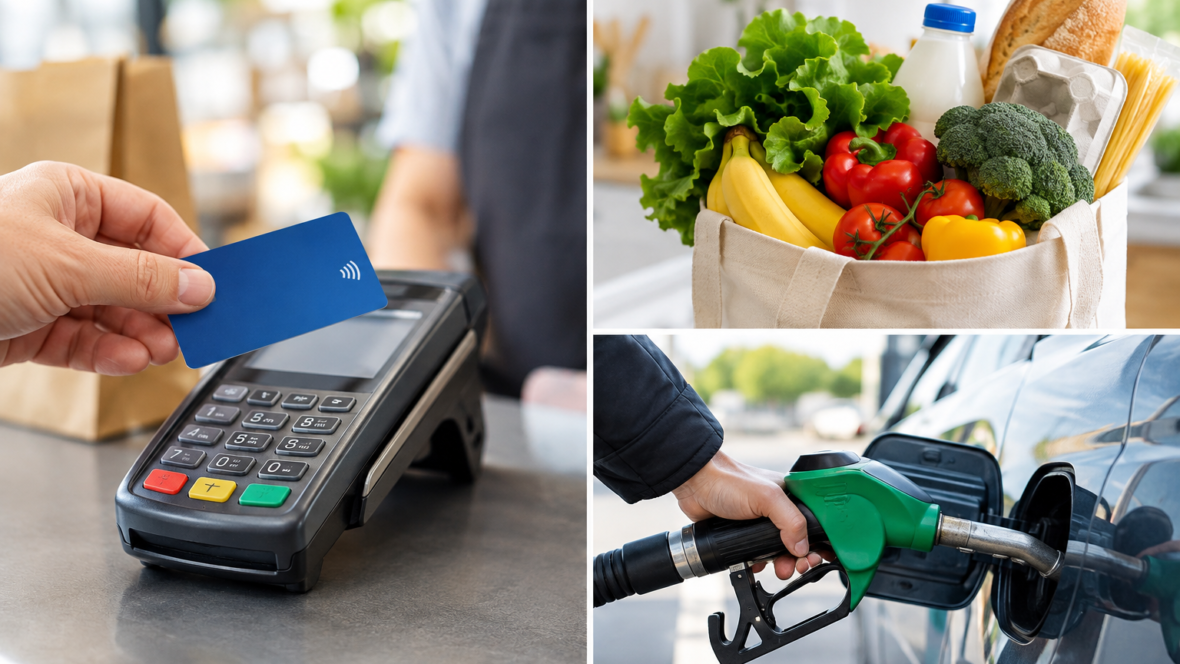
Ukrainians continue to spend most on food and fuel. In September the largest share of card turnover was in supermarkets and filling stations (АЗС). For the month, supermarkets accounted for 38% of turnover in the acquiring network of Raiffeisen Bank, while filling stations accounted for a further 19%.
This structure of spending reflects households’ everyday needs. The average receipt in supermarkets remained modest at 286 UAH, whereas a visit to a filling station cost on average 968 UAH per purchase. That means these categories make up the core of many households’ monthly budgets.
First changes in buyer behaviour and the market’s reaction
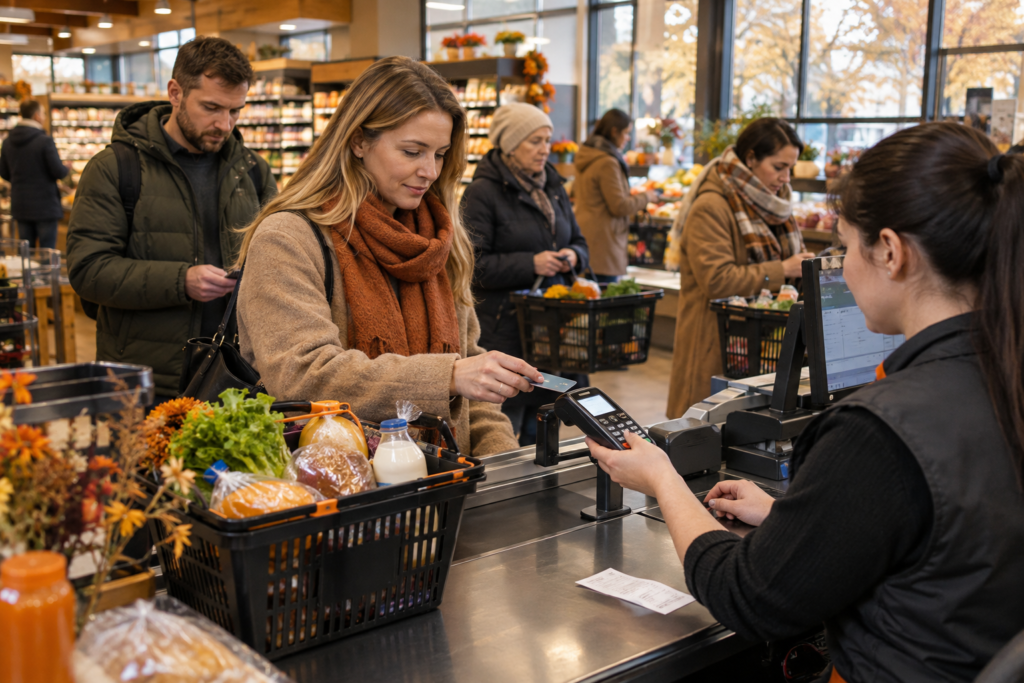
With the start of large-scale attacks on businesses and retail infrastructure, consumer behaviour began to change. Damage to shops and warehouses led to temporary shortages of some high-demand goods. As a result, some shoppers started stockpiling items that disappeared from the shelves.
In August this showed up as increased demand for pasta, salt, sugar, cereals and canned goods. At the same time, many people make unplanned purchases driven by discounts and promotions. According to a survey, 76% of respondents allow themselves impulse purchases, while 11% said that since the start of the full-scale war they have been controlling their spending more carefully.
The situation in September 2026 and what it means for your wallet
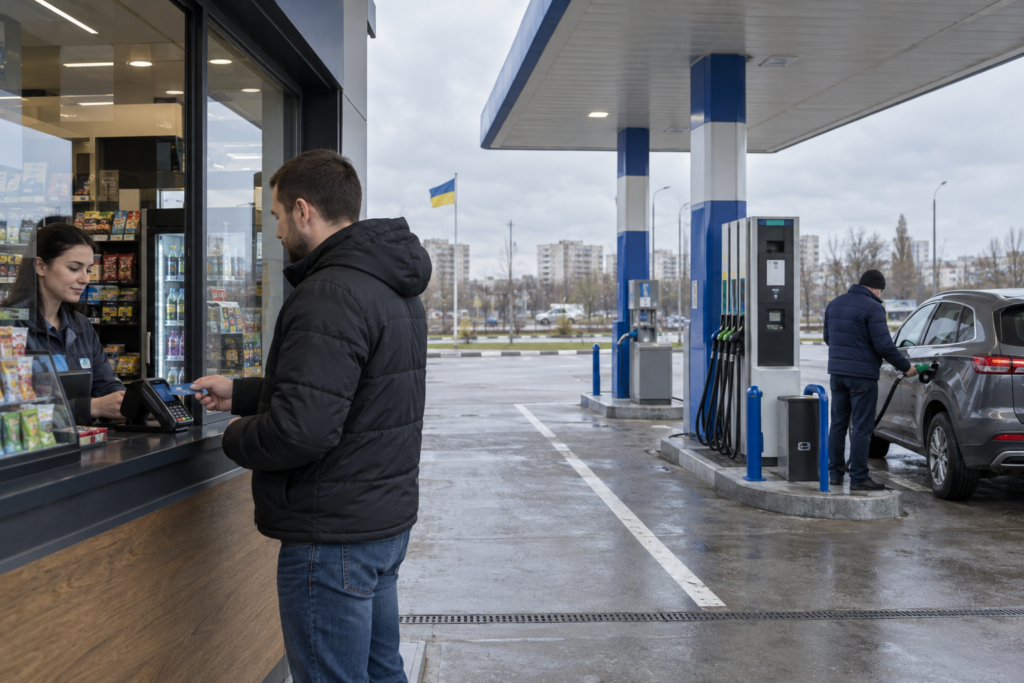
In September, via POS (point-of-sale) terminals of Raiffeisen Bank Ukrainians paid by card for purchases totalling 22 bn UAH. The average receipt across the network of bank terminals was 443 UAH. Together the top five categories made up around 72% of the turnover of the bank terminal network; the top five included supermarkets, filling stations and also clothing and building materials stores.
The largest average receipts were in segments that are not part of everyday spending. In clothing stores the average purchase was 2043 UAH, while in the building materials category the average receipt was 1018 UAH. This underlines the difference between routine living expenses and one-off larger purchases.
What changes for the consumer and what steps to take
For the typical shopper, the main change is that the bank card has become the primary payment instrument across almost all sectors. As Yevhen Vasyltsov, head of the acquiring department at Raiffeisen Bank, notes, the acquiring network is expanding and card acceptance is being made as convenient and technologically advanced as possible for retail and small business. He adds that you can connect to card acceptance and order a POS terminal simply via a smartphone, and that terminals continue to accept payments for a long time after power cuts.
What you can do right now. First, review your household budget taking into account the average receipts of 286 UAH in supermarkets and 968 UAH at filling stations. Second, if you are an entrepreneur and do not yet accept cards, find out about POS connection options through your bank or a provider. Third, plan stockpiles only of the goods your family actually needs to avoid spending extra on panic buying.
If you want more detail, review the bank’s statistics and the survey on impulse purchases to understand three main things. First, what has changed. Second, whether it affects your wallet. Third, what actions you should take to adjust spending or set up your business to accept card payments.