



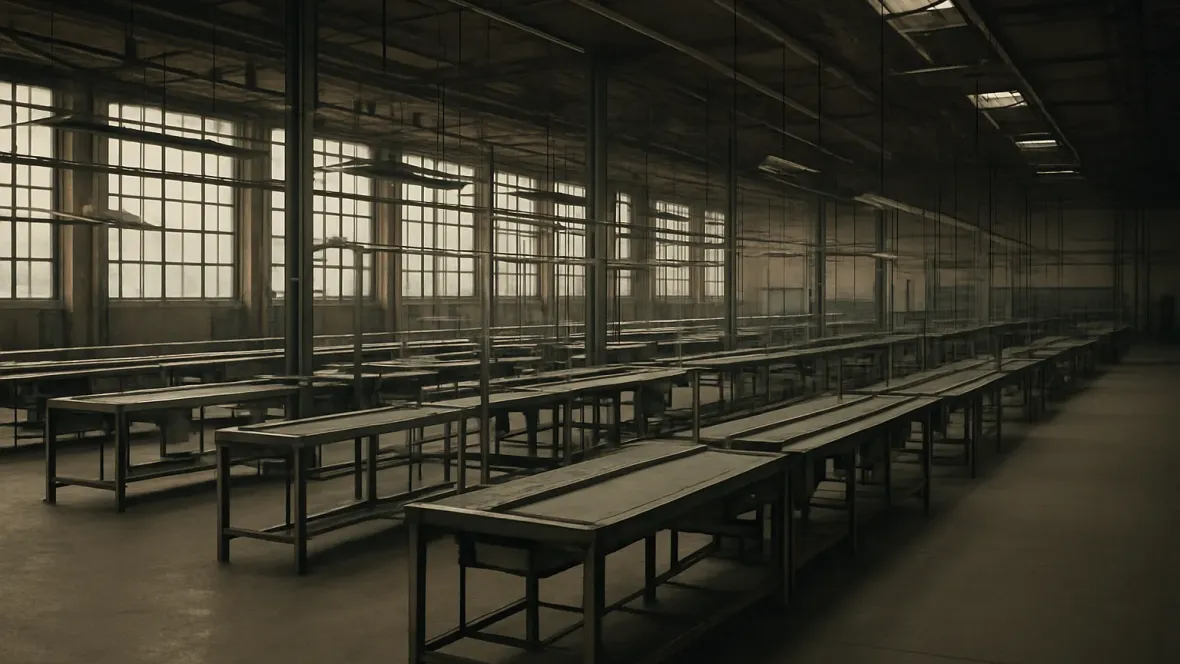
According to calculations by the association Gesamtmetall, Germany is losing around 10,000 industrial jobs per month; in August 2026 the metallurgical and electrical engineering industries employed about 3.72 million people, which is 94,100 (2.5%) fewer than a year earlier.
Scale of industrial job cuts
Since 2019 the sector has lost almost 350,000 jobs, and employment has fallen for 35 consecutive months on a seasonally adjusted basis. In many subsectors the employment level is significantly lower than before the onset of the prolonged industrial crisis.
Across manufacturing as a whole, employment fell by 144,100 people (2.7%) over the year. The decline affected a wide range of industries, not just isolated plant closures.
Sectors hardest hit
The biggest losses were recorded in the automotive industry: at the end of the first half of 2026 some 691,500 people were employed by car manufacturers and suppliers, 42,300 (5.8%) fewer than a year earlier. This is the lowest employment level in the sector since 2005.
Jobs were also cut in mechanical engineering, the chemical industry and metalworking, the association notes. As a result, the overall employment structure in industry is shifting towards fewer jobs.
Reasons cited for the reductions
The main reason cited is high labour costs. In addition to wages, factors include energy prices, taxes and levies, bureaucracy and international competition, which make many orders unprofitable to produce.
Wage negotiations are also complicating the situation: the union IG Metall is demanding a 5% pay rise while employers are offering substantially less. According to the association, production of metallurgical and electrical engineering goods is currently roughly 15% below 2018 levels, and new investment will only be forthcoming if long-term profitability is assured.