


What is changing in veterans’ support
Ukraine is creating a State Veterans’ Support Service that is intended to change how assistance is provided to people after military service. Instead of having to search for institutions and services themselves, every veteran will be assigned a personal specialist who will coordinate the entire route of support.
According to the press service of the Ministry for Veterans’ Affairs, the service will be formed on the basis of DNT «Derzhavnyi veteranskyi prostir» and will have central and regional levels with a network of accompanying specialists.
Comparison of the old and new working models
| Before | After |
|---|---|
| Veterans searched for rehabilitation and social support services and institutions themselves | A specialist will be assigned to the person who will coordinate the entire support route |
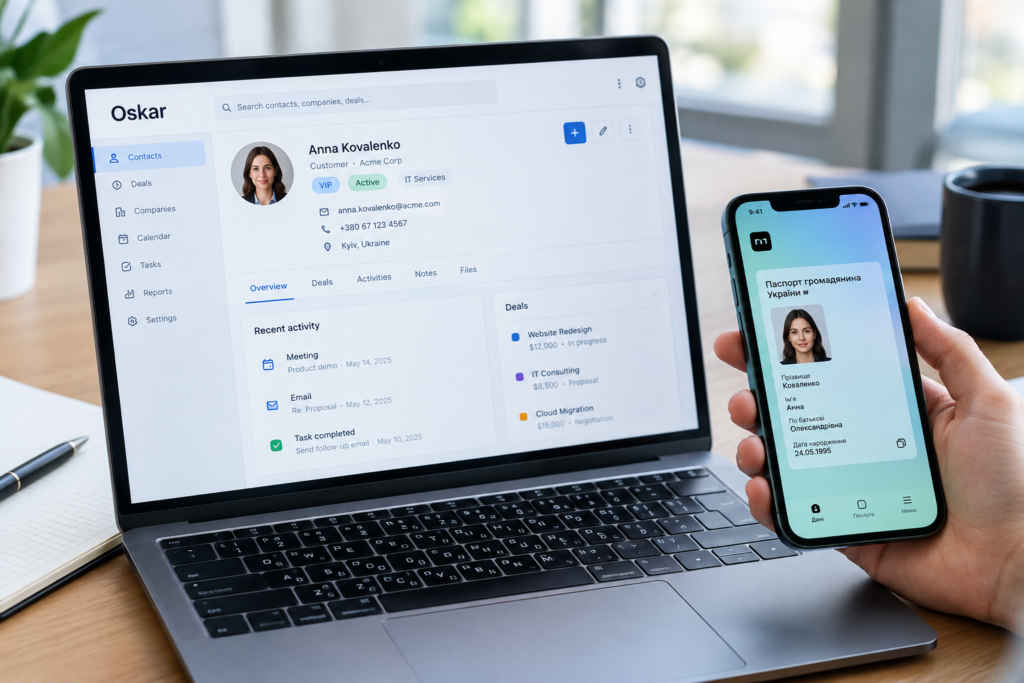
| Assignment and coordination took place fragmentarily without a single system | After demobilisation or the conclusion of the military medical commission (VLK) a person’s data is sent to the customer relationship management (CRM) system “Oskar” and the veteran receives a specialist |
| One specialist could be responsible for up to 100 people, which made support difficult | A points-based system will be introduced to assess case complexity and distribute workloads |
| Coordination with different agencies was often complicated and poorly informed | The specialist will coordinate interaction with the Ministry of Defence, the Ministry of Health, local authorities and the employment service |
| Individual plans were rarely drawn up centrally | On the basis of the assessment, an individual action plan will be created that the veteran can approve through “Diia” |
How the support service will operate
The State Veterans’ Support Service will be established on the basis of DNT «Derzhavnyi veteranskyi prostir», with a central office and regional divisions. It will include a network of specialists supporting veterans and demobilised persons who will work on cases locally.
After demobilisation or the conclusion of the military medical commission (VLK), a person’s data will be automatically entered into the customer relationship management (CRM) system “Oskar”. A plain-language explanation of terms: first, the VLK is the military medical commission that issues a medical opinion on a person’s health. Second, a CRM system is an electronic database for managing requests and service pathways.
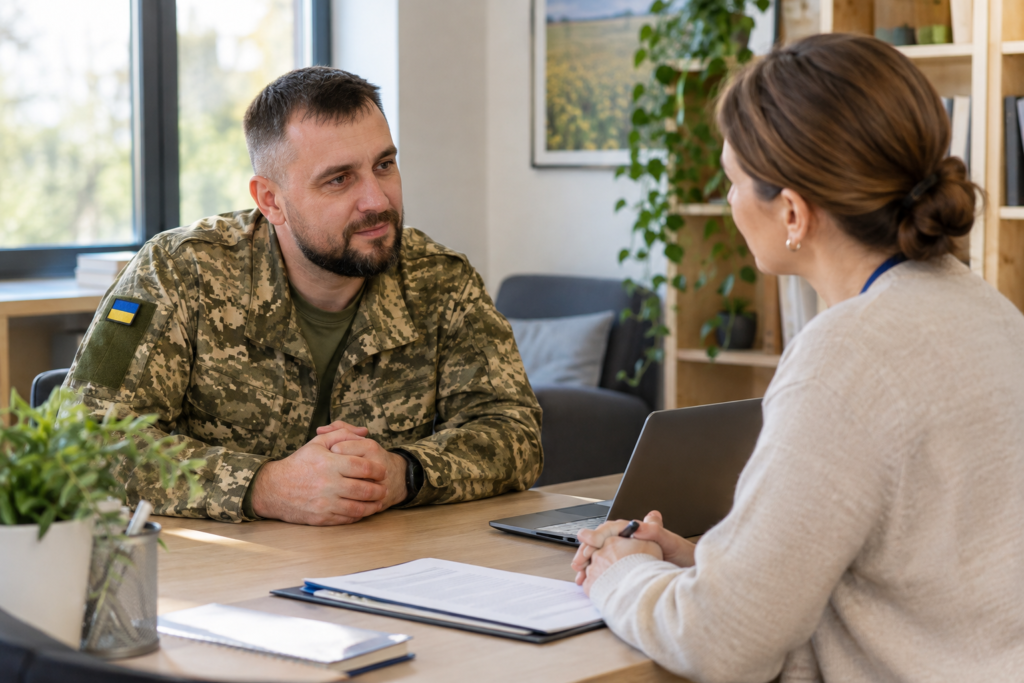
After the data enters the system, the accompanying specialist must contact the veteran within 24–48 hours. During the first contact, they assess health, the need for prosthetics, psychological state, housing issues and opportunities for economic reintegration.
Based on that assessment, an individual action plan is drawn up which the veteran will be able to approve via “Diia”. “Diia” is the state electronic service where documents can be confirmed or signed online.
Five stages of support and the specialist’s role
The specialist will accompany the entire service route and ensure that the assigned services are actually provided. That means they will coordinate interaction with the Ministry of Defence, the Ministry of Health, local self-government bodies, the employment service and other institutions, and will verify the results.
There are plans to change how workload is accounted for among specialists. Instead of a model where one specialist might be responsible for up to 100 people, a points-based system will be introduced that takes into account the complexity of each case and allows resources to be distributed more effectively.
Typical situations that illustrate the difference: first, a simple case where a person requires advice on employment or housing — the specialist quickly draws up a plan and coordinates a few requests. Second, a complex case involving prosthetics, which requires interaction with medical institutions, centralised funding and several stages of treatment and rehabilitation — the points assessment will assign a higher priority.
Who this concerns and what to do
The service is aimed at demobilised persons and those who have received a VLK conclusion. If you fall into one of these categories, your data should be automatically sent to the CRM “Oskar” and a specialist should be assigned to you.
What to do in practice: there are essentially three steps to follow. First, wait for contact from the specialist within 24–48 hours. Second, undergo the initial assessment to form an individual plan. Third, approve the plan through “Diia” and wait for the services to be delivered.
The list of documents required to arrange support has not yet been published. If you have a medical conclusion from the VLK or demobilisation papers, have them ready at the first contact.
The project has already mentioned other topics related to the rights of combatants, for example that combatants and people who became disabled as a result of the war can receive a 50% discount on compulsory motor third-party liability insurance (auto-civil liability) with the remainder reimbursed by the state. Combatants are also entitled to various benefits that apply not only to them but also to their family members.