




September surge in demand for cash foreign currency
In September Ukrainians bought $739,9 mln more cash foreign currency than they sold. This is 65,1% more than in August and the highest figure in the past six months. Financial analyst Andriy Shevchyshyn reports this.
The largest share was the dollar, with net demand of $405,3 mln, up 27,7% month on month. The euro also showed a strong recovery and reached $331,5 mln in equivalent. Other currencies accounted for only $3,1 mln of net demand.

Comparison of August and September figures
The table collects the key changes between August and September. It is important to look not only at absolute amounts but also at shares of the total volume of operations to understand how the structure of demand has changed.
| Indicator | Was | Became |
|---|---|---|
| Total net demand for cash foreign currency | 65,1% lower in August | $739,9 mln |
| Net demand for the dollar | 27,7% lower in August | $405,3 mln |
| Net demand for the euro | 2,5 times lower in August | $331,5 mln |
| Other currencies | significantly lower | $3,1 mln |
In the total volume of cash foreign exchange operations the dollar accounted for 68,7%, the euro 27,6% and other currencies 3,7%. This structure shows the dominance of the dollar alongside a simultaneous recovery in demand for the euro.
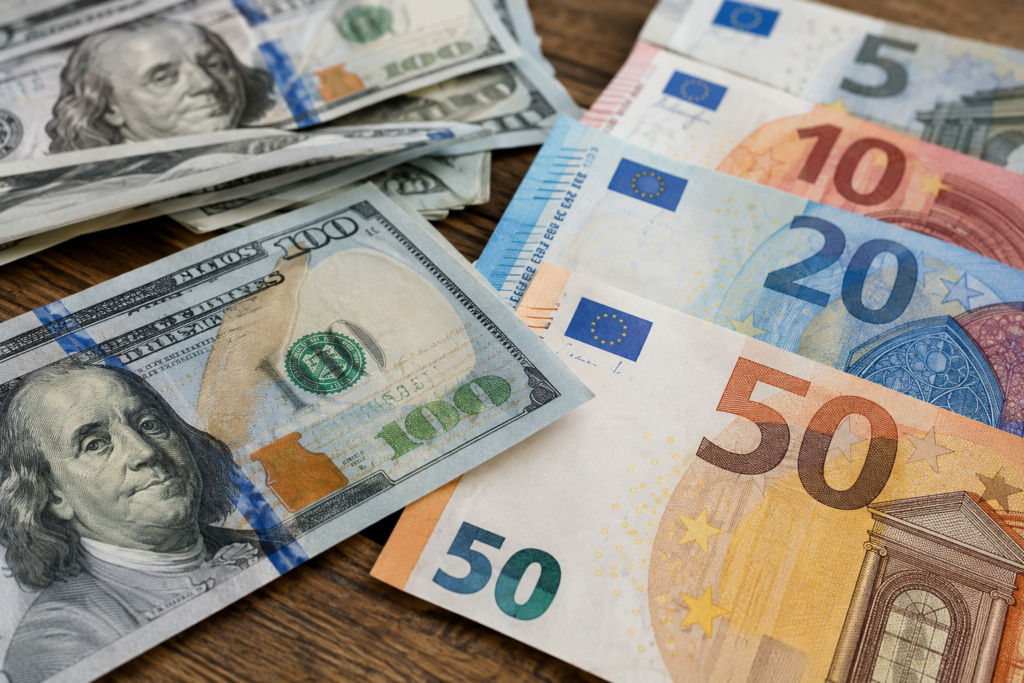
What happened with the euro and why
After the August slump, demand for the euro recovered sharply and approached June levels. Net demand for the euro in September amounted to $331,5 mln in equivalent, which is 2,5 times more than in August.
One possible factor in market interpretation was the euro’s depreciation against the dollar in September from around 1,16 to 1,13 for EUR/USD. This may have encouraged some people to buy euros on the dip, but this is a market interpretation rather than an official explanation.
The dollar is gaining momentum and what it means for you
Net demand for the dollar in September reached $405,3 mln, the highest since March and an increase of 27,7% compared with August. The rising interest in cash foreign currency may be linked to seasonal saving behaviour as well as increased public attention to inflationary and devaluation risks.
For those exchanging cash, this means higher demand at exchange points and the possibility of a slight widening of spreads between banks’ and exchange offices’ buy and sell rates. When paying by card there is no direct effect on the payment amount abroad other than the competitive exchange rates offered by banks, but for savings the high demand for the dollar and euro indicates public activity in converting funds into foreign currency.
Connect to multi. A mobile app that helps you exchange currency advantageously.