

Key figures explaining why the battery dies in winter
Short daily trips can leave the battery without reserve before really cold weather arrives. This is discussed on the Battery Tender website and is explained by the physics and operating patterns of the vehicle.
Below are the main indicators that help to understand what happens to the battery during freezing conditions and how long it takes to fully recharge it.
| Indicator | Value | What this means |
|---|---|---|
| Temperature | -5 °C | Even a new battery may fail to provide the required starting current |
| Initial period | 15−20 minutes | The alternator only compensates for the energy used to start the engine |
| Urban distance | approximately 50 km or up to 2 hours | Needed for a full recharge in town |
| Highway | at least 1 hour | Stable engine revs speed up the recharge |
| External charging | once a month | Experts’ recommendation for preserving battery life |
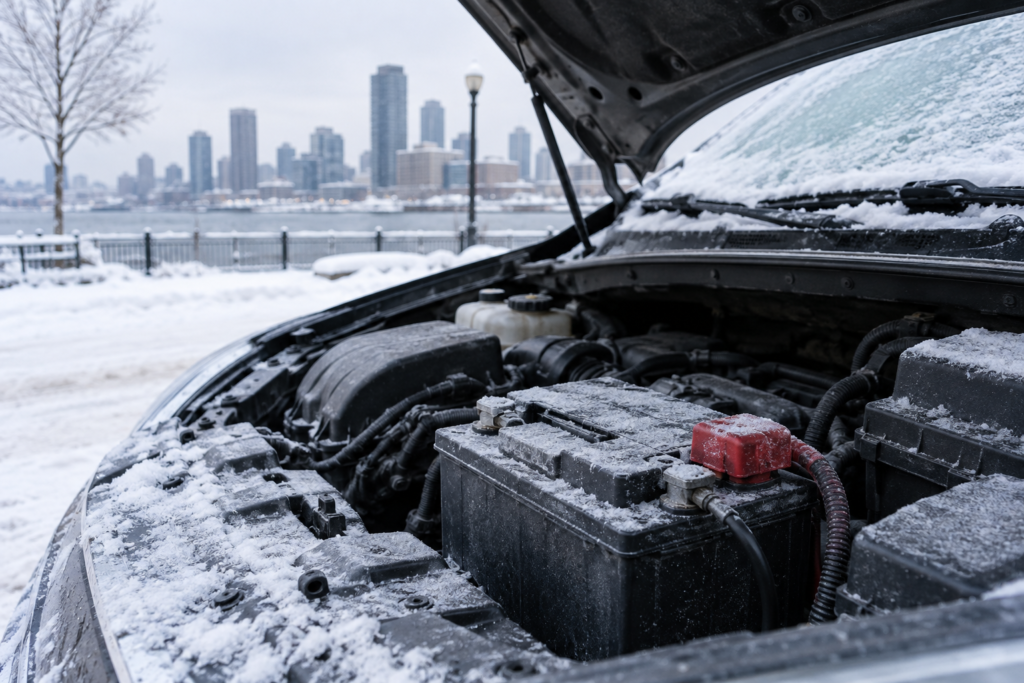
-5 °C — when even a new battery may fail
When temperatures fall to -5 °C the chemical reactions inside the battery slow down and it delivers current much less effectively. That means even a newly purchased battery may not provide the necessary starting current.
At the same time, cold increases the load on the vehicle’s electrical system. Lubricant thickens and the engine needs extra energy to turn the crankshaft, forcing the battery to work harder.
15−20 minutes — the period when the alternator only compensates for the start energy
In the first 15−20 minutes after starting in frost conditions the alternator does not yet provide surplus power for a full recharge. It covers the energy consumed at start-up and only afterwards does the real recovery phase begin.
For this reason, short trips of just a few minutes not only fail to restore the charge, they build up a deficit. Over time the battery loses reserve and can discharge completely without obvious warning.
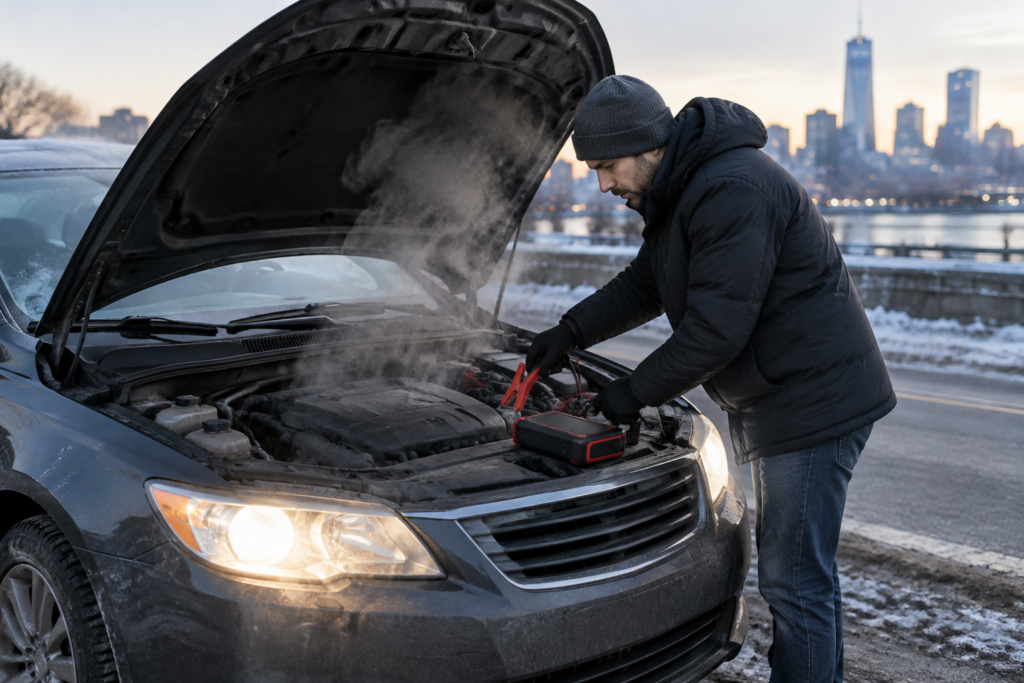
approximately 50 km or up to 2 hours in town — how long is needed for a full recharge
In an urban cycle, due to constant stops and changing engine revs, a full recovery of charge can take up to 2 hours of driving, which corresponds to roughly 50 km. Shorter trips do not supply the energy needed for recovery.
On the open road charging happens faster thanks to steady engine revs; however, even there you need to drive for at least an hour to noticeably replenish the charge.
Once a month — a simple tip from car experts
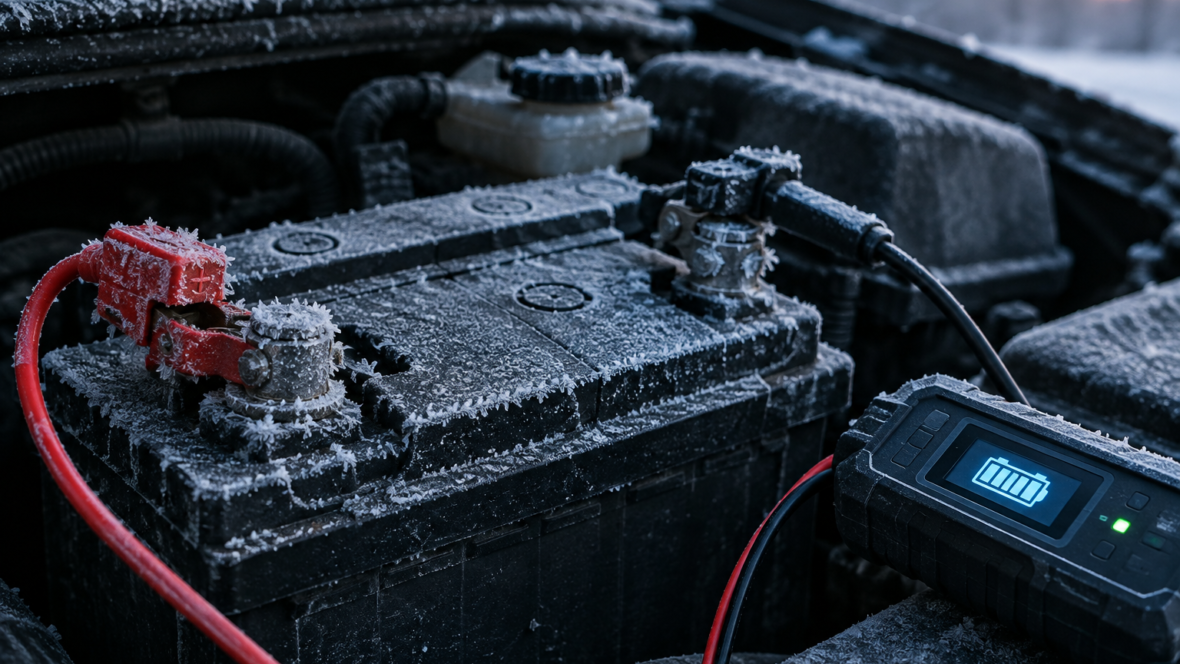
Instead of leaving the engine idling to charge the battery, experts recommend connecting an external charger once a month. Such a recharge is sufficient to preserve battery life and avoid the risk of failure in frost.
This advice also applies to owners of new batteries because the issue is not quality but the pattern of use. Regular external charging helps to preserve the battery and provides peace of mind during the winter season.