

According to 4Service, during a presentation at the FinRetail-2026 conference, Director of Product Development and Methodologies Olga Maksymyuk spoke about changes in Ukrainians’ payment preferences and the prospects for Open Banking in retail.
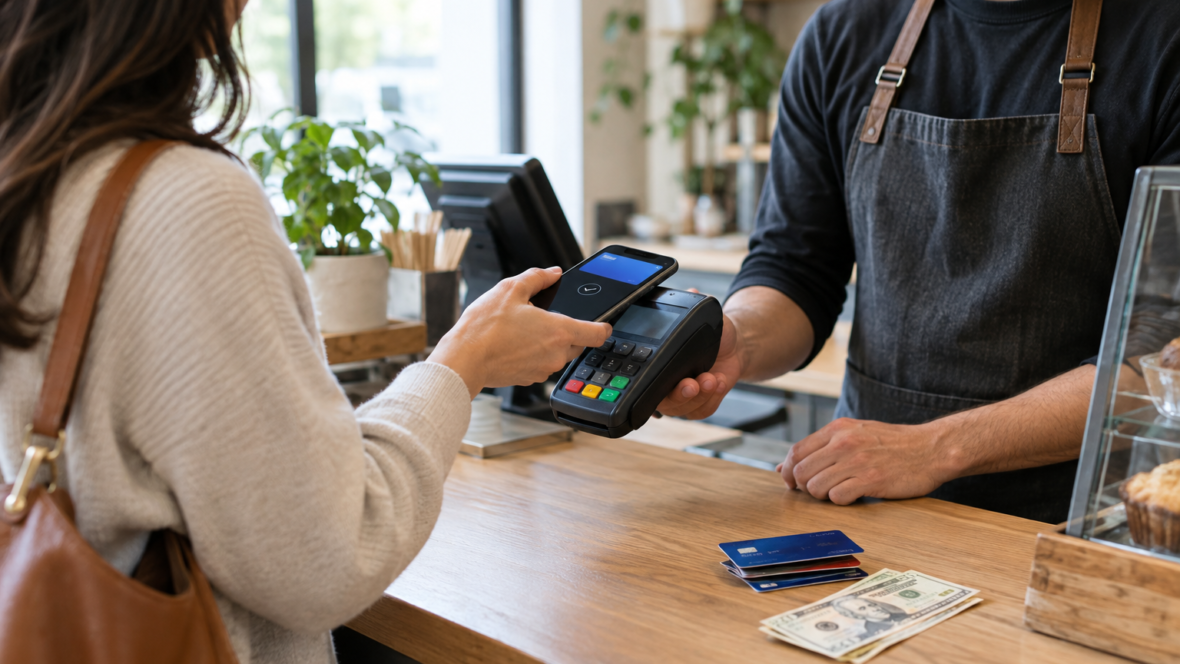
The smartphone is increasingly displacing plastic cards and cash: contactless payments via Apple Pay and Google Pay occupy a leading position both online and at physical points of sale. “The smartphone has decisively won both online and offline. For most Ukrainians the phone has become the main and most convenient wallet, while physical cards or cash are gradually moving to the background,” Maksymyuk said in her presentation.
When paying online, 65% of respondents use a smartphone, 61% use a card, 39% use cash on delivery, 35% make transfers to an account using the International Bank Account Number (IBAN), and 23% make peer-to-peer (P2P) transfers. Pay by Bank (via QR code or on the checkout page) is used regularly by 11% of respondents, and payment in instalments by 10%.
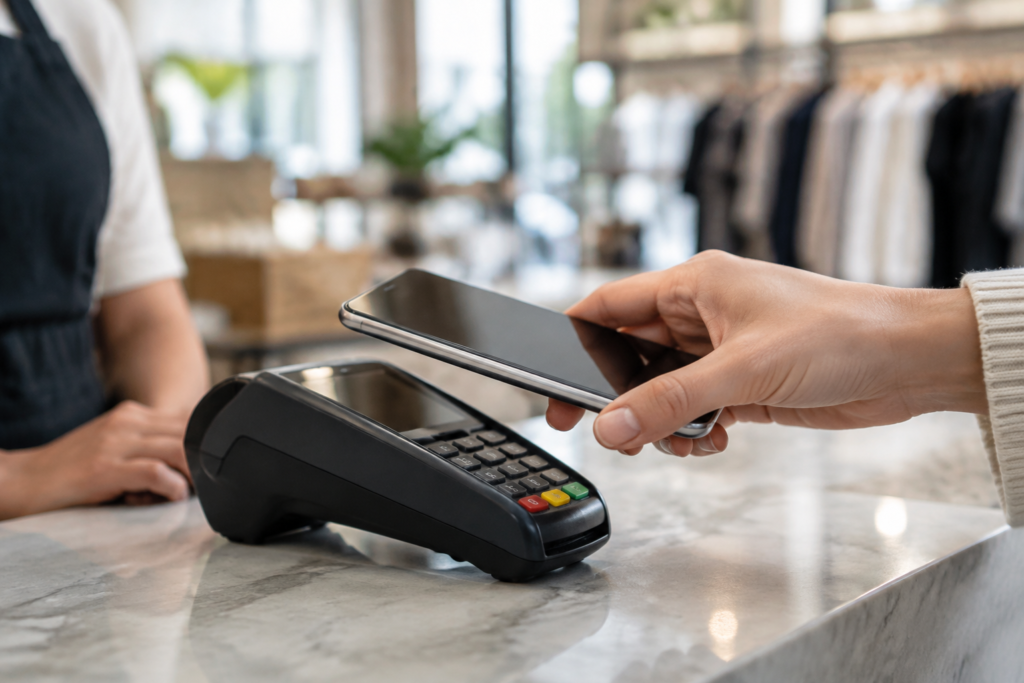
In offline retail, 62% pay with a smartphone, 52% use a physical card, and 47% keep cash to hand. P2P transfers and IBAN transfers each account for 5%, 3% choose instalments, and 2% choose Pay by Bank.
Ukrainian consumers show pragmatism: 75% of respondents consciously choose the payment method that gives the greatest financial benefit — cashback, bonuses, points or an instant discount. “You might think this is great news for any new service or payment method with attractive loyalty programmes. But benefit is only part of the truth, because on its own it does not guarantee long-term loyalty,” the speaker emphasised.
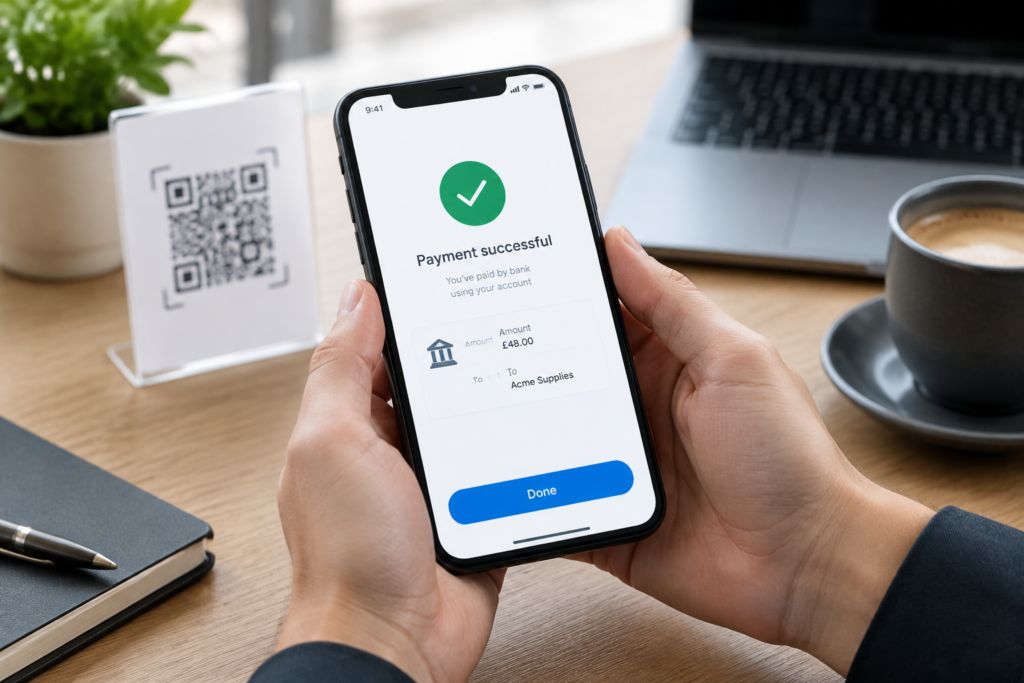
Direct payments from an account without the involvement of card schemes (confirmed in a banking app via QR code or by redirect) are already operating in the market: today 11% of Ukrainians regularly pay through Pay by Bank online and 2% offline. “A double-digit figure online for an entirely new payment method is a serious indicator. This is happening organically, without massive aggressive advertising or coercion, which points to the instrument’s high potential,” Maksymyuk noted.
Maksymyuk also cited global experience: account-to-account (A2A) payments can be up to 80% cheaper for merchants compared with card acquiring. She warned with the example of Italy: five years after the introduction of Payment Services Directive 2 (PSD2) only 0.13% of online payments were made through Open Banking.
According to the speaker, Ukraine’s Open Banking development scenario differs from the European one: in the EU the process was driven top-down by directive — from PSD2 in 2018 to the expected PSD3/Payment Services Regulation (PSR) no earlier than 2027 — whereas in Ukraine the market formed the standard and regulation followed later.
Five fundamental theses for retailers and fintech companies were highlighted during the presentation. In conclusion, Maksymyuk stressed the need for practical steps to ensure new payment solutions become widespread.