


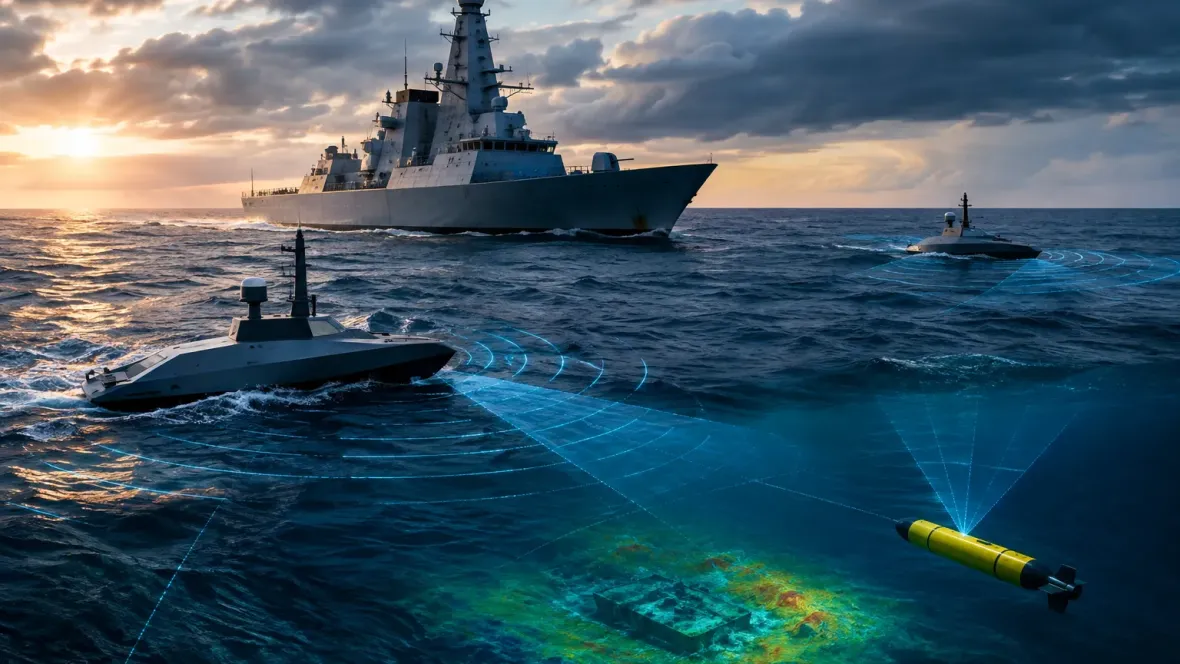
Britain will allocate £90m for unmanned systems, sensors and artificial intelligence for the Royal Navy to detect Russian submarines and protect undersea infrastructure, the Royal Navy said.
A framework agreement was to be signed the same day with British company Ocean Infinity Solutions. According to the navy’s assessment, the investment will support the creation of almost 200 jobs within the company and its direct suppliers.
Components and operation of the Atlantic Net
The new system, called Atlantic Net, will combine maritime unmanned platforms, underwater sensors, communications systems, remote control and data processing. The Royal Navy will operate the network.
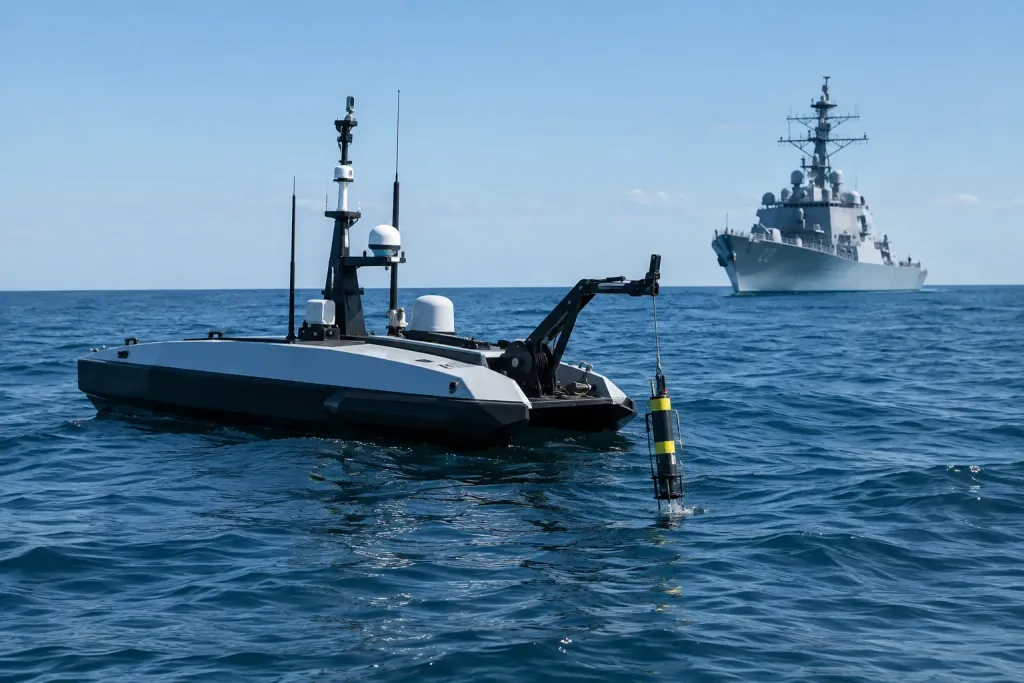
The sensors are intended to help detect submarines and suspicious activity, while unmanned platforms will patrol the depths. Collected data is intended to provide anti-submarine vessels and Astute-class submarines with threat warnings and a fuller picture of the undersea environment.
Technology trials and international cooperation
Some of the technologies have already been tested during NATO (North Atlantic Treaty Organization) REPMUS exercises: unmanned boats collected acoustic data and transmitted information about undersea contacts in real time. Two autonomous vessels, 12 and 17 metres long, were used in these trials.
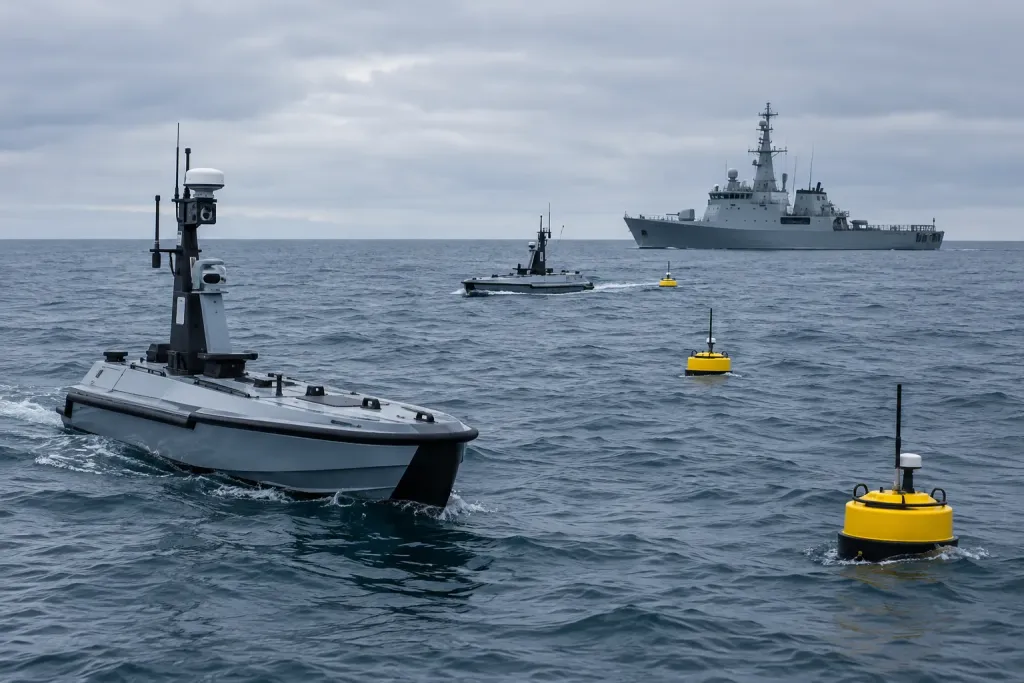
The boats towed sonars and deployed automated hydroacoustic buoys, the results of which are intended to help determine future decisions for the Atlantic Bastion programme. The programme will be implemented in cooperation with NATO allies and the Joint Expeditionary Force (JEF).
The aim of the wider Atlantic Bastion programme is to create a fleet in which crewed ships operate alongside unmanned systems to search for and track hostile submarines and protect undersea infrastructure, as well as to support the security of Britain’s nuclear deterrent forces.