


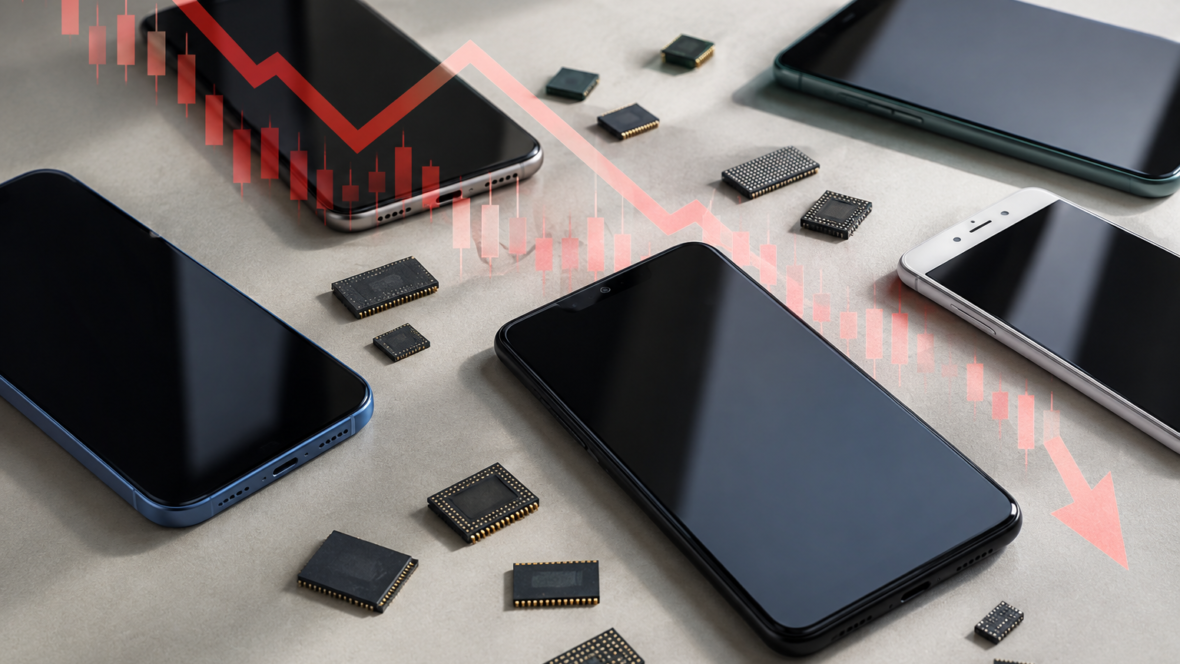
According to Counterpoint Research, global smartphone shipments in July–September fell by 20% year on year.
This is the weakest result for the third quarter since 2012; in the second quarter shipments fell by 11%. Analysts describe this as the second consecutive quarter to be fully affected by the memory-chip shortage.
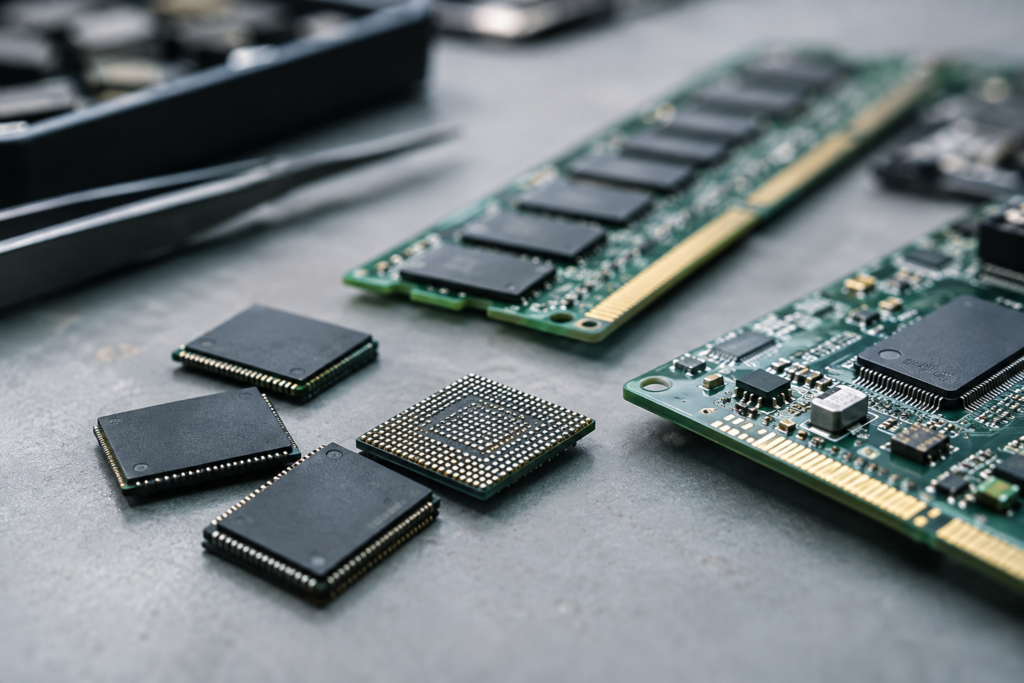
The reason has not changed: memory-chip manufacturers are prioritising chips for data centres that run artificial intelligence (AI), while smartphone makers are passing higher component costs on to buyers. This was already explained following the first quarter’s results, and it warned that the shortage could last until the end of 2027.
The decline was uneven. For the first time in a third quarter Apple exceeded the 20% market-share mark — 22% versus 18% last year — so iPhone shipments contracted noticeably less than the market overall.
At the same time, the absence of a base iPhone 18 meant that in the first month of sales channels received fewer devices than last year when the full iPhone 17 line-up launched. The iPhone 18 Pro models started stronger than their predecessors, particularly in China and India, and Apple only raised prices in the final weeks of the quarter.

Samsung remained the leader with a 23% share, a position attributed to better supply and strong initial demand for the foldable Galaxy Fold8 series. Xiaomi (10%), OPPO (9%) and vivo (8%) lost shares compared with the third quarter of 2025.
Analysts say manufacturers are increasingly favouring profitability over volumes because of costly components and weaker purchasing power. Omdia forecast that this year shipments of smartphones priced up to $400 will fall by more than 22%, while pricier devices will grow by 5.7%.