




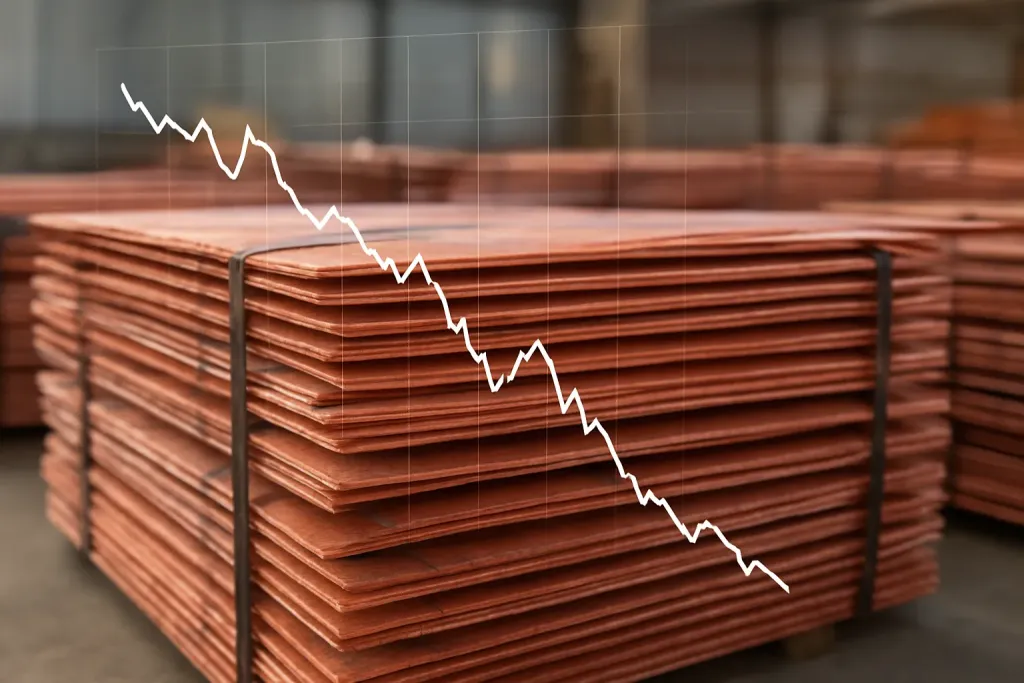
On 20 November on global markets copper prices fell to their lowest level since March. As of 5 a.m. Kyiv time, quotations were down 2.5% - to 12,213 dollars per tonne (12.21 dollars per kilogram), and over the week the decline may be around 9%.
Futures slump and weekly results
Three-month futures on the London Metal Exchange (LME) plunged by more than 3%, making this week one of the worst for copper in the past decade. This is the sharpest drop in the last 10 years, excluding the early stages of the Covid-19 pandemic and the period after the 2025 announcement of tariffs introduced as part of “Liberation Day”.
Reasons for the price decline
The main factors cited are growing doubts over the sustainability of spending on artificial intelligence (AI) and copper’s role in its deployment. Earlier, in September, prices rose to almost 15,000 dollars per tonne amid expectations of rising demand from data centres and AI infrastructure.
“We said since AI became a driver of prices that it may be somewhat overstated. That does not mean AI is not important, but there are many more factors,” said Benchmark Mineral Intelligence Ltd copper analyst Albert Mackenzie. Among other factors are weak demand from China, easing prospects for the introduction of tariffs on copper imports to the United States (US) and the strengthening of the US dollar.
Trading range and inventories
Over the past two months copper traded in a relatively narrow range around 14,500 dollars per tonne, while investors monitored uncertainties over AI spending, tariff prospects and the risk of escalation in the Middle East.

According to a source quoted in the publication, Chile is the undisputed leader in global copper reserves - the country accounts for 21.3% of the world’s metal reserves.