



The Monetary Authority of Singapore (MAS) has opened a state vault for foreign central banks and announced plans for tax incentives for firms working with gold. The vault’s initial capacity is 500 metric tonnes, and a physical clearing system is also planned.
Vault terms and tax incentives
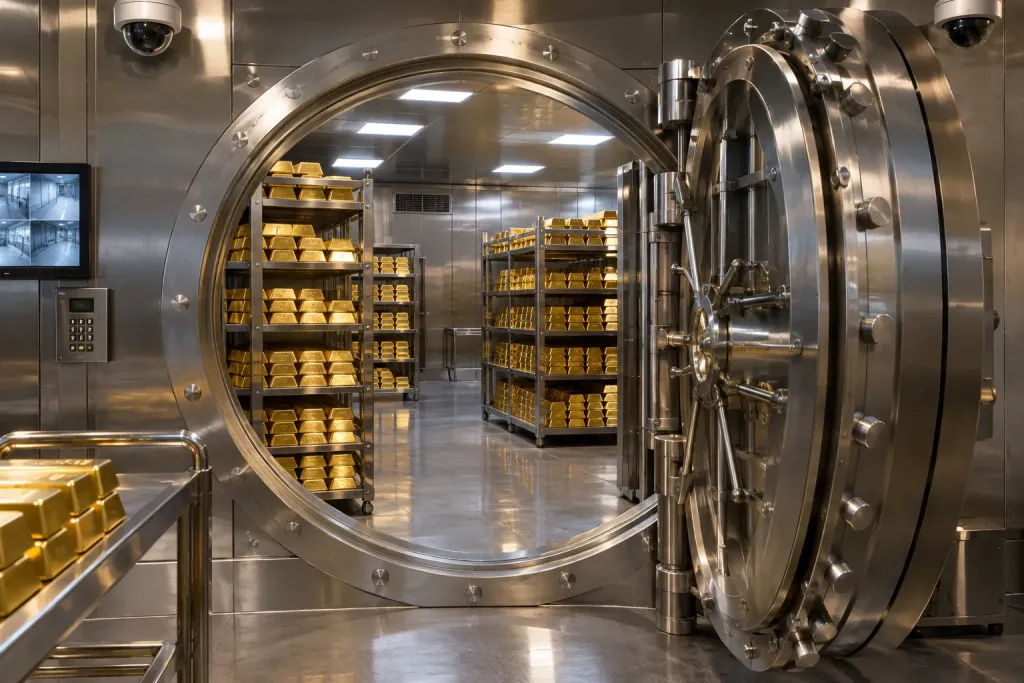
The state vault is intended to house reserves for foreign central banks and sovereign institutions. The initial capacity is 500 metric tonnes.
Singapore also plans to offer tax incentives for wholesale gold operations covering storage, refining, re-melting, assaying and brokerage services. In addition, a physical gold-clearing system is due to be launched in the first quarter of 2027 to simplify settlement for bullion transactions.
Competition with London and Hong Kong
Major trading hubs are already operating: as of the end of October, around 9850 tonnes of gold were held in London vaults, including those of commercial and central banks. Hong Kong is developing its own storage and clearing infrastructure and has close links with China.
“Singapore is very late to the game, because creating a physical hub requires volumes when you are talking about trade-supported structures,” said Jürg Kiner, chief investment officer at Swiss Asia Capital. He added that Singapore is unlikely to compete with Hong Kong in gold trading, but could occupy a niche as a storage location for the reserves of financial institutions.

Central banks and shifts in gold trading
The state vault differs from commercial facilities in that it will be operated by the Monetary Authority of Singapore, giving foreign central banks another option for holding gold reserves. Interest in such services has grown amid geopolitical tensions.
According to the World Gold Council, several countries have diversified their gold storage locations over the past 12 months, and others plan to do so. “We see that two centres complement each other, rather than compete with each other,” said Shaokai Fan, global head of central banks at the organisation. Processing capacity in Asia is increasing, allowing metal to be moved more often directly between markets in the region.