


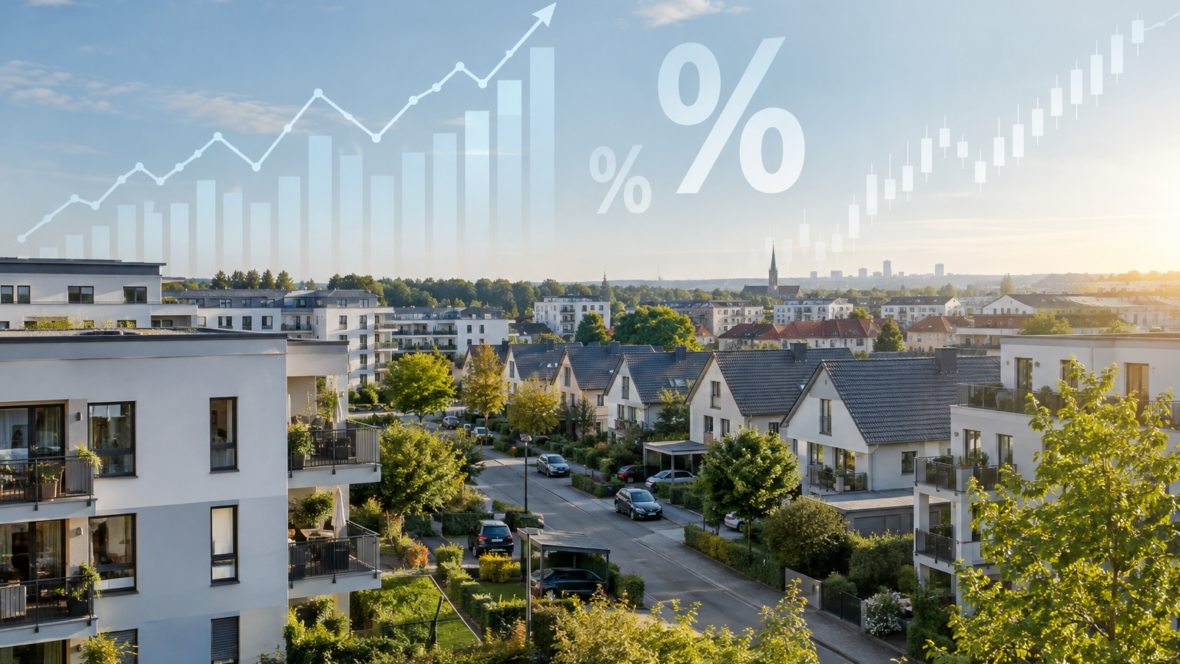
According to Interhyp, mortgage lending in Germany has reached its highest level since 2009, and ten-year interest rates have drawn close to 4,5%.
Reasons for the rise
The increase in mortgage costs is being linked to fears of rising inflation stemming from the war with Iran. Interhyp explains that those fears are lifting expectations of future interest-rate increases.
The company calls this the main factor making borrowing to buy a home more expensive than at any time since the 2009 financial crisis.

Rates and lenders’ survey
According to the firm, the typical rate on a ten-year mortgage is now close to 4,5%, slightly above the previous peak of just over 4,4% at the end of 2023. Chief executive Jörg Utecht noted that the average ten-year mortgage rate rose from 3,9% in May.
An Interhyp lenders’ survey, published on 15 October, showed an average ten-year rate of about 4,4%, but with an upward tendency. Most banks surveyed expect rates to remain stable over the next two months; 60% expect rates to fall within six to twelve months, while 40% forecast further increases.

Regulators’ data and history of changes
Both Interhyp’s data and household mortgage data from the Bundesbank show that funding costs have not been this high since the 2009 financial crisis. European Central Bank data also confirm rapid changes in funding costs.
The average rate on mortgages in Germany rose from 1,48% at the start of 2022 to 4,15% at the end of 2023, fell to 3,57% at the start of 2025 and then rose again to 3,91% in the second quarter of this year, before the most recent increase.
Automatic exchange of information (Common Reporting Standard, CRS)
The piece also says that Ukrainian banks will begin automatically transmitting to Germany information about the accounts of people who are tax residents of that country under the Common Reporting Standard (CRS).
In practice, this means a Ukrainian bank will, without the client’s involvement, pass information about accounts and funds to the relevant authorities, and the German authorities will be able to receive that data through the established automatic-exchange procedures.