



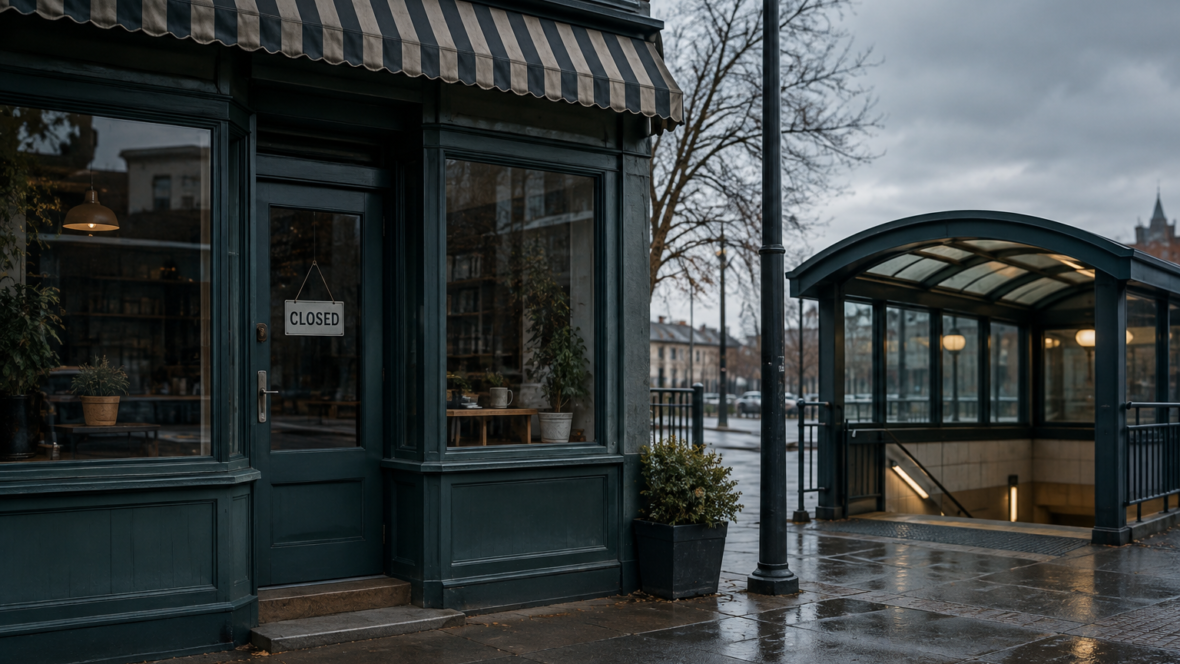
Entrepreneurs have submitted petition No. 41/011165−26еп to the government asking for a review of the requirements for shelters and safe spaces set out in the resolution of the Cabinet of Ministers of Ukraine (the Cabinet) No. 1092, which comes into force on 4 December. They request an extension of the transition period, permission to use the nearest suitable shelters and financial assistance for establishments that cannot afford re-equipping.
Technical and financial obstacles to fitting out
The resolution requires every establishment to have a separate, fully equipped shelter or safe space directly within the building after 4 December. Meeting these requirements is not straightforward: the level of protection depends on the building’s design, the thickness of walls and floor slabs, the location of the room and other technical parameters.
Small cafés, shops and beauty salons often lack basements or premises that meet the necessary criteria, and rebuilding can require substantial funds or be impossible altogether. For tenants the problem is compounded by the fact that they do not always have the right to carry out major works or alter structures.
What changes the petitioners are requesting
The petition’s authors ask for amendments to the rules across several areas to make them realistic for small businesses. They propose both technical and financial solutions.
- Differentiate requirements depending on the area of the premises, number of people, floor and the building’s structural characteristics.
- Extend the transition period for businesses that will not be able to prepare by 4 December.
- Allow an alternative in the form of the nearest suitable shelter, if it is accessible to staff and visitors.
- Establish uniform technical criteria to clarify the necessary works.
- Introduce financial support — compensations, concessional programmes or grants for re‑equipping.
- Delineate the responsibility of property owners and tenants and refrain from imposing sanctions where compliance is objectively impossible.
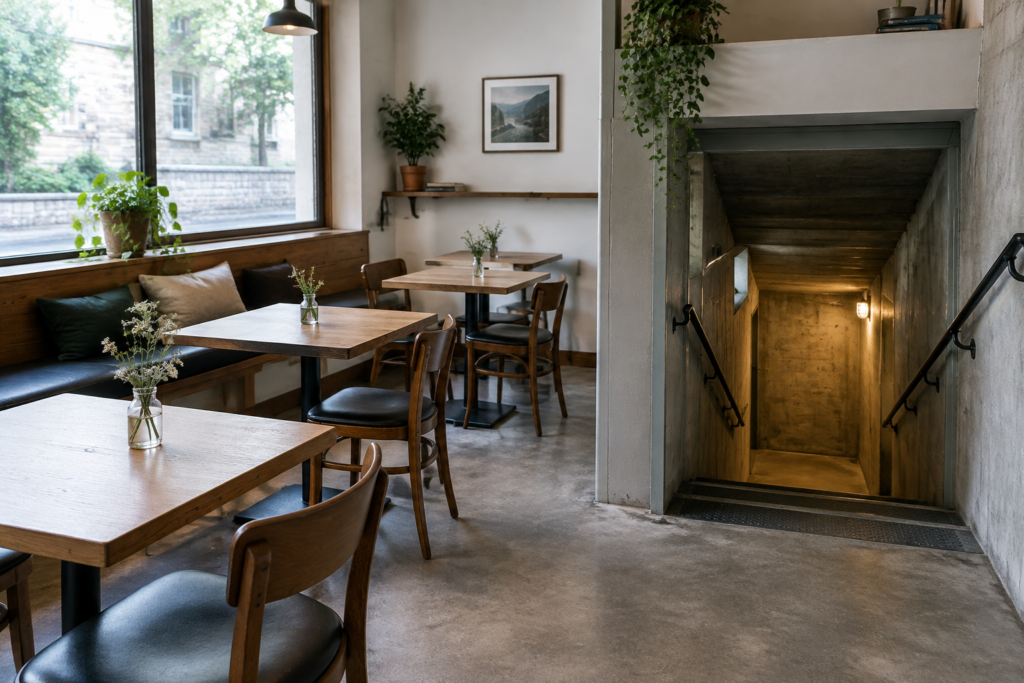
The petition also calls on the government to hold consultations with businesses and civil protection experts to agree practical criteria and timelines. The authors stress the need for clear division of responsibility between property owners and tenants.
Risks of temporary closures and losses for businesses
If establishments do not have shelters or cannot set up safe spaces, their operation during certain threat levels may be restricted or suspended. Even temporary cessation of activity will lead to lost revenue while some fixed costs remain.

The petition includes calculations suggesting that by spring up to 20% of food service establishments may temporarily suspend operations. The authors emphasise that they are not asking to abandon safety, only to make the rules realistic for small businesses.