




Quick summary of the deal and its size
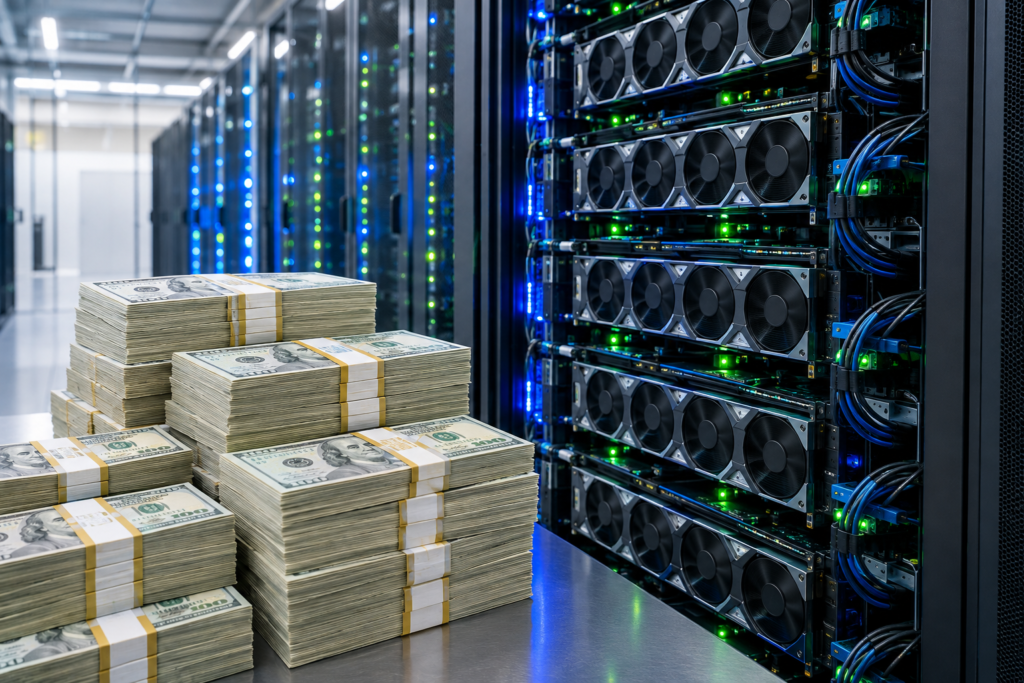
SpaceX plans to raise a total of $40 billion to purchase Nvidia chips. The company intends to cover most of this amount by issuing investment-grade debt securities. The Financial Times reports.
Under the plan, roughly $10 billion is expected to come in the form of bank loans, while a further $30 billion would be sold to investors as bonds. The parties aim to complete the deal in 2027, with the private investment group Apollo, together with Pimco, organising the financing.

Why this deal became possible
First, SpaceX and Nvidia already have a close working relationship. Elon Musk has repeatedly said the company will choose Nvidia technologies for its artificial intelligence developments. At a SpaceX conference in August he said the decision to build systems exclusively on Nvidia was driven by a belief that the Vera Rubin architecture is the best option.
Second, SpaceX’s recent financial track record has allowed it to access the debt markets. After an initial public offering valued at $86 billion in June, the company received an investment-grade credit rating of BBB. That opens access to buyers who are restricted from investing in speculative-grade securities. SpaceX has previously sold $25 billion of bonds, although their price later fell amid concerns over debt levels and capital expenditure.
Why now
Demand for computing power for AI is rising rapidly, and chip makers are increasing production plans. Companies rolling out large infrastructure projects often sign long-term contracted purchases to secure access to scarce components.
There is also a growing number of financial platforms specialising in financing chip purchases. Apollo is expanding that activity within its $800 billion credit business. In June it led financing of $35 billion for Broadcom. Nvidia in August announced a partnership with several major players on a $500 billion platform and can guarantee up to 25% of chip costs in similar deals. That creates a favourable infrastructure for large purchases now.
Who the deal will affect and how it could impact the market
First and foremost, Nvidia stands to benefit from the likely increase in demand for its products. For the company, this would strengthen its position in the advanced semiconductor segment. At the same time, investors who buy SpaceX debt will gain access to instruments available to investment-grade funds thanks to the BBB rating. However, risks remain given the rising debt and SpaceX’s limited financial disclosure.
Investors have already seen signs of these risks. SpaceX bonds maturing in 2056 previously traded at roughly 85 cents on the dollar, and their yield was 2.27 percentage points higher than US Treasury yields. Some potential buyers received only a two-page memorandum about the deal, which also raises concerns about issuer transparency for those assessing the risk.
How this will affect the Ukrainian foreign exchange market and ordinary people
The deal’s direct impact on the hryvnia exchange rate is unlikely to be immediate or clear-cut. Nevertheless, operations of this scale mean large dollar flows in global markets. If demand for dollars strengthens because of major purchases by importers or debt issuers, it could put pressure on exchange rates in countries with open currency markets.
For the average person, this could show up in several practical ways. Cash exchange rates may move more quickly during periods of heightened volatility, and card payments abroad could become more expensive if the dollar rises. People holding savings in hryvnia may see higher inflation in imported goods, while those holding savings in dollars would not be guaranteed protection by this movement.
It is not advisable to make exchange-rate forecasts without assessments from specific banks or analysts. However, it is useful for citizens to monitor the interbank rate and banks’ exchange offers, especially during periods of increased geopolitical or market activity.