

How the idea originated
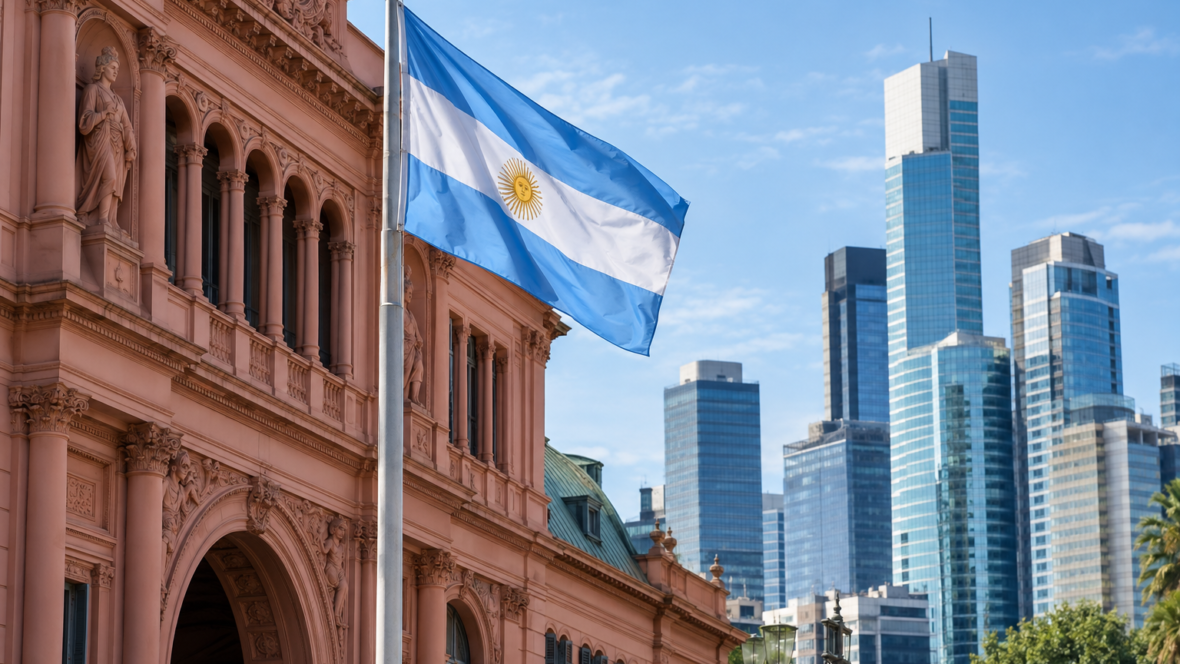
President Javier Milei, after coming to power in December 2023, took a course of strict fiscal policy and the expansion of private investment. By 2025 the legislative framework allowed foreigners who made significant investments to apply for citizenship through a special agency at the Ministry of Economy.
Against this background the government designed a programme intended to attract capital while creating new incentives for wealthy foreigners. The details of the initiative were published in official announcements and international reports, including a piece by Reuters.
Official announcement and launch timetable
The government announced that applications for the citizenship-by-investment programme will be accepted from the fourth quarter of 2026. From that point foreigners will be able to choose between two contribution pathways that qualify them for application consideration.
The first option requires an irrevocable transfer to the state budget of 350,000 US dollars. The second option involves the purchase of specially issued government bonds in the amount of 800,000 US dollars.
How the citizenship process will work
The procedure is not limited to transferring money. All applicants will face stages of security and financial transparency checks. The government emphasises that checks will be carried out in line with the international recommendations of the Organisation for Economic Co-operation and Development (OECD) and the Financial Action Task Force (FATF).
The programme is run by a special agency at the Ministry of Economy that accepts documents and coordinates the investment mechanisms. The 2025 law provided the legal basis for this mechanism and set out the general requirements for applicants.
Who pays and how much
The principal applicant can include family members in the application package. For a spouse and for unmarried children aged 18 to 25 who do not have children of their own, the fee is 100,000 US dollars for each such family member.
For children under 18 the fee is 25,000 US dollars. According to government calculations, a family consisting of the principal applicant, a partner and two minor children will be able to obtain citizenship for a total contribution of 500,000 US dollars.

Who is interested and what analogues exist
Consultancy Millionaire Migrant reported a list of potential applicants, some of whom already hold a second citizenship but are considering an Argentine passport because it allows visa-free travel within Mercosur countries. This is not a unique scheme in the global market, where some states offer simplified routes for wealthy foreigners.
For comparison, the US has the Gold Card programme initiated under the administration of Donald Trump, which likewise requires a significant financial contribution in exchange for a simplified route to visa access. Argentina is seeking to use its own instruments, including the RIGI regime, to encourage large investments.
Where the need comes from and the risks to the budget
The government explains that the aim of the investment-attraction programme is to boost state revenues and strengthen macroeconomic resilience. These steps are important to meet future debt payments and maintain overall financial balance.
At the same time, political debates have again raised questions about the budget deficit, which means state expenditures exceed its revenues and therefore require additional income or spending cuts. As we reported, the President proposed leaving government officials unpaid because of the budget deficit, which is a separate austerity measure.