




Europe faces low gas stocks as it prepares for winter
Gas stocks in the European Union (EU) are currently filled to slightly more than 70% — the lowest level for this time of year since 2011, when the relevant statistics began. That level leaves little room to manoeuvre if the winter proves colder than usual or supplies are constrained.
The low build-up is not explained only by weather. In summer, traders often sold gas rather than injecting it into storage because of high prices, and winter demand has increased over the last two years while imports have remained almost unchanged.
Key indicators
| Indicator | Value | Comment |
|---|---|---|
| Storage fill | slightly more than 70% | Lowest level for this time of year since 2011 |
| Possible shortfall | 14 billion cubic metres | The Institute for Energy Economics and Financial Analysis (IEEFA) estimates this is about 7% of EU demand |
| Household equivalent | 10−12 million | Volume that could be missing under a 14 billion cubic metre shortfall |
| Worst scenario from ENTSOG | 11% | If winter is cold and liquefied natural gas (LNG) supplies are constrained |
| End-of-winter target | 30% | To have reserves for the following cold season countries will need to cut consumption |
| Impact of ban on long-term contracts | 7 billion cubic metres | IEEFA estimate of cuts to supplies of Russian liquefied natural gas (LNG) |
| Additional cost for US LNG | 3 billion euros | About 12% more than last year for comparable volumes |
| Industrial demand | -20% | Decline since the start of Russia’s full-scale war against Ukraine |
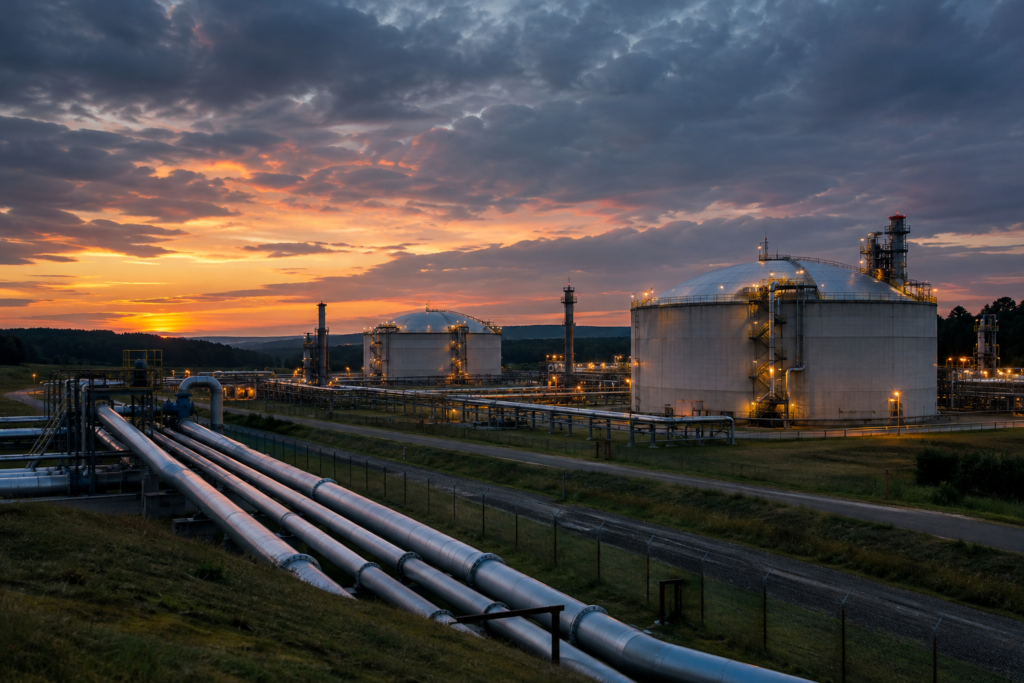
slightly more than 70% in storage
When the figure of 70% sounds adequate, it is important to understand the seasonal context. For this time of year that level means stocks are lower than usual and is the lowest reading since 2011.
The main drivers are high summer prices that incentivised traders to sell rather than inject, and the rise in winter demand over the past two years alongside almost steady import volumes.
14 billion cubic metres, or 7% of EU needs
The Institute for Energy Economics and Financial Analysis (IEEFA) estimates a possible shortfall this winter of 14 billion cubic metres. That is about 7% of total demand in the bloc and a material volume for the region’s energy system.
In scale, it is equivalent to the consumption of roughly 10–12 million European households, which indicates the potential impact on residential consumers if additional supplies cannot be secured.
11% in the European Network of Transmission System Operators for Gas (ENTSOG) scenario and a 30% target
ENTSOG forecasts that in a cold winter with limited LNG supplies stocks could fall to 11%. At that level, mostly strategic reserves would remain, which are hard to mobilise for immediate use.
To finish the heating season with stocks at 30% countries would need either to reduce consumption or restrict deliveries to end users. ENTSOG assesses that this corresponds to volumes equal to about 7% of demand.
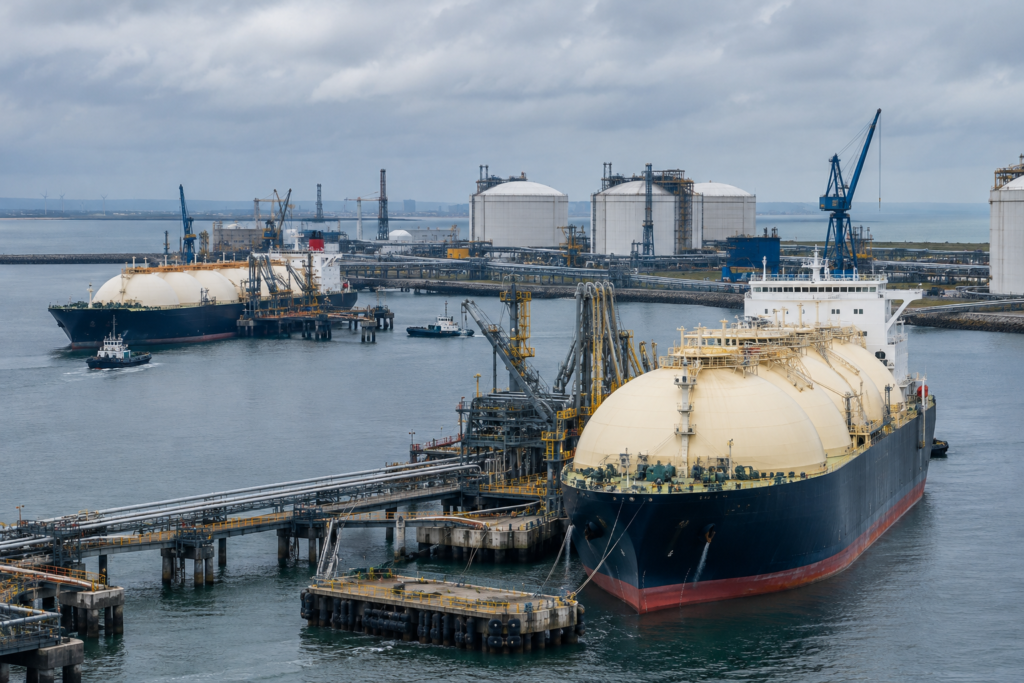
7 billion cubic metres from the ban on long-term contracts with Russia
An EU ban on long-term contracts for Russian liquefied natural gas (LNG), due to take effect in January, could cut supplies by a further 7 billion cubic metres, according to IEEFA. Previously, Russian gas partly evened out seasonal swings.
That makes Europe more reliant on storage, while the ability to quickly find replacements is limited by market conditions and transport constraints.
3 billion euros of additional costs and a 12% price rise
One route to cover the shortfall is to increase LNG purchases, notably from the United States. IEEFA calculates that at current prices this would cost Europe an extra 3 billion euros, about 12% more than last year’s spending on equivalent volumes.
At the same time, US producers are operating close to full capacity, so rapidly scaling up exports is difficult, which further pushes up prices and limits availability.
20% drop in industrial demand since the start of the war
Industrial gas demand in the EU has fallen by 20% since the start of Russia’s full-scale war against Ukraine and has not returned to pre-crisis levels. That reduction has already partly offset market needs.
However, the scope for further savings in industry is limited, reducing the potential to curb demand further if supplies are cut more deeply.
Prices in Europe are close to a nearly four-year high
IEEFA notes that supply vulnerabilities and falling stocks have pushed gas prices in Europe close to their highest level in almost four years. That raises the risk of further rises if demand or supplies move in an adverse direction.
Analysts warn that the scope to quickly increase imports is limited and that shifting supplier flows between regions could further push markets to reorient flows and lift prices.