



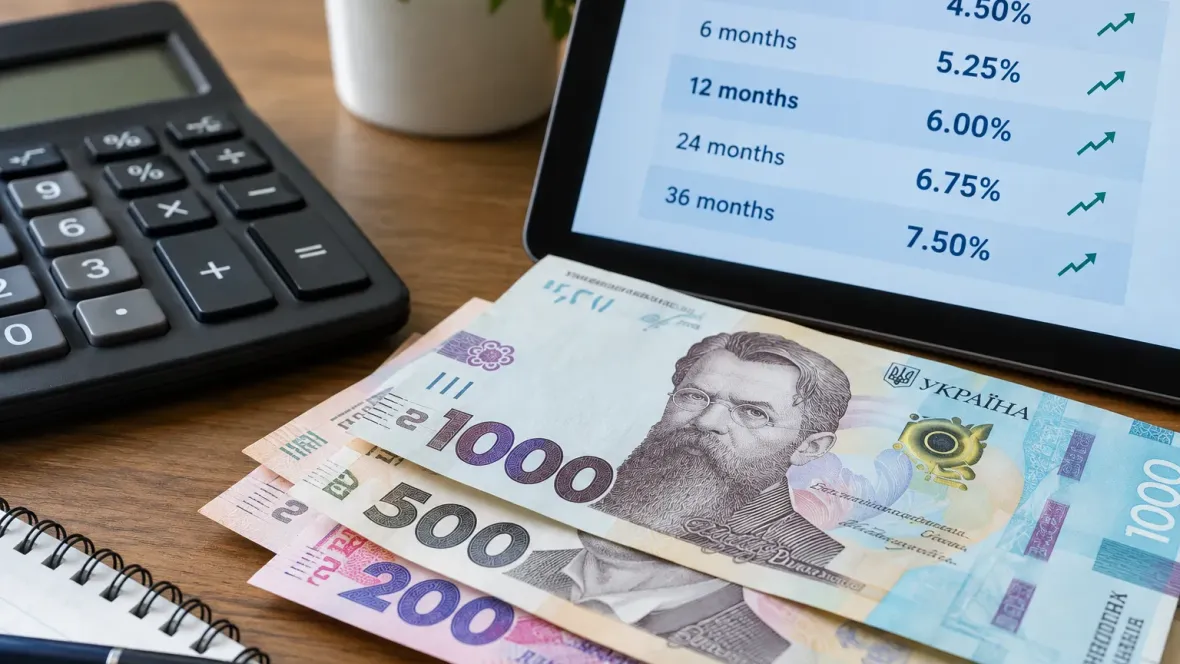
After the National Bank of Ukraine (NBU) raised the key policy rate to 16.5% per annum, banks may gradually increase the yields on hryvnia deposits; the decision came into effect on 30 October.
Expected rate increases and active terms
Dmytro Zamotaiev, Director of the Retail Business Department at Globus Bank, predicts that most of the increases will be in the 3–6 month deposit segment. “We expect the greatest activity in the 3–6 month deposit segment. Primarily, rates may be raised by those banks that, after the previous NBU decision, decided to wait and did not change their offers,” said Dmytro Zamotaiev.
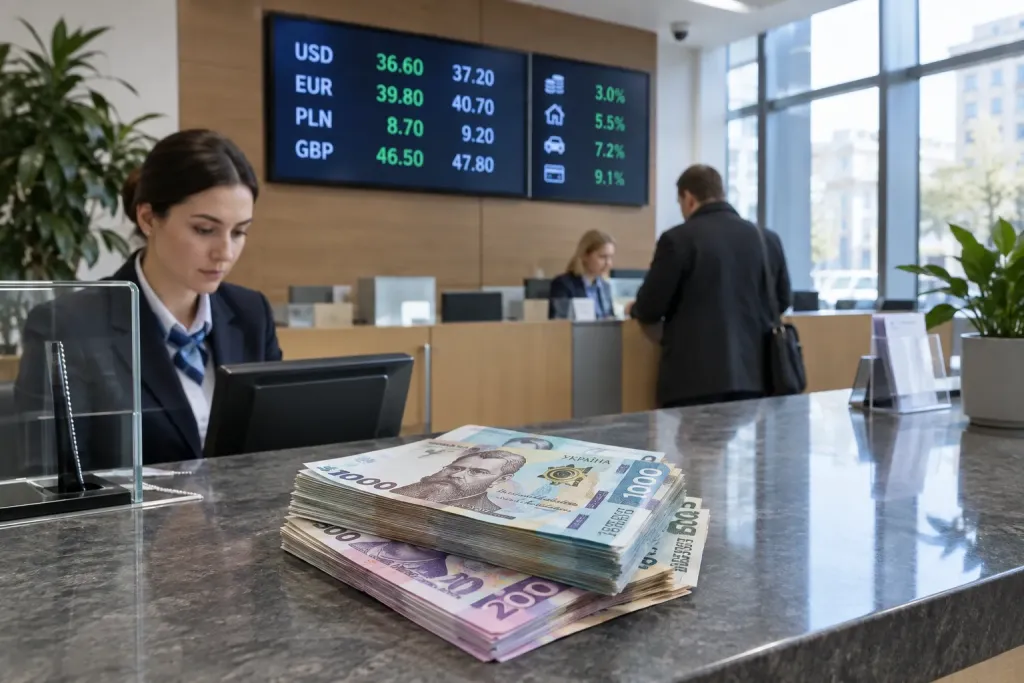
According to him, any revision of rates will depend on individual banks’ needs to raise funds and competition for depositors. Zamotaiev also noted that clients will likely continue to prefer short-term deposits because they combine yield with access to funds.
What rates are already on offer and how much you can earn
At the end of October, average rates on hryvnia deposits ranged from 14% to 15% per annum depending on term, while the highest offers from some banks reached 17–17.5%. On a one-year deposit at 17.5% the accrued interest would be 17,500 UAH.

After deducting 18% personal income tax (PIT) and a 5% military levy, the net income on 100,000 UAH at a rate of 17.5% would be 13,475 UAH. Maximum rates may apply only under special conditions for opening the deposit, and actual income will depend on the exact placement term and the method of interest accrual.
Comparison with buying foreign currency and other options
According to the banker’s calculation, if you buy dollars for 100,000 UAH at a notional exchange rate of 45.60 UAH/$, you could get approximately $2,193. “Buying foreign currency does not guarantee profit by itself. To beat a hryvnia deposit, the dollar or euro would have to appreciate enough to offset the entire net interest income,” Dmytro Zamotaiev explained.
An alternative to bank deposits remains domestic government bonds (OVDP), the income from which for individuals is not subject to personal income tax (PIT) and the military levy, but the early sale of government bonds is carried out at the market price, so the final outcome may differ from expectations.