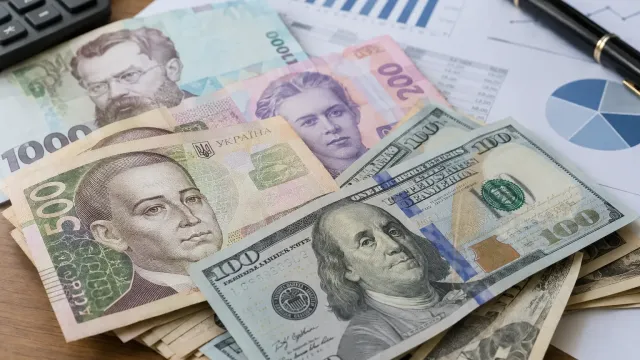



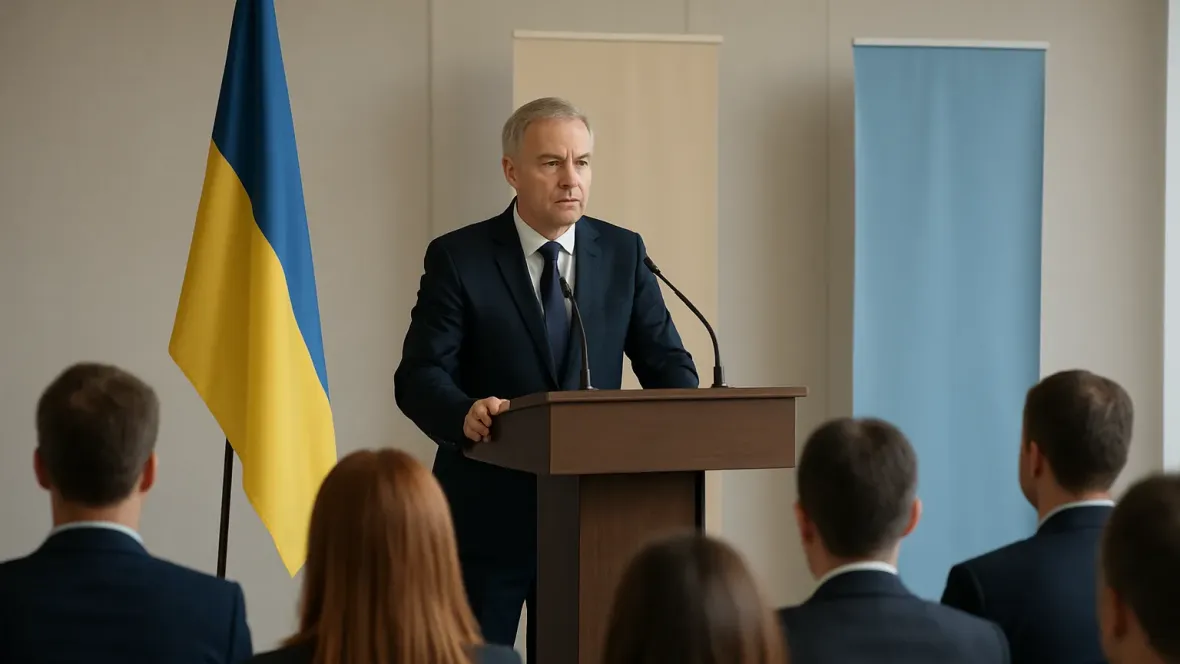
Andriy Pyshnyi, head of the National Bank of Ukraine (NBU), said at the Annual General Meeting of the European Business Association (AGMM 2026) that the regulator will not allow sharp jumps in the exchange rate and will maintain the resilience of the foreign exchange market. “Do not expect the National Bank to make the exchange rate shoot into space. We have been and remain very determined in our efforts to ensure the resilience of the foreign exchange market. Do not confuse this with fixing the rate, because it operates in a regime of managed flexibility and moves in both directions,” Pyshnyi said.
How the NBU plans to curb exchange rate volatility
Pyshnyi said the regulator will continue to cover the structural deficit of foreign currency in the market. According to him, this should help avoid excessive volatility that can affect inflation expectations and create more predictable planning conditions for businesses.
By “structural deficit of foreign currency” is meant a shortage of foreign currency supply in the market relative to demand; covering such a shortfall includes regulator operations aimed at stabilising the situation.

Fifth package of easing measures and financing for the energy sector
Over the past two months the National Bank has already introduced four packages of measures to stimulate lending to the agricultural sector, the defence industry and energy infrastructure. The NBU is analysing options for a fifth package of easing measures - without waiting for a separate request from business.
Pyshnyi noted that banks have directed over 70 billion UAH to restore generation totalling 2.2 GW under a targeted programme that has been in effect for two years. At the same time, the need for financing remains due to persistent strikes on substations and CHP-4 and CHP-5.
NBU forecasts for the economy and inflation
The National Bank expects the Ukrainian economy to shrink by 0.4% in 2026 and to grow by 0.4% in 2027. The baseline forecast assumes a partial restoration of maritime logistics in the first half of 2027.
Pyshnyi also reported an acceleration of inflation in 2026 due to external factors and higher fuel prices, and said that, in his assessment, inflation will gradually ease toward the 5% target in 2027 thanks to the regulator’s proactive policy.
What to watch in the coming days: the official NBU exchange rate, the volumes of coverage of the structural foreign currency deficit, volumes of bank financing for the agricultural sector, the condition of energy infrastructure and the restoration of maritime logistics, as well as inflation dynamics.