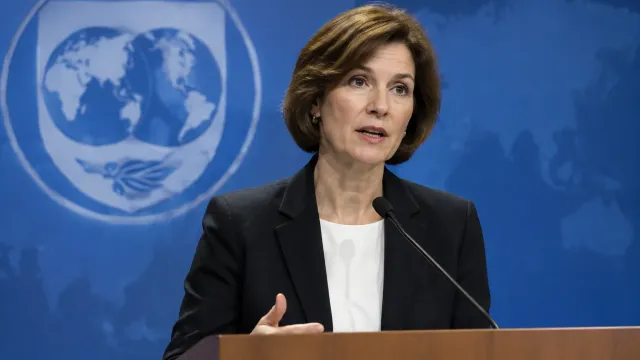



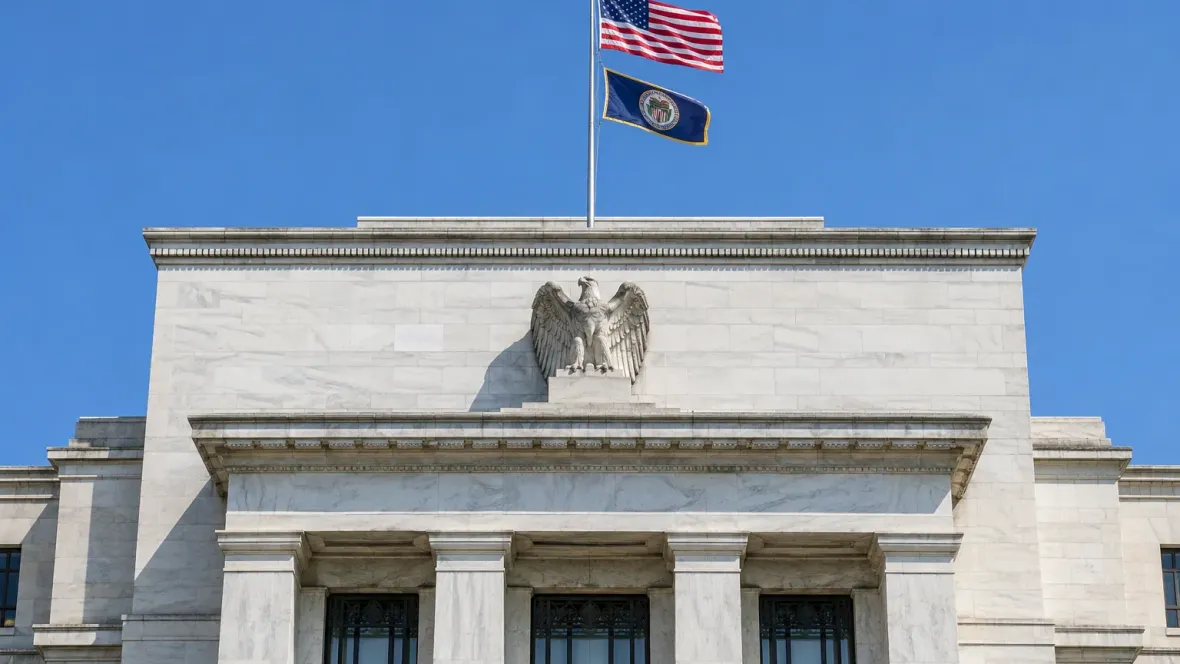
The Federal Reserve (the Fed) left its target range for the federal funds rate at 3,75−4% per annum following the two-day meeting on 27−28 October.
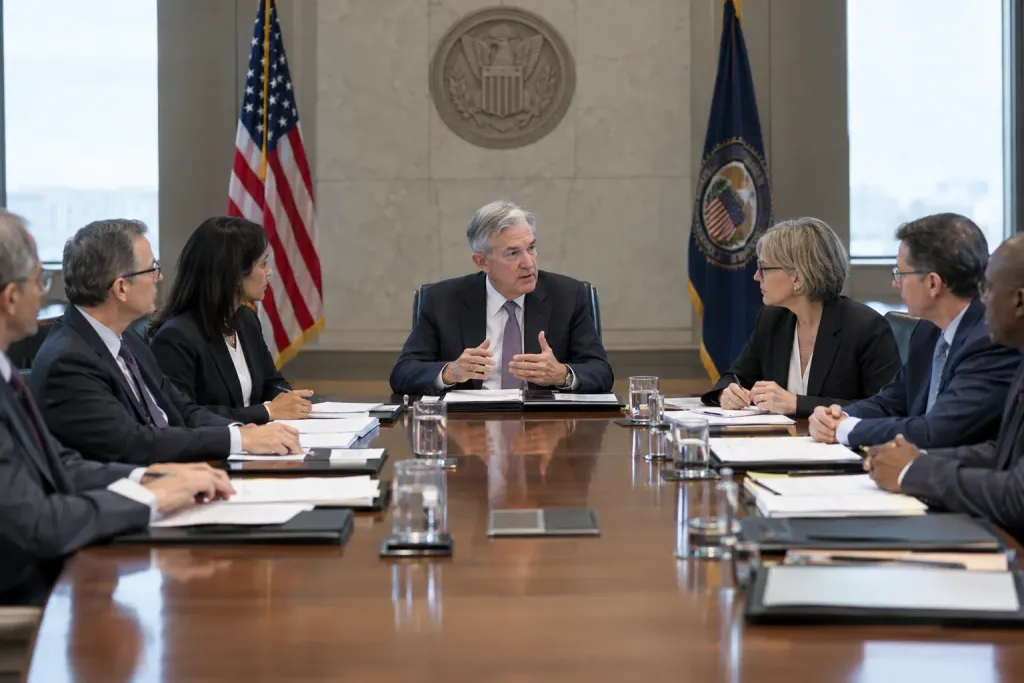
The Federal Open Market Committee (FOMC) voted to keep the range unchanged: 10 members supported the decision and two voted for a 0,25 percentage point increase. The range was first set in September, when the regulator raised the rate by 0,25 percentage points.
Committee wording and data expectations
In its press release the FOMC noted “heightened uncertainty that remains, in part reflecting geopolitical developments,” and said that economic activity and labour productivity are growing at a solid pace, business investment in fixed capital remains substantial, and the unemployment rate has changed little.
“The Committee will rely on incoming data to help determine the appropriate path of monetary policy to achieve a timely return of inflation to the 2% target. The Committee is committed to price stability,” the statement said.
Market reaction to the decision
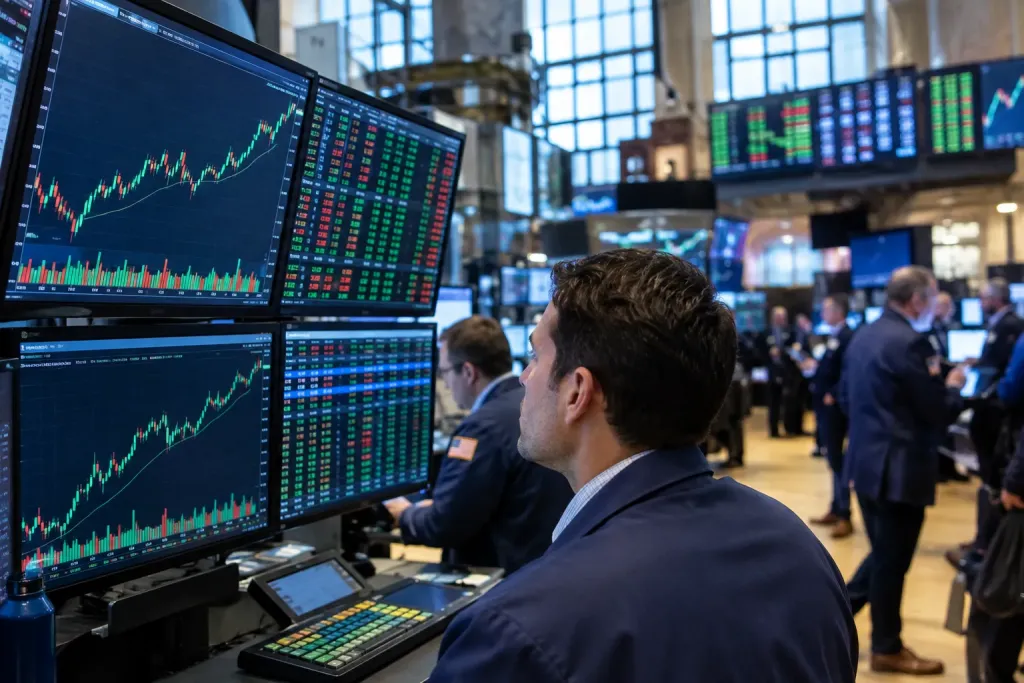
Market reaction was muted: the S&P 500 index rose about 0.2% after the release, the Dow Jones Industrial Average gained 0.3%, while the Nasdaq Composite was virtually unchanged.
Because the decision to keep the rate unchanged was not a surprise, index moves were small.
Assessments on further hikes
Inflation in the US has remained above the Fed’s 2% target for nearly six years. Preliminary estimates show the personal consumption expenditures (PCE) price index, the Fed’s preferred gauge, was at 3% or higher year‑on‑year in September.
Causes cited include an energy shock after US President Donald Trump’s decision to attack Iran, tariffs, elevated demand from companies in the artificial intelligence sector and consumer spending. Oil rose to about $114 per barrel, up roughly 20% since the start of September.
Experts’ forecasts and analysts’ positions
“The question today is not whether the Fed will raise rates again, but how many more hikes there will be,” wrote TS Lombard managing director Dario Perkins (quoted by Reuters).
Monetary Policy Analytics economist Derek Tan expects three more 0,25 percentage point increases at upcoming meetings. Mizuho economist Alex Pelle called a possible decision not to raise in October a mistake and expects a 0,25 percentage point increase in December, while judging the risk of a 0,5 percentage point hike to be higher than the risk of a pause.
Piper Sandler analysts say Fed policy remains accommodative: an effective rate of 3,9% supports growth and mitigates the impact on the economy of bond yields around 5%, they note.
Previous decisions and the calendar
In September the Fed raised the rate by 0,25 percentage points to 3,75−4% for the first time since July 2023; that decision was unanimous, 12 votes in favour. Before that, the rate had been held at 3,5−3,75% for nine months.
Kevin Warsh took charge of the Federal Reserve at the end of May. At the July meeting under his leadership the regulator left the rate unchanged, with the presidents of the Federal Reserve Banks of Cleveland, Dallas and Minneapolis voting against. In the median participant forecast from the September meeting, the rate was projected to be 4,1% by the end of 2026, implying one more 0,25 percentage point increase.
The next Fed meeting is scheduled for 8−9 December.