


According to the World Bank in its October report Commodity Markets Outlook, global grain prices will rise by 14.1% in 2026 and by 9.3% in 2027. The food price index will increase by 10.3% in 2026 and by 7.2% in 2027.
Outlook for wheat, maize, barley and rice
‘Wheat prices will rise the most due to supply disruptions from the Black Sea region, adverse weather conditions and higher production costs,’ the report says. Estimates suggest prices for US hard red winter (HRW) wheat will rise by 28% in 2026 — from $243/t to $311/t — and by a further 13.5% in 2027 to $353/t.
Maize prices will rise by 9.9% — from $203/t to $223/t in 2026 and to $235/t in 2027 (+5.4%). Barley prices are expected to be $164/t in 2026 and $172/t in 2027. The average price of Thai 5% broken rice will increase from $408/t to $448/t in 2026 and to $500/t in 2027.
Rising prices for soy products
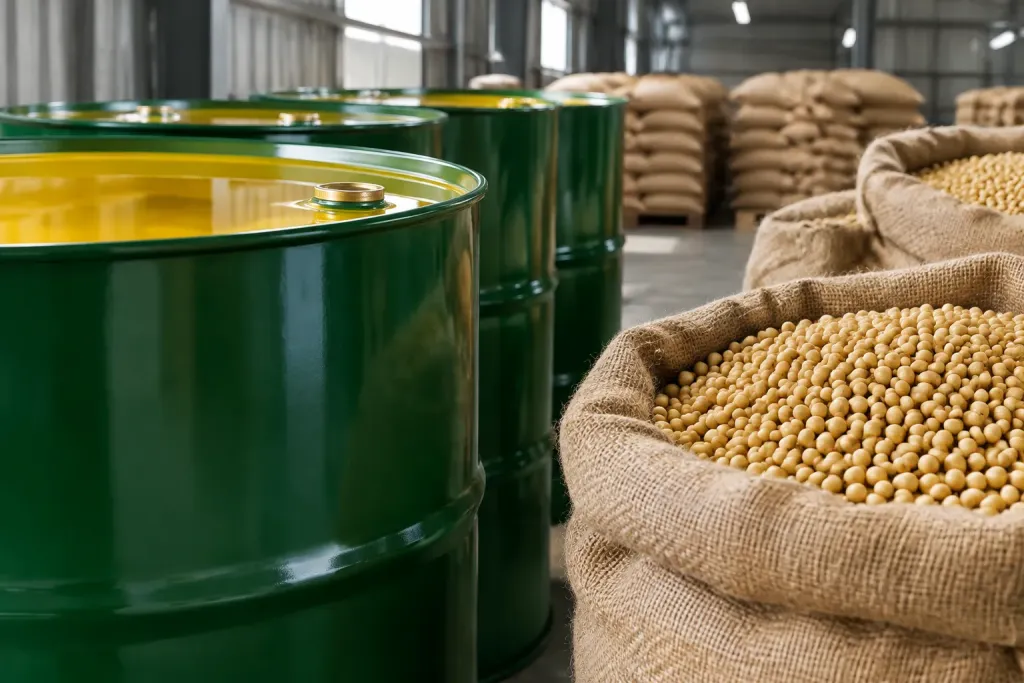
Markets for oilseeds and their processed products will also become more expensive, with the largest increase forecast for soybean oil. In 2026 its price will rise by 39% to $1585/t, and in 2027 to $1765/t.
Soybean meal prices will rise by 17.5% in 2026 to $430/t, and by a further 9.5% in 2027 to $471/t. Soybean prices are forecast at $489/t in 2026 and $515/t in 2027.
Energy, fertilisers and risk factors
Rising energy and fertiliser costs further increase the production costs of agricultural products. The World Bank estimates that energy prices will rise by 32% in 2026, with Brent crude oil quotations in particular increasing from $69/barrel to $91/barrel.
The fertiliser price index is expected to increase by 14.3% in 2026, and urea prices will rise by 20.6% to $510/t; in 2027 the fertiliser index is expected to fall by 12.4%. The World Bank also identifies key risks as blockages to shipments from Black Sea ports, rising energy prices and a possible strengthening of El Niño. If these factors combine, global prices for food commodities could exceed the baseline forecast by 12% in 2027 and be higher than in 2022, with the greatest impact on import-dependent countries in North Africa, the Middle East and Asia.