




Reserve levels at the start of October 2026
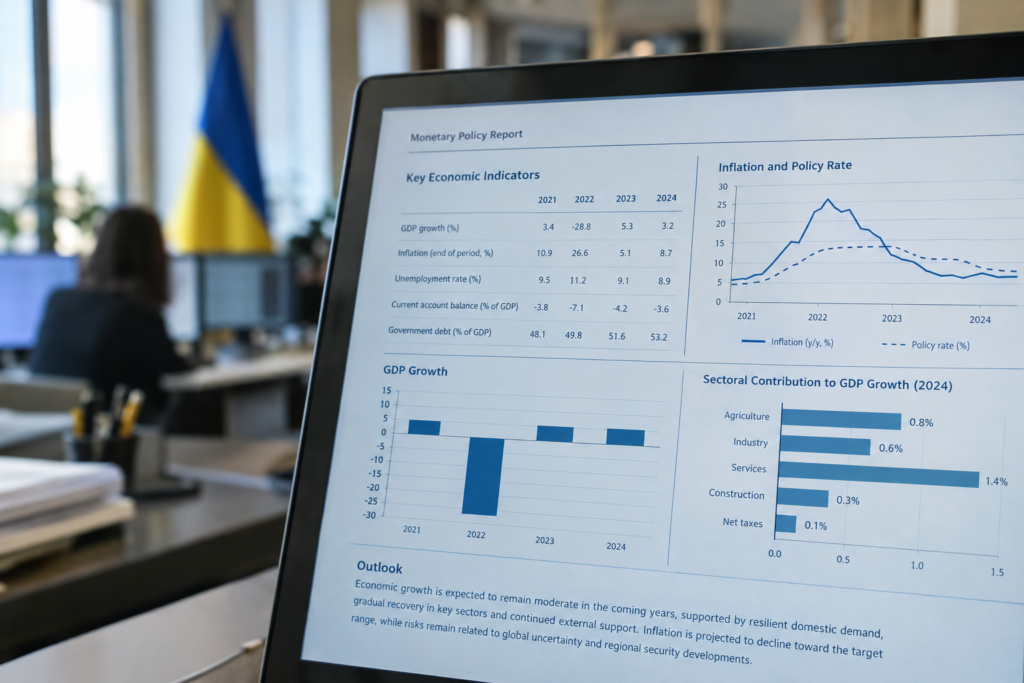
International reserves of Ukraine as of 1 October 2026 amounted to $47 101,8 mln. In September they decreased by 3,2%, which the press service of the National Bank of Ukraine (NBU) reported.
The level of reserves still allows the foreign-exchange market to remain resilient. The current volume of reserves covers financing of 4,0 months of future imports, which is a key benchmark for assessing the country’s solvency.
Main factors behind the September decline
September’s dynamics were driven by currency interventions by the National Bank of Ukraine (NBU) and foreign-currency debt-service payments. According to the NBU, $5 449,9 mln was sold on the foreign-exchange market in September, which had a material impact on the reduction of reserves.
At the same time, $890,4 mln was credited to the government’s foreign-currency accounts at the NBU via World Bank accounts. In addition, a tranche of $3,81 bln from the European Union (EU) arrived in Ukraine under the Ukraine Support Loan programme.

Role of the EU tranche and government conversion of funds
Funds from the EU under the Ukraine Support Loan are not recorded in international reserves because of their earmarked purpose. However, if the government sells such foreign currency to the National Bank of Ukraine (NBU) for hryvnia for subsequent use for the intended purpose, reserves increase by the corresponding amount.
In September the government converted $3,81 bln of such funds into UAH, which temporarily supported an increase in reserves. At the same time, financing in UAH from these funds subsequently raises demand on the foreign-exchange market and affects the volume of NBU interventions. Transactions with these funds serve a reallocative function between state needs and the foreign-exchange market.
Debt payments and other influences
In September $195,7 mln was paid for servicing and repaying sovereign debt in foreign currency. Separately noted is a payment to the International Monetary Fund (IMF) of $254,3 mln.
Also, as a result of revaluation of financial instruments and other factors, reserves declined by $368,3 mln. The total of these three groups of influences together with interventions explains the overall change in reserves in September.
Who is affected by the change in reserves and what it means for the market
The reduction in reserves primarily affects the government, which makes payments and carries out conversions, and the National Bank of Ukraine (NBU), which conducts foreign-exchange interventions to smooth exchange-rate volatility. Sovereign debtors and international creditors feel a direct impact via payment schedules and demand for foreign currency.
For importers and businesses, the indicator of 4,0 months covers upcoming import needs and serves as a marker of solvency. The data are presented as of 1 October 2026 and reflect the balance of currency flows in September.