




Start of the operation and metal purchase
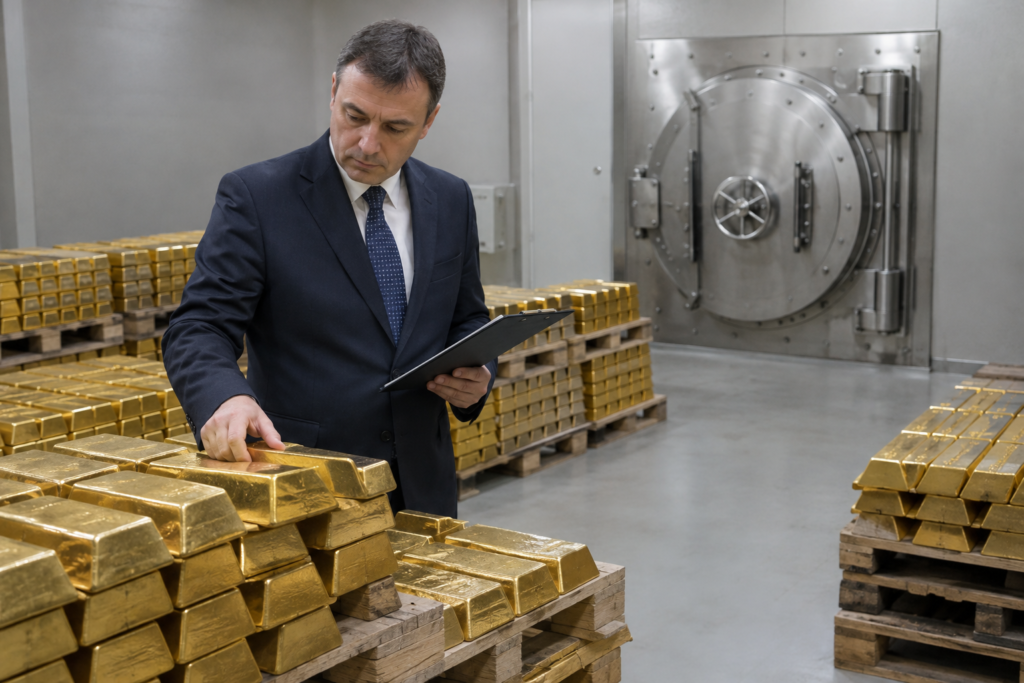
The Bulgarian National Bank bought gold in advance to prepare for the transfer of reserves to the European Central Bank (ECB) from 1 January 2026. This involved about two tonnes of metal that the central bank acquired specifically for the procedure so that the country’s reserve levels would remain effectively unchanged after the transfer.
These measures were part of the technical preparations for the transition to the euro. The purchase of gold allowed Bulgaria to comply with the ECB’s rules on the transfer of foreign-exchange reserves without a sudden change in the asset composition.
Transfer of reserves and exchange mechanics
Under ECB rules Bulgaria had to hand over part of its foreign-exchange reserves to the European regulator. The transfer consisted mainly of currency assets and partly of gold in a ratio of 85:15. That means 85 per cent of the reserves were in currency and 15 per cent in gold.
In return, the national central bank received a monetary claim on the ECB. A monetary claim is a claim as an asset on the central bank’s balance sheet and reflects the value of the transferred reserves in the form of a claim on the European regulator.
What changed in the balances and who the decision affects
The changes primarily affected the balance sheet of the Bulgarian National Bank and the reserves managed by the ECB. For the Bulgarian side the physical gold was transferred to the ECB, but an equivalent monetary claim remained on the balance sheet, so the total volume of reserves was not expected to decline.
The decision concerns mainly Bulgaria’s central bank, which from 1 January 2026 will see different arrangements for storing and managing part of its reserves. Households and businesses will not receive direct payments or face new taxes because of this operation, but changes in the structure of reserves are important for the country’s macroeconomic stability.

International context: central bank gold purchases in August
According to the World Gold Council (WGC), global central banks bought 39 tonnes of gold in August net of sales. Year-to-date purchases reached 170 tonnes, with demand driven mainly by countries running long-term accumulation programmes. Details can be found in the WGC review.
The biggest buyer in August was the People’s Bank of China with 20 tonnes. Year-to-date China has bought 80 tonnes. Poland accumulated 98 tonnes from January to August, including 8 tonnes in August. Uzbekistan added 8 tonnes in the month, bringing its year-to-date purchases to almost 50 tonnes; Kazakhstan bought 7 tonnes in August and about 36 tonnes over the eight months. The Czech National Bank has been replenishing its reserves for 42 consecutive months and added 2 tonnes in August, taking its year-to-date purchases to 14 tonnes and total holdings to 86 tonnes. Bolivia and Ghana each bought roughly 1 tonne, Turkey added 3 tonnes, and the Central Bank of Jordan sold 3 tonnes in August.