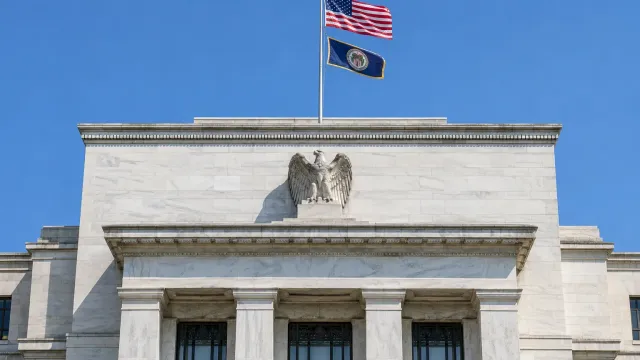




According to the National Bank of Ukraine (NBU), in October the bank sold more than $6 billion on the foreign exchange market, but the deficit (shortage of foreign currency) has not disappeared and remains high.
Volumes of interventions and exchange-rate movements in October
In October the regulator put more than $6 billion into the market, and in the last week of the month, from 26 to 30 October, it sold $1.82 billion — a record weekly amount since the start of 2026. By comparison, in September the NBU sold $5.45 billion, and for the whole of 2025 sales amounted to $36.1 billion.
After the change in the exchange-rate anchor, demand for foreign currency rose: the cash (retail) dollar increased by 2.3% to 46.04 hryvnia, the official rate rose by 1.5% to 45.53 hryvnia, on the interbank market the dollar at times reached 45.70−45.75 hryvnia, and the cash rate hit 46.20 hryvnia. Analyst Andriy Shevchyshyn described the regulator’s policy as: “The NBU loosened the reins exactly as much as it decided and when it decided. And where it decided, it pulled them back.”

Demand and supply of foreign currency on the interbank and cash markets
By estimate, average daily purchases of foreign currency on the interbank market in October rose by 5.1% to $433.7 million, while supply increased by 5.9% to $245.6 million — a daily gap of $181.1 million. Overall, over ten months the regulator executed $44.3 billion on the interbank market.
Demand among the public also increased: Ukrainians bought on average $101.7 million in cash foreign currency per day, 7.3% more than in September, while sales fell to $58.2 million. The cash-market deficit reached $43.5 million per day, and together with the interbank market the average daily shortfall was $231.6 million — what the analyst calls a historical maximum.
Imports outpace exports — the gap in foreign trade
For January–August 2026 imports of goods amounted to $66.3 billion, exports to $26.6 billion, producing a trade deficit of almost $39.7 billion. For the same period in 2025 imports were $52.6 billion and exports $26.3 billion; imports rose by 26%, while exports increased by only 1%.
More than 73% of imports fall into three categories: machinery, equipment and transport — $29.9 billion; fuel and energy products — $9.5 billion; and chemical-industry products — more than $9 billion. Shevchyshyn notes that “most of the imports are critical imports and goods that cannot be produced in Ukraine because of the war or the loss of local production”, and overall he estimates 60–70% of imports as critically important.
Export restrictions due to ports, logistics and industry
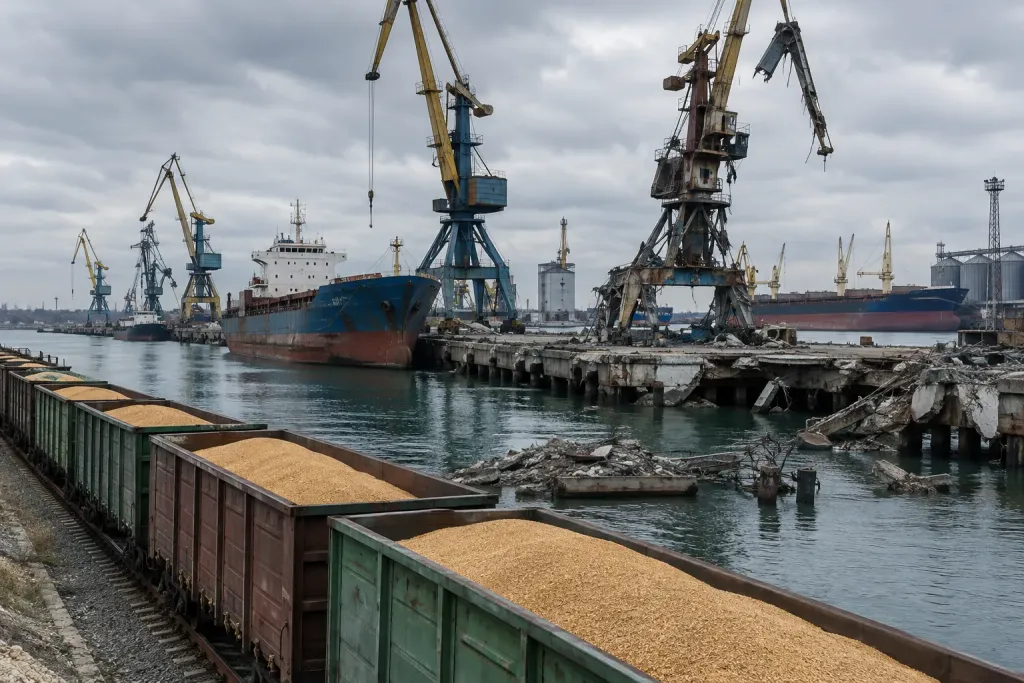
Russian strikes on port infrastructure in Odesa region have significantly constrained export capacity. In August exports of goods were $2.5 billion, 19.4% less than in July; shipments of grain fell to 981,000 tonnes, 2.5 times lower than in August 2025.
Some shipments were rerouted via alternative corridors: rail deliveries of grain to Danube ports in August almost tripled compared with July, to 248,800 tonnes, but rail deliveries to the ports of Greater Odesa fell by 94.9% to 68,500 tonnes. Shevchyshyn believes that “this now looks like the maximum level that can be achieved until the ports of Greater Odesa are opened.” The suspension of some metallurgical plants further limits export supply.
The NBU estimates that, because of attacks on ports and blockage of maritime infrastructure, Ukraine could miss out on about $2.5 billion in export revenue in the second half of 2026.
Reserves, the policy rate and other tools to curb demand
Ukraine’s international reserves reached a record $57.7 billion at the end of January 2026, and stood at $47.1 billion on 1 October, down 3.2% over the month. According to the regulator, available reserves cover four months of future imports.
In addition to interventions, the NBU raised its key policy rate from 16% to 16.5% in a decision on 29 October, effective 30 October; this was the third consecutive increase, and the regulator plans to keep the rate at this level until the second quarter of 2027. In September consumer prices rose by 10% year on year, the NBU forecasts inflation of 12.5% for 2026 and now expects GDP to contract by 0.4% in 2026.
Shevchyshyn points out that interventions ease short-term pressure on the exchange rate but do not address the underlying cause of the deficit: “This is burning reserves, not solving the global problem,” the analyst says. He also estimates potential future inflows from partners by the end of the year at up to $16 billion of budgetary support and up to $15 billion of military funding, stressing that these are his estimates rather than confirmed receipts.
On the dollar exchange rate, Shevchyshyn expects managed flexibility: the baseline scenario (70% probability) — interbank 45.1−45.95 hryvnia, cash 45.5−46.5 hryvnia; a pessimistic scenario (15%) — cash up to 47.5 hryvnia, interbank up to 46.9 hryvnia; an optimistic scenario (15%) — cash 45−46 hryvnia, interbank 45−45.5 hryvnia. He also notes: “A deep devaluation will not help and will not significantly reduce imports. It will only accelerate inflation.”