


What happened
The headline states the main point: the US dollar is strengthening against major global currencies. The source reports a general upward trend for the dollar but does not provide specific exchange rates or percentages in the text. This means the market is experiencing increased demand for dollars, and the effects are visible across different segments of the foreign exchange market.
In this publication we do not add new figures that are not in the source: all specific rates, dates or forecasts must be provided exclusively by the source. Instead, we will explain how to read such news and what it means for those planning to exchange currency or to pay international bills.
Why this is happening
Movements in the dollar’s exchange rate are usually explained by several categories of factors. Below are some terms and a simple interpretation:
- Dollar Index (DXY) — an indicator that reflects the value of the dollar against a basket of major currencies. When the DXY rises, the dollar is generally appreciating. Explanation: it is an averaged indicator that gives a sense of the currency’s overall strength in the international market.
- Interbank market — the market where banks exchange currency with one another. This is where the base rate is formed, which other segments often reference.
- Interventions — actions by the central bank in the foreign exchange market to smooth out rate fluctuations. Simply put, these are government purchases or sales of currency to stabilise the exchange rate.
- Policy rate — the percentage rate at which the central bank lends to commercial banks. It affects the attractiveness of the currency: a higher rate can support the national currency, while a lower rate can weaken it.
There can be several simultaneous reasons for the dollar’s strengthening: a global increase in demand for safe-haven assets, differences in monetary policy between countries, or expectations of changes in key economic indicators. The source notes the general picture but lacks specific details regarding each of these factors.

What this means for the hryvnia and for the average payer
When the dollar strengthens in the global market, it affects national exchange rates as well, but this effect plays out differently across three main segments:
- Official exchange rate of the National Bank of Ukraine (NBU): this is the rate set by the central bank, used for state budget calculations and official payments. The source does not provide values for the official rate, so to check it you should refer to statements by the National Bank of Ukraine (NBU).
- Interbank market: the rate for transactions between banks. This is where changes in demand and supply for currency are reflected most quickly, but the source does not provide specific figures.
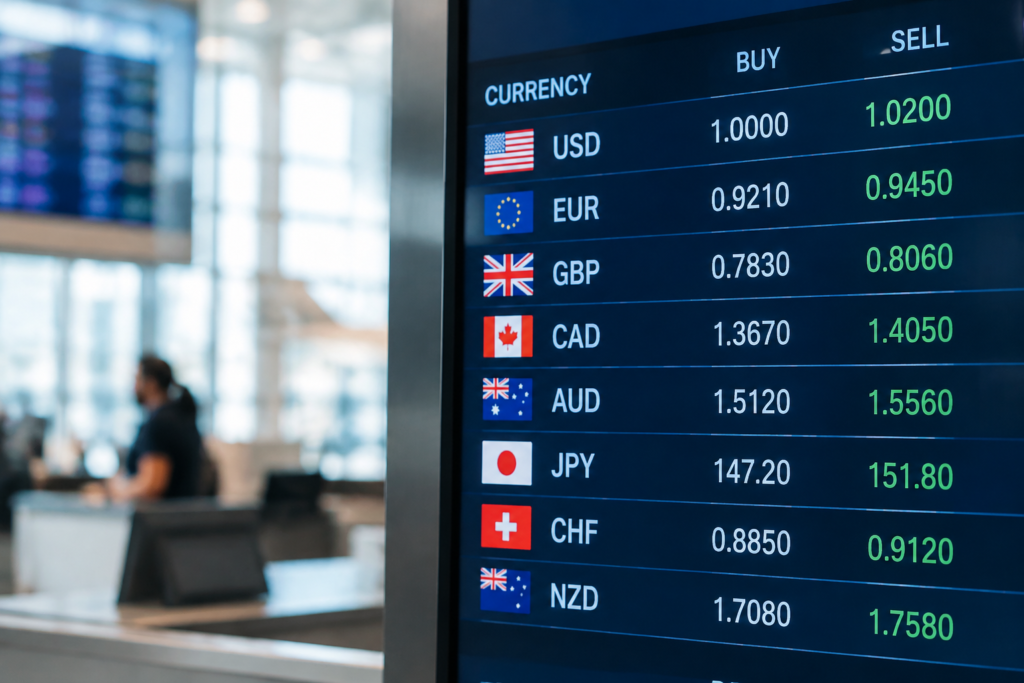
- Cash exchange rate: the rates at branches and exchange offices, which experience fluctuations in a slightly different way — they include banks’ and exchangers’ margins as well as local customer needs.
For the average payer it is important to understand the difference between these rates: the official rate may differ from what you see at your bank when buying or selling cash, and the interbank rate is yet another reference. It should also be remembered that central bank interventions can temporarily smooth rate movements, but they do not remove the external causes of the dollar’s strengthening.
Brief summary
The source reports a general strengthening of the US dollar against major currencies. Since the text does not contain specific rates or forecasts, we focused on explaining the mechanics of currency movements and distinguishing market segments. To obtain numerical values for the exchange rate of the National Bank of Ukraine (NBU), the interbank market or cash rates, refer to official statements and the quotations from your bank.
What to watch in the coming days: changes to the official exchange rate set by the National Bank of Ukraine (NBU), interbank market dynamics, announcements about interventions and news on interest rates (the policy rate). These indicators most often determine short-term rate movements and affect the cost of currency transactions.