



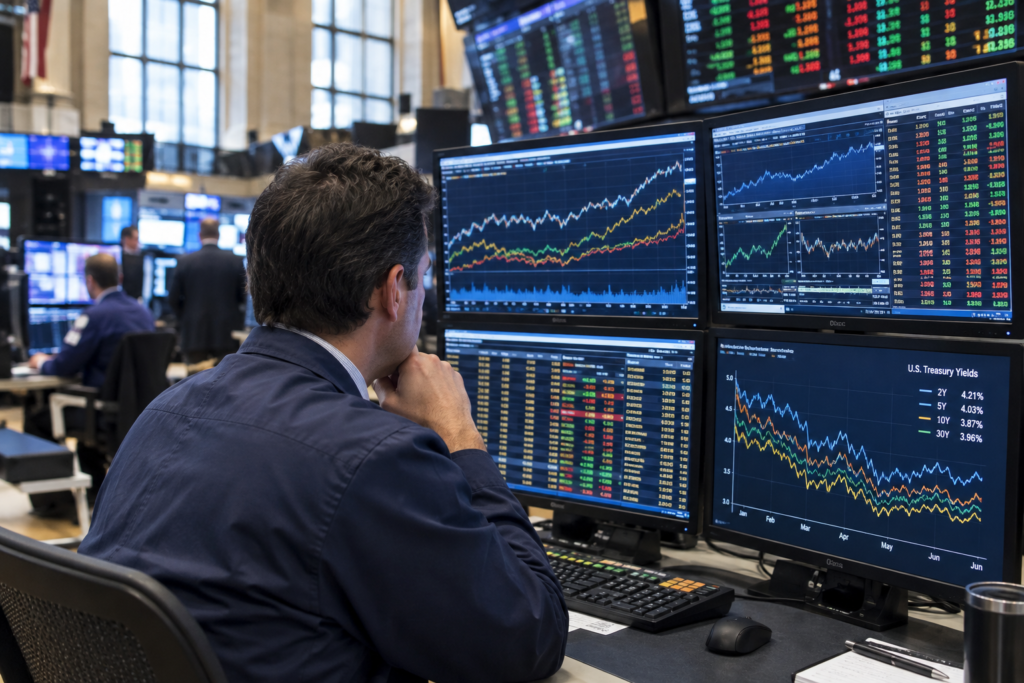
According to Bloomberg, U.S. government bonds have again become a refuge for investors following a sell-off in technology shares. The Nasdaq 100 (a market index that tracks the prices of 100 leading technology companies) fell 5.5%, while the yield (a measure of a security’s return) on 10-year U.S. Treasury bonds dropped by roughly 17 basis points last week.
Why the 10-year Treasury yield fell
The reason is that after several months of rising yields—driven by high inflation and substantial borrowing—recent moves in the equity market have forced traders to change position. Investors who had bet on further increases in yields (i.e. falling bond prices) were compelled to close some short positions and buy back securities, which pushed yields down.
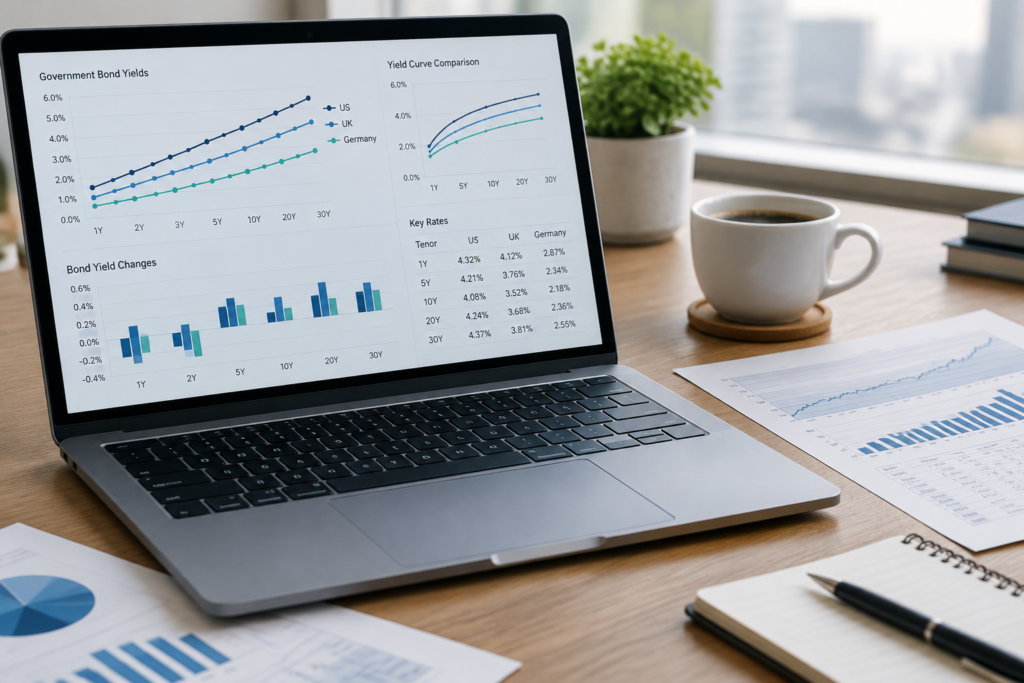
Earlier, the 10-year yield had climbed for seven months and reached its highest level in more than two decades amid inflationary pressure and strong demand for capital to finance projects, notably in the field of artificial intelligence. “Reports of the death of U.S. Treasuries are greatly exaggerated,” said James Etty, a portfolio manager at Marlborough Investment Management.
How problems in the artificial intelligence (AI) sector affected the bond market and rates
Problems in the artificial intelligence sector affected bonds through inflation dynamics and large corporate debt issuance. Bloomberg reports that investment-grade companies placed $1.7 trillion of bonds this year—29% more than last year—adding to capital demand and putting upward pressure on sovereign yields.
Falls in the valuations of certain AI-related companies (notably Anthropic and CoreWeave) weakened expectations of revenue growth and partly eased inflationary pressure. Last week, after inflation data came in hotter than expected, traders had priced in roughly a 50% chance of a rate hike by the Federal Reserve (the Fed) in October, but those expectations softened amid the stock sell-off.
Markets still anticipate one rate rise by the end of the year and another in 2027. On Monday during Asian trading, the yield on 10-year U.S. Treasuries fell by one basis point—to 5.06%. Masahiko Loo, an analyst at State Street Investment Management, believes that in a broad risk-off move government bonds could again serve as an effective portfolio hedge. Afonso Borges, a bond-market strategist at Julius Baer, also points out that the downturn in the AI sector could act as a demand shock and support demand for Treasury securities.