



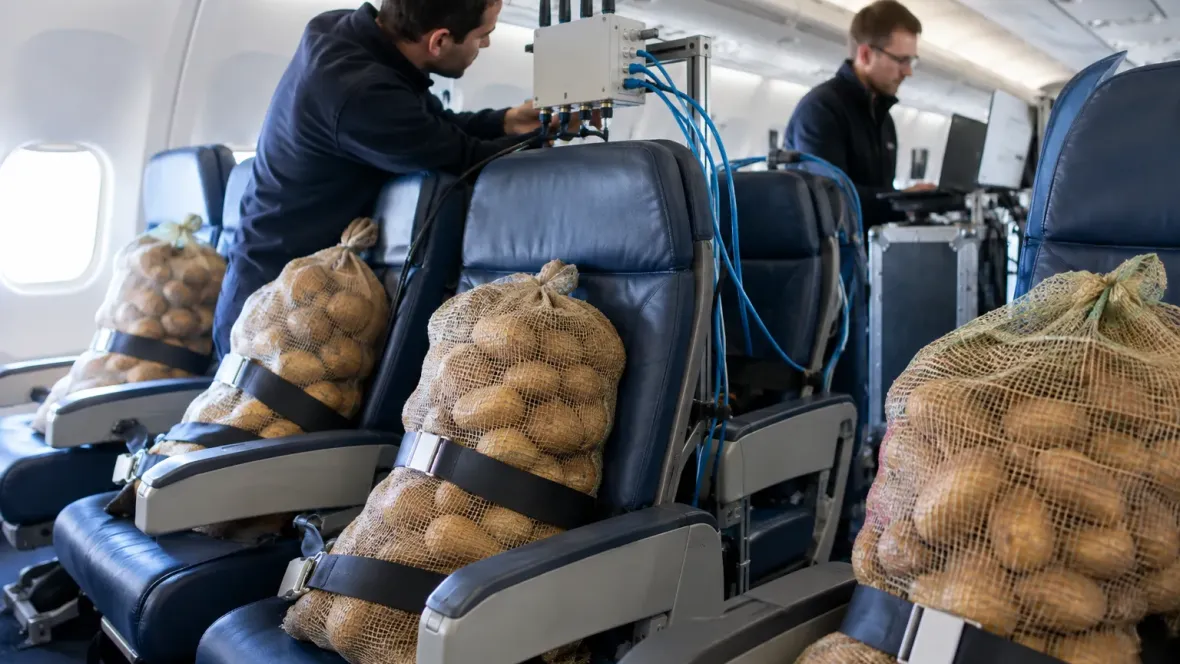
According to Boeing, in 2012 the company conducted an experiment in which it replaced passengers with approximately 9 tonnes of potatoes during onboard Wi‑Fi testing.
Potatoes interact with radio waves similarly to the human body, which allowed the company to reduce the time and resources needed for testing and avoid the lengthy recruitment of volunteers.
How the tests were conducted
In the early 2010s, wireless internet was only beginning to be introduced on aircraft, and an empty fuselage did not reproduce the effect of human bodies, which absorb and reflect electromagnetic waves. For realistic testing Boeing would have needed to recruit dozens of volunteers for about two weeks in a stationary environment with regular breaks and compensation for their time.
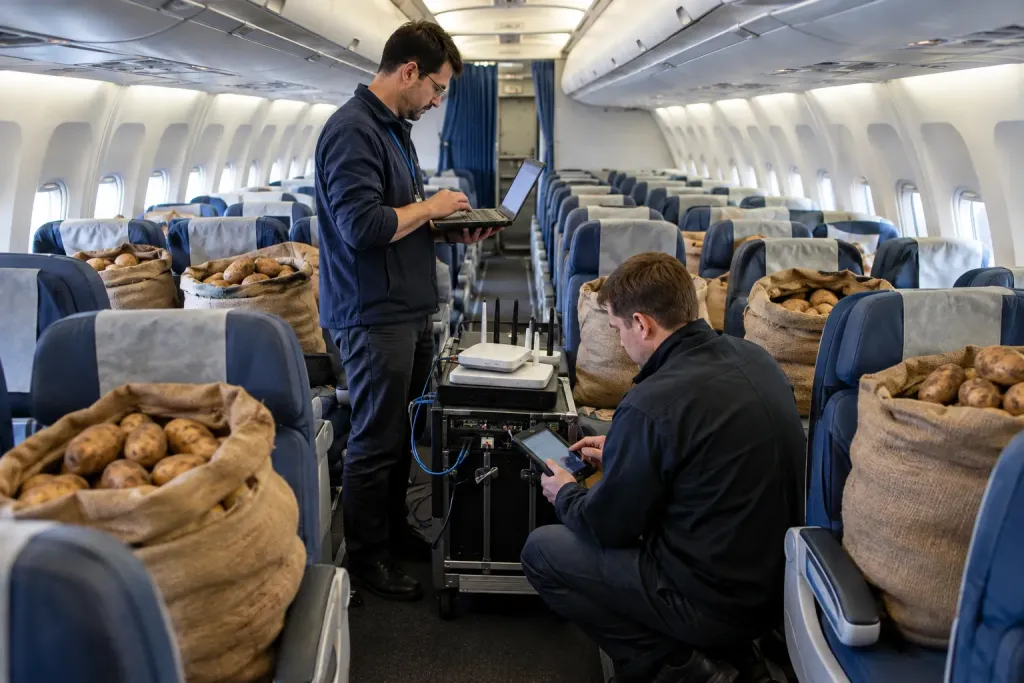
Such conditions made the testing expensive and labour-intensive, so engineers sought alternative methods to model the presence of passengers and the impact on signal propagation.
The potato alternative and the results
The engineers purchased approximately 9 tonnes of potatoes, which are composed of roughly 80% water and respond to radio waves in a way similar to the human body. The potatoes were placed in sacks on the seats, and the experiment was called SPUDS (Synthetic Personnel Using Dielectric Substitution), where “spud” is a colloquial name for a potato.
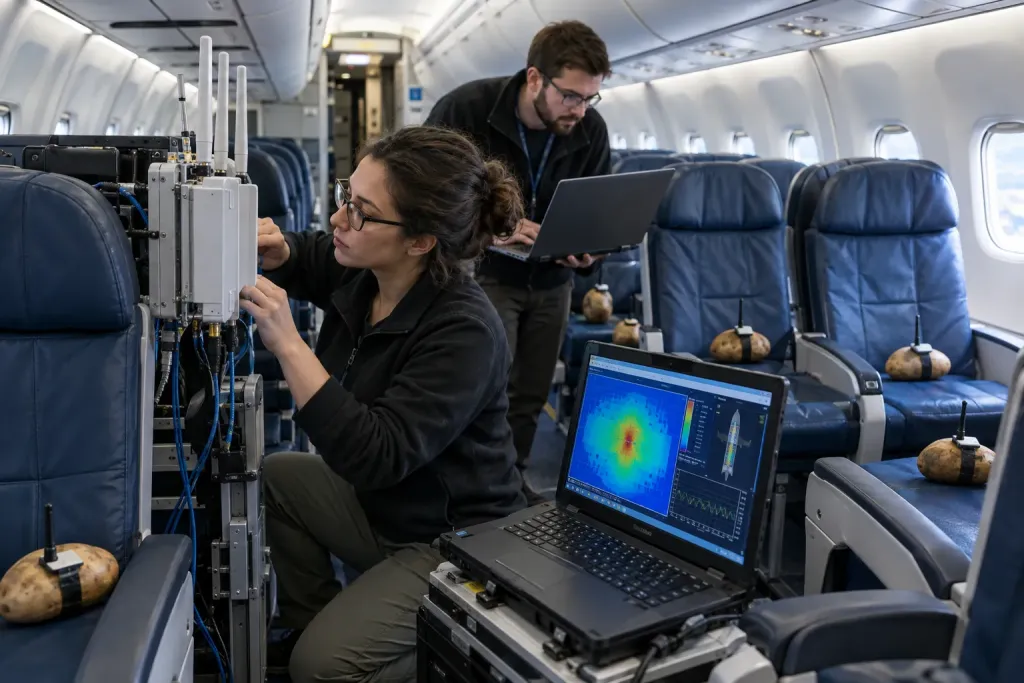
Thanks to this approach the testing time was cut from the expected 14 days to just 10 hours. Engineers mapped areas with the weakest coverage, adjusted the placement of relay units to achieve an even distribution of the signal, and later confirmed the initial findings with tests using real volunteers.