




According to research by Borys Muselyak, managing partner at the venture fund SMOK Ventures, Ukraine took first place among countries in Central and Eastern Europe (CEE) for the number of startups with founders who have gone through Y Combinator — 37 companies compared with 34 Polish companies.
Methodology for counting startups from the region
The official Y Combinator directory shows approximately 30 companies from the region, but it classifies startups by the location of their headquarters, whereas many founders relocate to the United States (US) after launching. Muselyak analysed all 6267 Y Combinator startups, checked founder data, reviewed the portfolios of 260 regional venture funds and gathered information on investment rounds.

As a result of this analysis, 155 Y Combinator companies with founders from Central and Eastern Europe were identified, of which 100 have their headquarters in the United States (US). This approach aims to account for the founders’ country of origin rather than only the companies’ official place of registration.
Number of startups from Ukraine and Poland
The largest number of startups with founders from the region are Ukrainian — 37 companies; Poland is in second place with 34 companies. At the start of the period under study, in 2012–2013, Poland led, but Ukraine overtook it in 2016 and has held first place since.
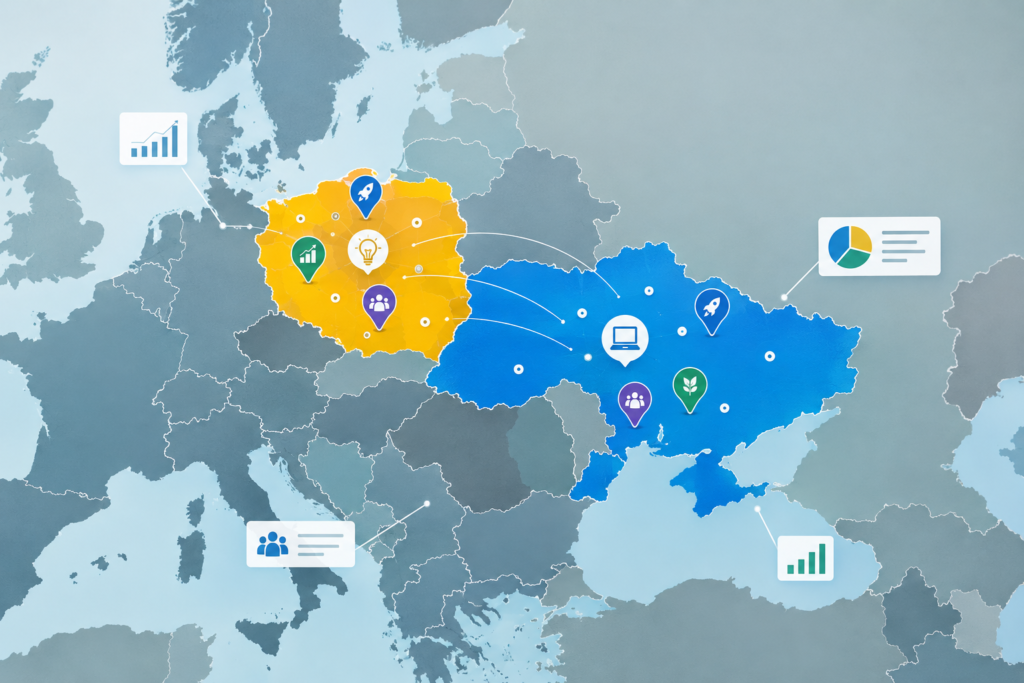
2026 was a record year for Poland: eight companies with Polish founders were accepted into Y Combinator. These figures illustrate the changing dynamics of the region’s representation in the accelerator over the past decade.
The region’s share in Y Combinator and investors
Startups from Central and Eastern Europe make up a small share of Y Combinator — over the past decade their proportion in individual cohorts has been roughly 2–3%. Of the 155 companies found, only 53 have, among their known investors, at least one fund from Central and Eastern Europe.
Among active investors in such startups are also the US-based Pioneer Fund, Rebel Fund and SV Angel. This indicates that part of the investment in companies from the region comes from abroad, according to Muselyak’s analysis.