
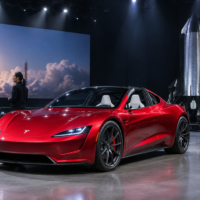

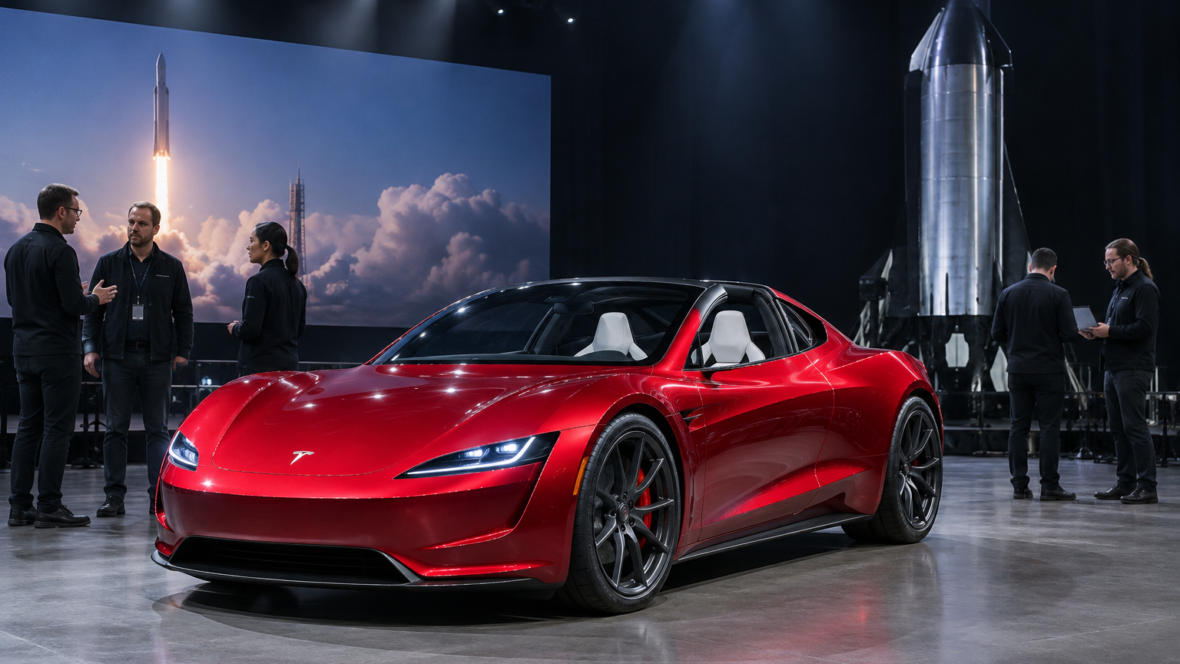
Tesla introduced the new generation of the electric sports car Roadster during a presentation in which the car lifted off the ground, performed an aerial flip and landed back on its wheels using rocket thrusters. Elon Musk said production is due to begin in 2028.
Demonstration and thruster technology
The development was created in collaboration with SpaceX; a unique feature of the car is its cold-gas thruster system. They generate thrust using compressed gas without burning fuel.
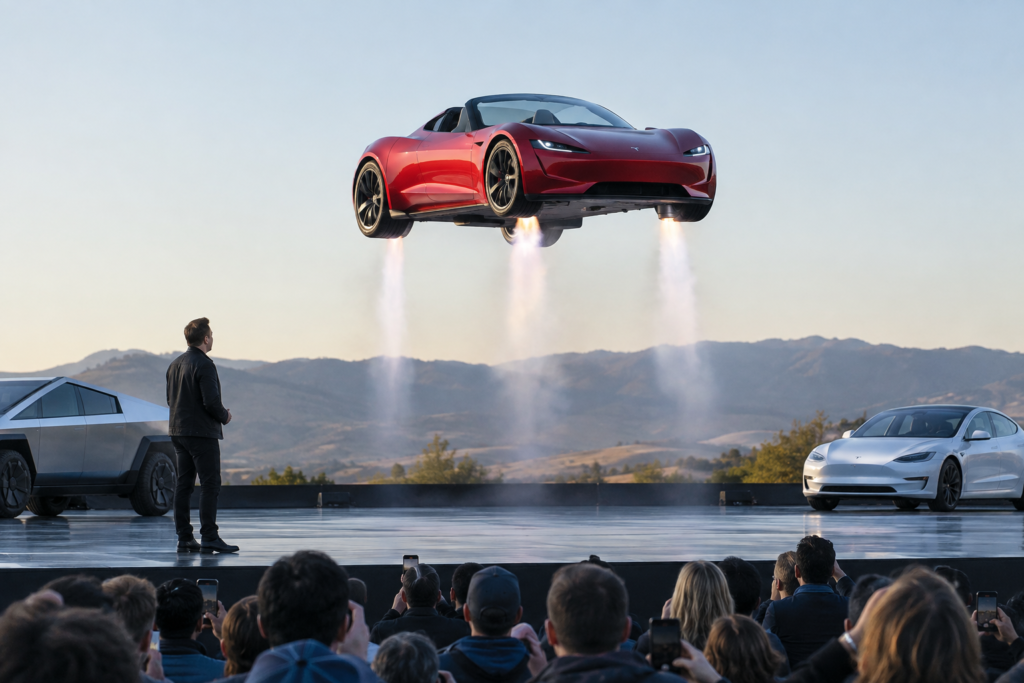
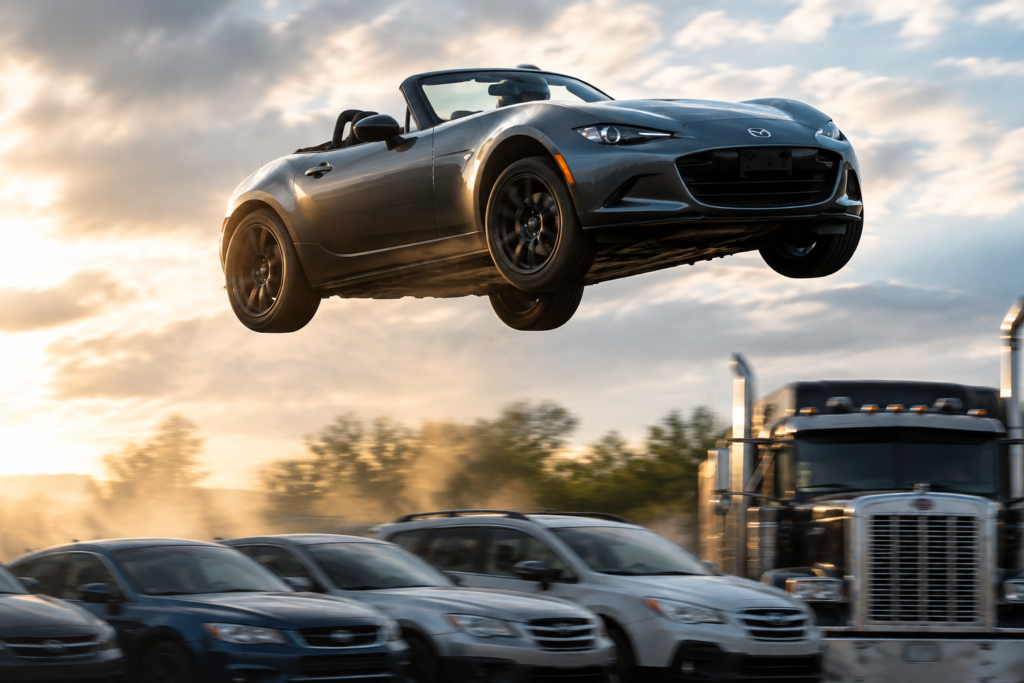
During the presentation the Roadster briefly detached from the ground, performed an aerial flip and jumped over other cars and a truck. Another feature is a suction system that helps the car move along a curved ramp even when inverted; these are demonstration capabilities, not evidence that the car will be able to fly long distances or drive on vertical walls under normal conditions.
Performance claims
According to the manufacturer, the Roadster is claimed to accelerate from 0 to 60 miles/hour (approximately 97 km/h) in less than a second. The stated top speed exceeds 370 km/h, and the range is over 480 km.
These figures should for now be regarded as manufacturer-stated claims rather than results of independent testing.
Price, reservations and production timeline
The company has not yet announced the final price of the new Roadster. In 2017, at the first unveiling of the second generation, the base price was quoted at $200 000, but after almost nine years of delays that figure cannot be taken as confirmed for the new version.
Tesla has opened reservations for several configurations with deposits of $50 000 and $250 000; these amounts are reservation deposits and not announced vehicle prices, the cost of finished versions is still unknown. The concept of the second-generation Roadster was first shown in November 2017 and at that time deliveries were promised to begin in 2020, but the timetable has been repeatedly pushed back; production is now targeted for 2028. Musk has previously acknowledged that the Roadster is unlikely to have a significant impact on the company’s financial results, which is currently more focused on autonomous driving, robotaxis and robotics.